
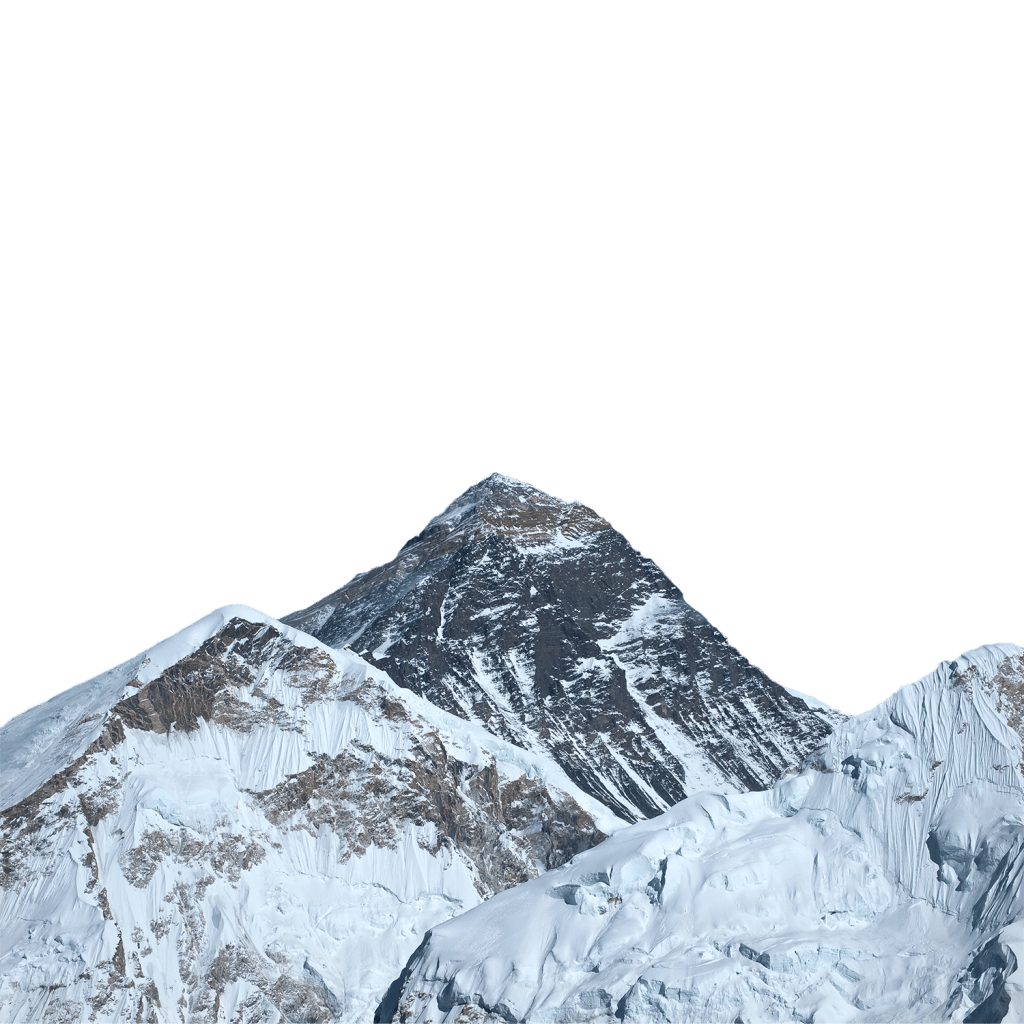
Mount Everest, Nepal, 8848 meters. You most probably know the highest mountain in the world and its majesty. The first documented climb to the summit was made in 1953 by Tenzing Norgay, a sherpa from Nepal and Edmund Hillary, a New-Zealander. Place of adventurers and home to the sherpas, the Nepalese community constantly helping the climbers to reach the apogee, Mt. Everest is not without any risks and has to face new problems every year.
Approximately 200 dead bodies are laying on the way to the summit right now, at the moment you read this article. The extreme conditions are making it (nearly) impossible to bring them back from up there. Indeed, this monstrous height comes with a handful of different challenges. Lack of oxygen, treacherous terrain, mountain sickness, exhaustion… Ascents are very rarely attempted outside a very short window between May and June when conditions are at their absolute best, with average temperatures of minus 27 degrees celsius, and 80 km/h winds. But Mount Everest is so high that the top actually penetrates into the stratosphere, where winds known as Jet Streams can flow up to 320 km/h, driving temperatures down to minus 73 degrees celsius. These conditions are causing the bodies of deceased mountaineers to freeze and mummify. Every single person that died on Everest was a highly motivated climber and now are just trail markers. The most “famous” one is Green Boots, a man believed to be Tsewang Paljor, an Indian climber who died in 1996. His nickname comes from the color of his boots (which are very unusual in the climbing community). You have to pass by him in order to go to the summit from the North (Tibetan) side. Some people say that the hardest part of climbing Everest isn’t the amount of energy required or the difficulty of the climb, but to pass by the deceased bodies that are laying on their way to the summit.
Another problem comes across every Everest-related discussion: overcrowding. Even though the fatality rate hasn’t changed much over the years (around 1%), the amount of people taking their chance to the summit doubled, even tripled! The Nepalese government is not inclined to stop this overcrowding as the permit-fee is 11.000$, which is good money for them. But with this unprecedented wave of people comes problems. If 300 people are waiting for a meteorological window at camps on the way to the top, they need to go to the bathrooms. “Every year, it is getting worse with poop,” says Lakpa Rita, a 23-year veteran sirdar and 17-time summiter. “People just dig holes at Camps I and II, and it melts out and smells terrible. When it melts out, it gets into the water, and people are getting sick at every camp”. To counter this, the Nepalese Ministry of Tourism issued a mandate that every climber has to bring 18 pounds of trash off the mountain to ensure that expeditions clean up after themselves. Inexperience, slowness, and waiting lines at the summit… Despite the dangers, there are no checks in place to prevent overcrowding.
Mount Everest is testament to the inspiring spirit of human exploration and the untamed power of nature. However, the challenges it faces are not confined to a single nation or community. They require collaborative efforts on a global scale. It is imperative for governments, mountaineering organizations, and environmentalists to come together, share knowledge, and develop comprehensive strategies to address the issues surrounding Everest. By working hand in hand, we can preserve this natural wonder and protect the well-being of all those who venture into its majestic embrace.
Hugo Lhomedet
Sources:
https://www.cbsnews.com/news/the-mountain-of-safety-problems-facing-climbers-mount-everest/
https://godheadv.blogspot.com/2010/04/abandoned-on-everest.html
Himalayandatabase.com
Outsideonline: Peak poop feces problem everest needs solution
CBSnews: The mountain of safety problems facing climbers, Mt. Everest
Godheadv – Blogspot: Abandoned on Everest
 VOICES
Leave a comment