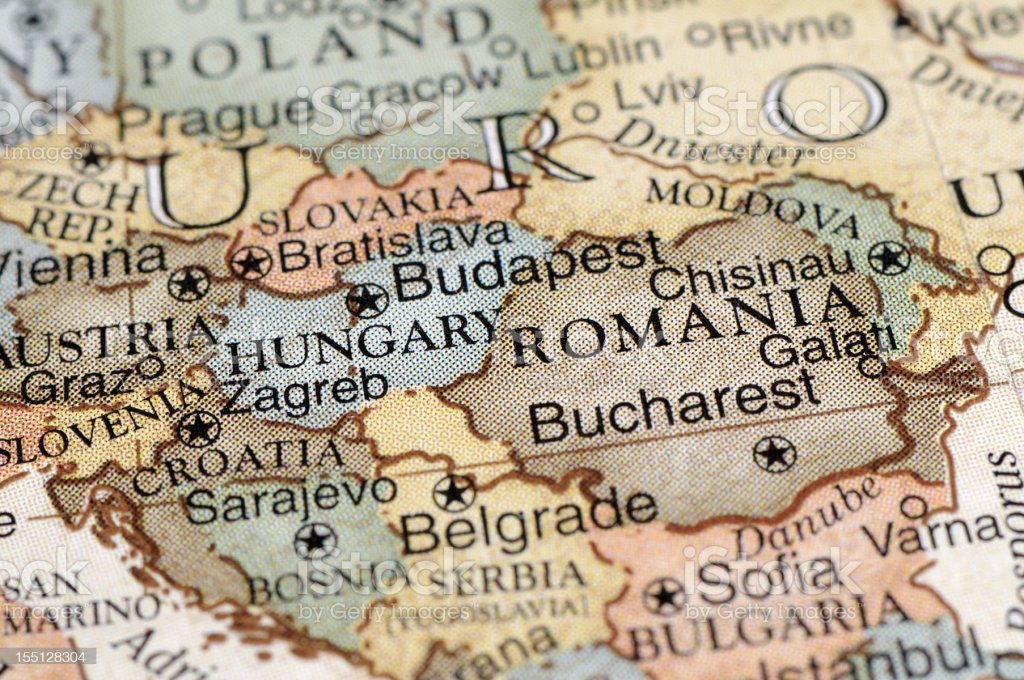
In a world filled with diverse languages and their fascinating similarities, one particular group stands out in Europe, coming from countries with Slavic origins. Let’s explore together this captivating linguistic realm.
The Slavic languages trace their roots back to the disintegration of the original Proto-Slavic language. To begin our exploration, let’s focus on the first group of Slavic languages: the Eastern European group. One distinguishing feature of this group is the use of the Cyrillic across multiple countries in the region. This collection includes Russia, Ukraine, and Belarus. As a Polish individual, I have noticed that these languages bear striking similarities, with shared words and expressions that are well-known among the people of these nations.
Moving on to the second class within the Slavic set, we encounter the Western European group, which I am most familiar with due to my Polish descent. This group comprises Poland, Slovakia, and the Czech Republic. As a Polish speaker, I can confidently say that Slovakian have a closer resemblance to my native language compared to Czech. For instance, while the Polish phrase for “Good morning” is “Dzień dobry,” in Slovakian, it is “Dobre rano.” Interestingly, the word “rano” in Polish also means “morning,” making it instantly understandable to Polish speakers. Many other words along the Polish-Slovakian line sound remarkably similar to one another. Czech, although somewhat different, is still understandable to Polish speakers.
The time has finally come for Balkan language groups within the Slavic family. The Southern Slavic group takes center stage, beginning with its eastern part, comprising Macedonian and Bulgarian. After spending a few days in Skopje, I can say that this language is not as similar to the Western Slavic languages. However, I can sometimes understand a few words, such as “welcome.” To be honest, I am eager to immerse myself in Macedonian to a greater extent. Similar to the Eastern Slavic group, this Balkan subgroup also employs the Cyrillic script, but with subtle differences.
The final group within the Southern Slavic group includes Serbia, Slovenia, Croatia, Montenegro, and Bosnia, spoken by approximately 25 million people across the Balkans. These countries share common linguistic roots and have historically been influenced by various cultural and political events.
While each nation has its distinct dialects and linguistic variations, the Southern Slavic languages form an important part of the regional identity and communication in the Balkan Peninsula. The commonalities among these languages allows for a certain level of understanding, facilitating intercultural exchange and cooperation among the countries.
The Slavic languages have remarkable similarities within their respective groups. As a result, individuals from the mentioned countries often have no difficulty understanding one another. The linguistic kaleidoscope of the Slavic language world is a great mix of words and expressions that both unite and celebrate the diverse cultures of these nations.
Marcel Mańkowski
Sources:
https://pl.wikipedia.org/wiki/J%C4%99zyki_s%C5%82owia%C5%84skie
 VOICES
Leave a comment