
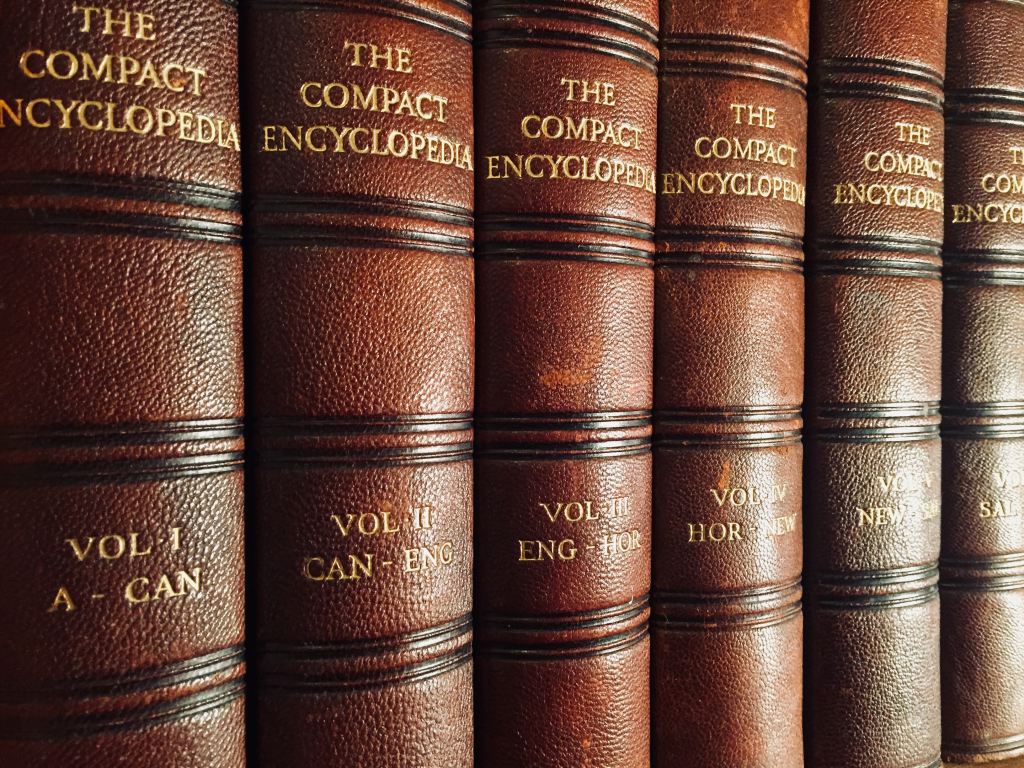
The first Polish-language encyclopedia, “Nowe Ateny” or “New Athens,” was first published in 1745-46. Its author, Benedykt Joachim Chmielowski, used a style distinct from today’s dry encyclopedia language. He included definitions such as: What a horse is like, anyone can see.
The full title of this book is “New Athens or the Academy full of all science, divided into subjects and classes, for the wise ones to record, for the idiots to learn, for the politicians to practice, for the melancholics to entertain issued…”. In the Enlightenment period this encyclopedia was a controversial topic. Some critics mentioned that it was a waste of time and money, and that it contained ignorance and exaggerations. This era was characterized by naturalism, which rejected all forms of the supernatural. For them, truth was what could be experienced or verified. Therefore, the encyclopedia did not meet the criteria and was perceived as an amusing document containing false information. Indeed, that was the case, but the author approached it completely seriously. His knowledge was based on books by authors like Pliny, Tertullian, and Saint Augustine. He would repeat even the most peculiar information because he believed it to be true due to its venerable source. In his encyclopedia, he mentioned dragons, headless people, magic and sorcery, astronomy, astrology, and more, most of which were fantastical. When it comes to typical information, the author had his own way to describe things, like initially joking about the horse’s obvious identity but then delved into a detailed description.
In a dedicated section on the devil, sorcerers, and magic, the author delves into the realm of possessed individuals. Chmielowski examines their extraordinary abilities and the signs by which their possession can be identified. Furthermore, he mentions three types of magic: natural, artificial, and demonic. Within this exploration, Chmielowski introduces readers to an array of sorcerers, ranging from biblical figures like the Witch of Endor and Simon Magus to more contemporary practitioners. He analyzes the abilities and practices of witches, shedding light on their mystical world.
In the chapter dedicated to astronomy and astrology, Chmielowski boldly critiques the Copernican system, offering an alternative perspective on the cosmos. He introduces readers to the concept of the sublunary sphere, a region within the geocentric cosmos situated below the Moon’s orbit. Sphere that consists of four classical elements: earth, water, air, and fire. Additionally, Chmielowski’s narrative takes us on a journey through the geography of infernal rivers such as Acheron, Styx, Lethe, as well as the mysterious lakes Geluchalat and Avecigus. The author’s exploration extends to various forms of divination, including the art of foretelling the future, physiognomy, palmistry, and oneiromancy.
Benedykt Chmielowski described people in an extraordinary manner, contemplating the existence of giants and speculating about their outstanding height. He also mentioned long-lived individuals, like Methuselah, a biblical character said to have lived for 969 years. Additionally, he provided examples of people with exceptional strength, such as Augustus II the Strong, the King of Poland. When it comes to animals, he provided unique insights, like an unconventional behavior in deer, explaining that they would ingest snakes to rid themselves of parasites. He also introduced the Indian rabbit, a predator of deer, and highlighted the Arabian mice, which surpassed cats in size and even walked on two legs. Moving on to birds, he discussed what people have learned from them, with a particular focus on ancient Roman omens based on bird flight. Among reptiles, he intriguingly mentioned the basilisk, a creature rumored to possess the deadly power of killing with its gaze, and the enigmatic dragons.
It’s a source of amusing and memorable “definitions” that are known to some people to this day:
Horse
What a horse is like, anyone can see.
Ant
ANT, in the Persian city of Susa in a market square called Avianus, there was an ant that daily ate a pound of meat, as Rhasis and Jonstonus relate.
Goat
A stinking kind of animal.
Headless humans
[…] They have the complete figure and symmetry of ordinary humans, but they don’t have a head, only a face in the middle of the chest.
Socrates
SOCRATES never laughed in his life; his face was neither happy nor sad.
While the work may not have been groundbreaking, it was valuable. The author was creative and possessed a genuine writing talent. Thanks to this encyclopedia, readers could explore a wide range of fascinating topics, though, of course, not taking everything too seriously.
Aleksandra Szumielewicz
Sources:
Culture.pl – 10 Quirky Quotes from Poland’s First Encyclopaedia
Wikipedia.org – Nowe Ateny
 VOICES
Leave a comment