
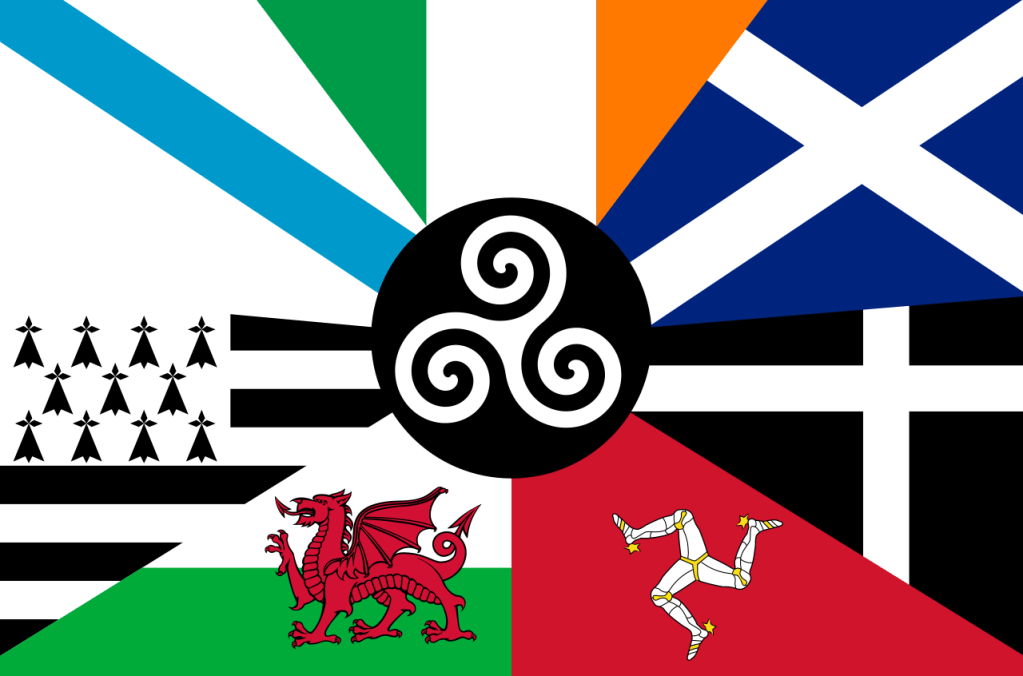
The Celts were among the most iconic people of Antiquity. Great warriors that were settled in most of northern Europe, they were also traders that expanded from modern-day Turkey (Galatia) and Spain (Celtiberia). Nowadays, celtic-related languages are in danger but didn’t vanish, while a strong culture remains in the lands that they never completely left. What is the legacy of this former civilization nowadays?
Antiquity
Because they weren’t using script, most of what we know from them comes from foreign sources (Ancient Greeks and Romans). That is why there is no precise information about the arrival of the Celts in Europe, and the historians are still arguing to come to a precise conclusion about it. Whatever their date of arrival, they were known as efficient warriors, plundering big cities such as Delphi and Rome but also trading a lot: their iron, barrels or pottery were found around the Mediterranean Sea. Celtic civilization, regrouping a lot of different tribes, had also a taste for poetry and their religion was centered around druids, shamans that represented the link between nature and humans. But they couldn’t resist the rising power of Rome, which conquered most of Celtic territories: Gauls (France and Belgium), Alps, Iberia (Spain and Portugal) and even Britain. Even with their overwhelming power, Rome couldn’t submit Scotland, populated by the Picts, tribes whose warriors were painted in blue. The Emperor Hadrian, to prevent them attacking the Roman settlements, built a great wall to repel them. After a few centuries of early colonization that followed violent conquest, most of the Celtic population adopted Roman lifestyle and Christianity.
Middle Ages and Modern era
At the collapse of the Roman Empire, Germanic tribes would invade the Western territories. The Angles and Saxons got to Britain, where most of the population wasn’t as romanized as elsewhere. This invasion created the Arthurian myth, probably from a briton officer that fought the germanic outsiders. In spite of their resistance, the Celts who lived there had to flee westward, to Cumbria, Wales, Cornwall and Brittany (in western nowadays-France). Some sources also suggest that some populations fled to Galicia and Asturias, in north-western Spain. Early Middle Ages were a period of turmoil, but Celtic descendants could build and organize into duchies and kingdoms in Ireland, Scotland, Man Island, Wales and Brittany, fighting for their independence against Franks, Saxons and then Vikings, that settled in those areas around the IXth century.
In the following centuries, celtic kingdoms will fall under foreign reign one after another: Kingdom of Strathclyde in 1030, Welsh in 1283, Brittany in 1532, Ireland in 1536, after a long conquest that started in 1169, and finally Scotland in 1603, continuing to exist with its institutions until 1707.
Celtic revival
Celtic languages and culture slowly vanished in the cities, but continued to be very much alive and spoken in the countryside. A lot of rebellions occurred in the rural areas that kept seeing the outside power as invasive, especially in Ireland where the catholic population was discriminated against by the protestants settlers. Industrialization started to empty the countryside from their populations, and the imperial policies of France and Great-Britain were really harmful for the Celtic languages. But in the meantime, Celtic culture would experience a revival in the XIXth century, around music, dances, languages but also politics: some nationalists movements emerged in Brittany, Wales, Scotland and of course Ireland that started a war of Independence in 1916 to achieve it in 1922, without its Northern part.
Celtic Legacy today
Most of the Celtic Languages are in a bad condition nowadays. Cornish and Manx vanished during the XXth century, and Irish and Scottish Gaelic are now considered Critically Endangered by UNESCO. But Breton, and above all Welsh, are still spoken by hundreds of thousands, and extinguished languages regained interest and some speakers from upper classes that could implement it in universities and high schools. Along with that, specific features of celtic culture survived through centuries.
Traditional Music and Dances
One of the features that survived the most was celtic traditional music. Bagpipes, Celtic Harp, tin whistles mixed with drums survived through Celtic Circles, also known as bagad in Brittany. The closer links developed with other Celtic nations brought the Interceltic Festival, held every summer in Brittany where traditional musicians from every Celtic country but also Galicia and Asturias gather to play. Traditional dances stayed really popular in some places, and some waltzes or circles are well-known also outside of Celtic areas. Fest-noz, traditional breton dances gathering, were acknowledged by UNESCO a few years ago.
Modern music
The revival from the 70’s also brought Celtic influences to modern music, starting with Rock. Thin Lizzy, Alan Stivell, Dan Ar Bras, The Chieftains, Sinnead O’Connor, The Wolfstone were the pioneers of the genre, before it evolved with the global culture. The Pogues or the Boomtown Rats included it to punk, and modern-day artists are innovating with reggae, rap or techno music, such as Plouzafouenn and Tekmao from Brittany.
Sport
Gaelic (not Galactic) Football, closer to rugby than actual football, is also a living proof of celtic culture’s survival. It counts 2500 clubs around the world nowadays. The Celtic Legacy is also strong in other clubs identity: Boston Celtic Basketball club in the US, Glasgow’s Celtic in football are good examples of it, but more generally, Celtic anthems and songs are displayed in a lot of clubs and competitions today.
Words
Centuries of cohabitation impregnated both celtic and outsider’s languages. Some really common words from English actually have Celtic roots, either by direct lineage from Old Brittonic, or by Gaulish words brought by French.
- Bard: bardos in Old Celtic, bardd in Welsh, bardis in Scottish or bardh in Cornish. The bards were really estimated members of old Celtic societies.
- Ambassador: from Gaulish, through French. *ambactos, “henchman”, “one who goes about”.
- Carry: from Gaulish through French karros, that described the war chariots used by ancient celts.
- Bin: from Old Brittonic or Gallo-Roman Benna.
- Ass: from Irish Assan, that means originally Donkey.
Youen Le Bris
Sources:
UNESCO Atlas of the world’s languages in dangerBrun, Patrice. « La formation de l’entité celtique : migration ou acculturation », Dominique Garcia éd., Archéologie des migrations. La Découverte, 2017, pp. 137-152.
 VOICES
Leave a comment