
As we already know, microplastic has been detected in our bodies. Lungs, brains, hearts, blood, placenta, feces. It’s in the soil where we grow our food and in the air we’re breathing. This concerns animals as well. The toxicity is still being studied but I think we can all agree that it’s most likely not good. Research shows that at least in mice it causes behavioral changes, cancer and irritable bowel syndrome. What’s new is now we also know it’s in the clouds. Let’s get into it and see if the future allows us to still dance in the rain.
Before, we talked about people being plastic, referring to those doing plastic surgeries or injections like botox. Now we can say that everyone is plastic. Literally. Humans produce 350 million tons of plastic each year and about 90% of it isn’t or can’t be recycled. It needs to go somewhere. And that somewhere is actually, everywhere. Even in the Mariana Trench.
When plastic ends up in landfills, what happens is that over time it breaks apart and fragments. It keeps getting smaller and smaller but never really disappears. This breaking apart can be caused by physical abrasion like wear and tear and being outdoors, but also things like ultraviolet from the sun, which can help create free radicals that cause breaks in the bonds between polymers in the plastic. These little pieces have been found in almost every ecosystem on our planet. From the bottom of the ocean to the Arctic to mountain ranges in Europe. More than 1000 tons of microplastics (more than 100 million plastic bottles) rain down in the western US each year.
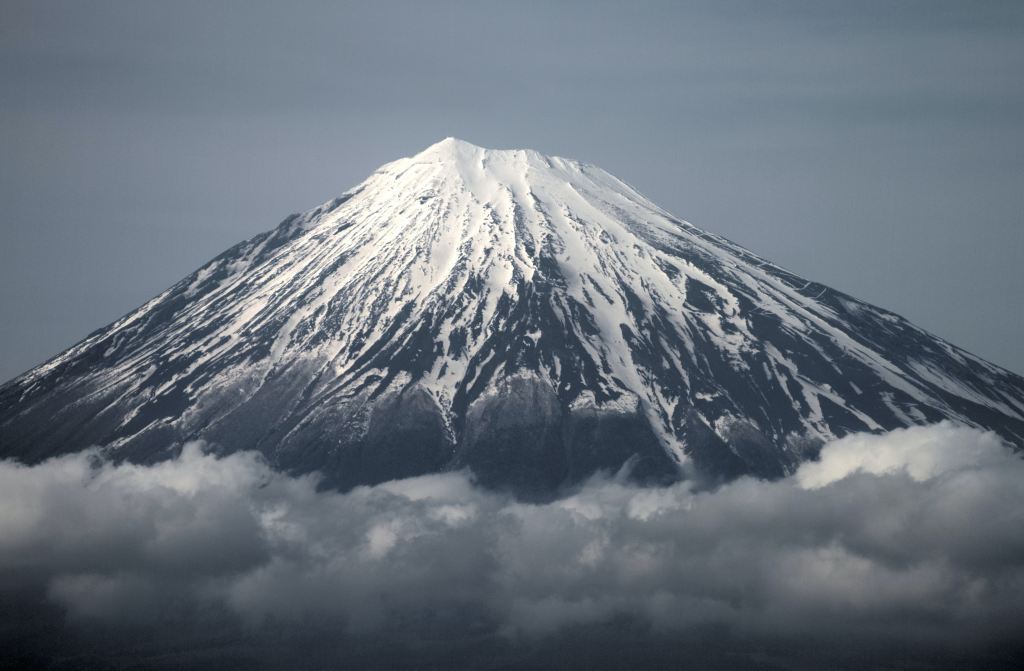
According to Japanese researchers, nine types of polymers and one type of rubber were found from water samples collected from Mount Fuji and Mount Oyama. Polymers are large molecules made by chemically linking a series of building blocks. The water collected from the high-altitude summits contained 6.7 to 13.9 pieces of plastics per liter. The researchers suggest that microplastics can therefore be affecting cloud formation processes. In sufficient quantities, they could change the cloud albedo, precipitation and lifetime, collectively impacting the Earth’s radiation balance and climate. The nine different types of plastics included polyethylene, polypropylene and polyethylene terephthalate. Those are common forms of plastic used in the production of bottles, shopping bags and synthetic clothing. Because the microplastics are in high altitudes, they’re more exposed to ultraviolet light from the sun. This speeds up the degradation of the plastic, and increases greenhouse gasses. Needless to say this has a potential to throw off ecological balance also in polar regions that are more sensitive to climate change to begin with.
We should all reduce our plastic usage and contribute to proper recycling. The plastic production is still expected to double by 2040 even though it’s already raining on us.
Taika Soihtu
sources:
Mongabay.com – Up in the air: Study finds microplastics in high-altitude cloud water
The guardian – Microplastics detected in clouds hanging atop two Japanese mountains
Springerlink.com – Airborne hydrophilic microplastics in cloud water at high altitudes and their role in cloud formation
 VOICES
Leave a comment