Dazzling costumes, fabulous dancers, and vibrant ballrooms. Between the glamour, there is a story of queer expression, creating safe spaces and celebrating culture.
Since the 19th century, drag has been a subculture playing with gender and social boundaries. Rooted in the queer community, drag is about self-expression and performing art. It questions identity and challenges our comprehension of gender roles. Thanks to the American TV show “RuPaul’s Drag Race”, a competition show for drag queens, hosted and co-produced by world-famous drag queen RuPaul, drag gained more visibility and has become a part of modern pop culture.
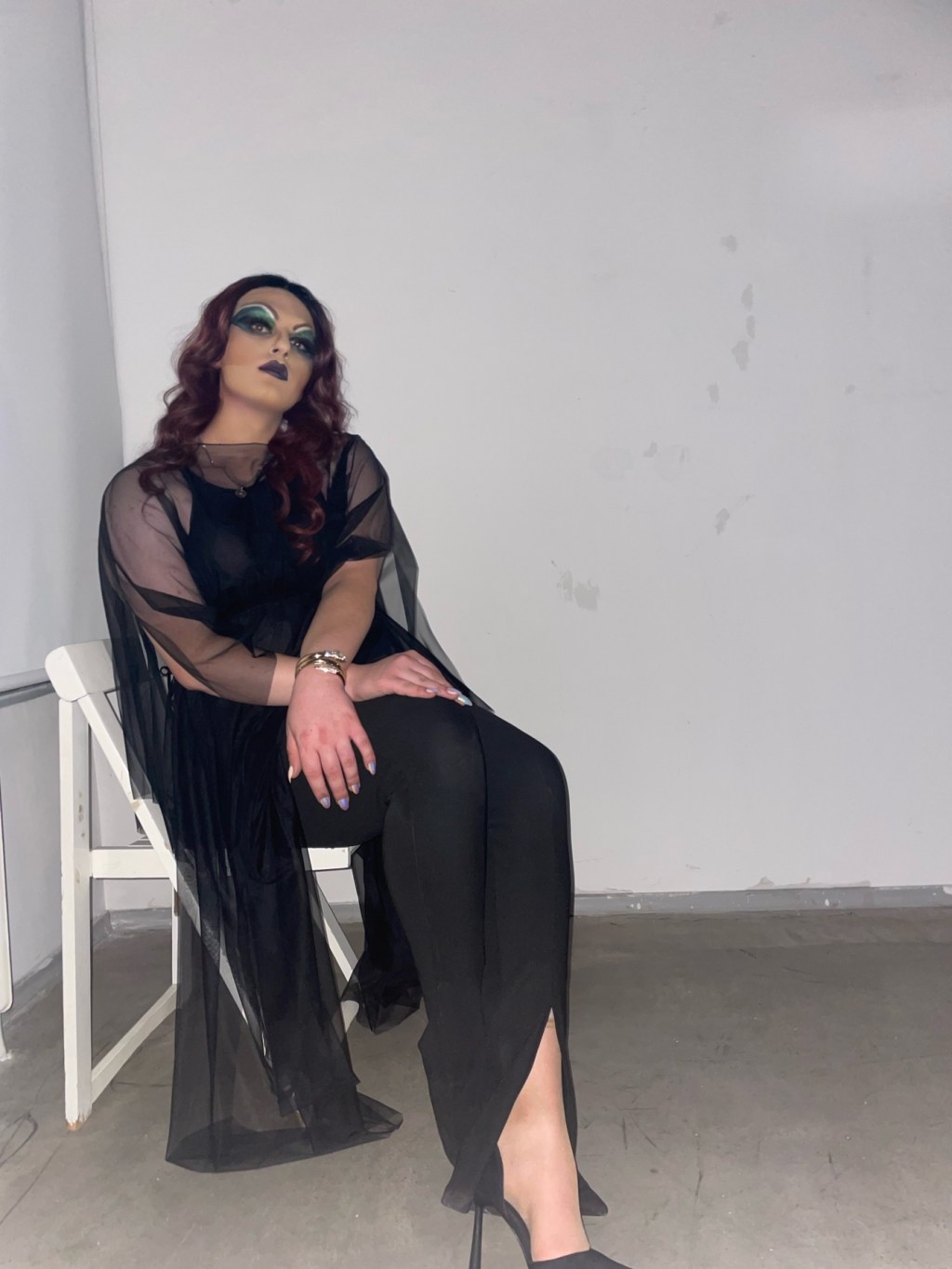
Drag is a worldwide phenomenon, also spreading to Macedonia. Together with five other drag queens, artist Daria Buffy is building a local drag scene. For a better understanding of what it means to do drag, Daria Buffy spoke with me about her experiences as a drag queen in Skopje.
What is a drag queen? What is drag culture to you?
A drag queen is a person, usually a male. A drag person uses drag clothing and make-up to imitate and often exaggerate the female gender, which signifies gender roles for entertainment purposes. We also have drag kings, they are the opposite of drag queens, so they want to show masculinity. Drag culture for me is a protest. LGBTQ people are marginalised. We use our drag personas to express ourselves.
How did you become a drag queen?
I became a drag queen by participating in one competition in 2022. We have a club, Komitet, where we have a competition every year on the 1st of April, it’s called “Night Queen”. I started in that competition, and I won second place that year.
You are part of “All Queers Summit”. Since when does the group exist and what is your role in it?
Two years ago, before I started to do drag, they formed a group called “All Queers Summit”. It’s a self-organised group for drag. Last year, I had my first official performance in a club with them. This year, after organising a few events, I founded a new group, called “High Heels Skopje.” After several successful events, “All Queers Summit” and “High Heels Skopje” became one group. Now we are making something new, an association of drag queens of Macedonia.
What is your main goal as a group?
I am the person who organises the shows, together with one other person, Zorica. And we are applying for a grant to make a show with queens from other countries, like Croatia, Serbia, Kosovo… We want to make a bigger scene here.
What do you like most about being a drag queen?
I like that I can show the world another persona that is living inside of me, another human being. My drag persona is always with me. I’m showing the world with my drag, who I really want to be.
You get a lot of reactions to your drag. How do you deal with them, both positive and negative?
Most of the reactions are positive, and I love that. I love the crowd, I love the people, I work with people, so it fills my heart. The negative reactions are small, I don’t even look at that, I just look at the positive.
Good attitude. Do people in your surroundings know you’re a drag queen?
Everybody who knows me knows what I’m doing and I’m always talking like: “drag show, drag show” and that stuff (laughs).
Drag is rooted in the LGBTQ community and it is mostly done by gay men. What does drag have to do with sexuality? Is drag gay?
I would say everyone can do drag. We cannot say it’s a gay thing, but a lot of gay people love to do drag. Drag is a big part of gay culture, at every gay party, there is a drag queen. At Pride1 there are many drag queens. This year, I was part of Skopje Pride, and I was performing.
What does it mean to do drag in the LGBTQ+ community in Skopje?
For now, it’s a small part of the local culture, but the LGBTQ community loves us. Every time they are at our parties, they want to see us. A lot are coming from other cities, just to see us. They feel safe with us, I think.
We talked about the scene here being quite small. Is the Macedonian drag scene also different from the mainstream drag culture we see in (American) pop culture?
The difference is quite small. But the country has no money for the culture. Everything we do, we do without money, without budget. Sometimes we are doing drag for free. It’s difficult to do drag here. But I hope that we will build a better scene and get the money from the country, from some grant or something.
What do you wish for in the future?
For the future, I love to have a big scene here, to have new queens. We already have a few new ones, but I want everyone who wants to do drag to come and become a drag queen or a drag king. In the last event, we had three new queens. That’s really beautiful. We are stronger, We are bigger.
Is there anything else you want to share?
I want to see more people coming. I want to see us in bigger places, not just small clubs. That’s our goal.
Are you up for a night to remember? Look out for Buffy Daria, as well as Fendi Mama, Iggy Mona Asnetra, Tia Doll, Estella Dark and Klara Mark, the queens of Skopje!
Johanna Krautkrämer
NEWS: The grant was given to Daria Buffy and her fellow drag queens, so be ready for a fabulous international drag show coming next year!
1The Pride Week, also referred to as “Pride”, is an event in June celebrating queer people and raising awareness of discrimination. It is set there in the time of Christopher Street Day, the remembrance day of the uprising queer people against homophobic police violence in a club in Christopher Street, New York, in 1969.
Sources:
The history of drag and historical drag queens – BBC Bitesize
Picture: Daria Buffy
 VOICES
Leave a comment