
“How are you doing?”
“I don’t know. I’m just feeling a bit off lately”
“I can relate. Everything is so grey and the days are so short. But it’s probably just the weather.”
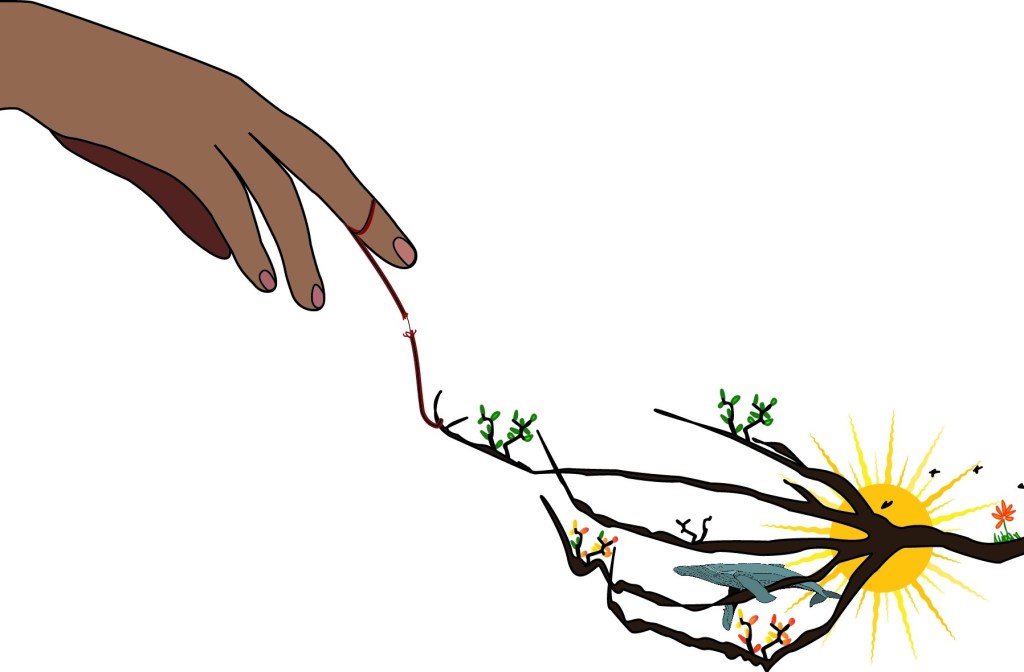
Is it really? That would mean that we can’t do anything about our mood when the weather is depressing. Most humans live in big cities, far away from nature. In that way, it is easy to forget what a great impact it has on us. So what impact is that?
We, humans, are losing our connection with nature. Especially children do not experience nature anymore. Many believe that this is one of the causes for health and well-being problems later in life. In 2005, the book “Last Child in the Woods” was published, and since then, the term “nature deficit disorder” is often used when talking about the healing powers of nature. Nature deficit disorder is not a medical diagnosis, but it describes various positive effects of being in nature and negative results of spending too much time inside.
“There is mounting evidence, from dozens and dozens of researchers, that nature has benefits for both physical and psychological human well-being.” (Lisa Nisbet, PhD, a psychologist who studies connectedness to nature). A few of these physical benefits include a lower chance of having eyesight problems and needing glasses. This is the result of a study with children in Australia. Other researchers found that people who engage in outdoor activities have fewer chances of suffering from obesity. People who practise Shinrin-yoku, which is a therapeutic way of spending time in natural environments, have improved nervous system functioning, good cardiac conditions, and reduced problems with the digestive system.
Not just our physical health but also our mental health are influenced by nature. Multiple studies compare groups of people in urban and natural environments and what effect it has. These studies have shown that being outdoors improves memory, attention span, and overall cognitive flexibility. The stress hormone cortisol is lower, and people are more relaxed. In contrast, urban environments decrease the attention span, and stress levels are generally higher. A study from Denmark has shown that children that grow up in areas with fewer green spaces have a 55% higher chance of having some kind of mental health disorder later in life than children that grow up in areas with more green spaces. Furthermore, being outside benefits people who suffer from depression. After being exposed to nature, the affected people had a better mood and were more motivated, which brings us to the next point.
The winter offers the perfect conditions for the seasonal affective disorder to get comfortable in humans for a few months: It’s grey, cold, wet and dark. SAD is a form of depression that stands in relation to the changes in the seasons. Of course, SAD can look completely different from one person to the next, but mostly the symptoms are oversleeping, changes of appetite, losing interest in activities, and having trouble concentrating. That period is shaped by having low energy, feeling hopeless, and being sad nearly all the time. Some call it winter depression because the majority of those affected have depressive episodes in these months. Not everyone who feels low in the winter has this kind of depression, but the low feelings come from being more isolated from natural environments.
It is not clear what the causes are for the seasonal affective disorder, but some things are most definitely a factor, like the lack of sunlight. Many organisms live in harmony with the sun. Plants are able to function through photosynthesis, which begins with sunlight. However, not just plants build their lives around the sun. The big star in the sky also affects humans. With our circadian rhythm, our body knows to wake up when we are exposed to natural light. In the darker months, our biological clock can be disrupted by the reduced level of sunlight. The sun not only affects our sleep, which is vital to us, but also our mood. The hormone serotonin helps with communication between the brain and the nervous system, and its main task is to stabilise our mood. Melatonin is produced from serotonin and plays a role in our sleep pattern and mood. Sunlight causes the brain to produce serotonin. Therefore, sunlight is not just the start of photosynthesis but also the start of the production of brain chemicals that are in charge of our mood.
If it’s the winter or the summer, if it’s outside or inside our environment influences us. The sun affects sleep and mood and just walking outside can improve our physical and mental health. That doesn’t mean that you can’t do anything about your mood, when the weather is depressing. Being aware of what and how something affects us can help you. Maybe rethink your day and try to have as much nature around you and see the value of spending time outdoors yourself!
Fiona Schaumann
Sources:
Seasonal affective disorder (SAD) – Mayo Clinic
The Positive Effects Of Nature On Your Mental Wellbeing – positivepsychology.com
Nurtured by nature – apa.org
What is Nature – Deficit Disorder? – Richard Louv
 VOICES
Leave a comment