
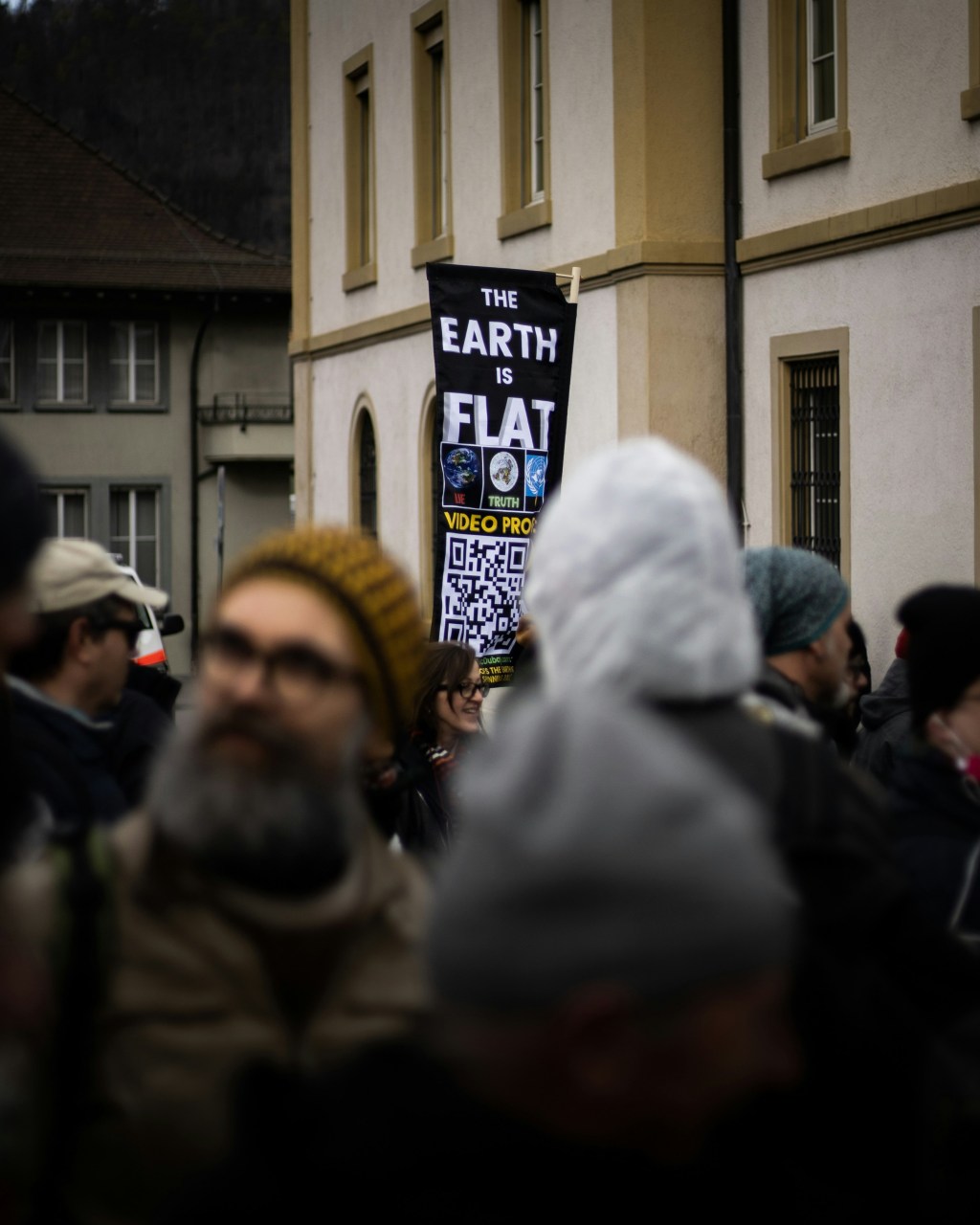
DO NOT BELIEVE EVERYTHING YOU SEE ON THE INTERNET!
Unbiased perception of what is happening around the world is important for keeping the doors open to communication. Sustainability of this relies on accessing authentic news and not to be drawn into fake news.
For many of us, buying newspapers or watching the news on TV is history. We live in the age of digitalization, and our fundamental source of information is the internet. The articles we read on social media platforms or the reels we stream influence our cognitive behavior daily.
However, the same social media platforms that allow news agencies to publish content also let us do so. Thus, in theory, no restriction or regulation keeps anyone from publishing anything. This is good for alternative journalism to reinforce inclusivity and diversity of political views. Yet, it creates a possibility of harmful use.
Social media platforms have proven to be the most powerful when spreading propaganda in the last decade. With features such as follow, retweet, share, and mention (Jiexun Li, Xiaohui Chang, 2023) the capacity it has created to circulate any ideas interactively and instantly while defying borders and time zones is behind this success.
Therefore, anyone who has enough of an audience can easily contribute to this mass flow of information and manipulate the news. Consequently, as the number of contributors increases without authorization to publish news online, we must be more sincere in combating misinformation and disinformation.
The way we define misinformation and disinformation is relevant. People tend to use misinformation and disinformation interchangeably in their daily talk; however, they are distinct in some ways. Misinformation is a wrong statement caused by limited knowledge of the topic and is unintentional. However, disinformation is a type of untrue statement that is intentionally fabricated to cause distress and harm to the public. That’s why, for us to access authentic news, we must be able to detect misinformation (Jiexun Li, Xiaohui Chang, 2023) and disinformation. To be able to do that we have to be news literate.
There are three components of news literacy measurement: need for cognition (NFC), self-perceived media literacy (SPML), and value for media literacy (VML) (Emily K. Vraga & Melissa Tully, 2021). NFC is the person’s enjoyment of cognitive activity on the news they have read. SPML is the person’s self-perception of their news literacy. Finally, VML is the person’s belief on why news literacy is vital for a healthy democracy.
Yet, one’s effort is not always enough to not be exposed to fake news on social media. That’s why many social media platforms like X have developed in-app tools to combat fake news. Labeling content that is deemed as fake, and prompting people when they engage with a misleading post by disclaimers are some of these effective tools. But out of all, the most radical one is temporary suspensions for people who repeatedly violate the platform’s policies about news sincerity.
There are attempts to take large-scale collective action against fake news too. They are categorized into two groups: fact-checking services and verification services (Petter Bae Brandtzaeg, Asbjørn Følstad & María Ángeles Chaparro Domínguez, 2018). Fact-checking is related to the credibility of online content whilst verification is a key for the processing of authenticating online content. For instance, ClaimReviewProject has created a tagging system that fact-checkers can use to identify their articles for search engines and social media platforms such as Google Search, Google News, Bing, Facebook, and YouTube. By doing so, they help to stop the promotion of fake news online.
So, what can be done? First, try to find reliable sources and journalists to follow. Second, always be critical. Don’t take any information as true at first glance. Then, have some knowledge of online fact-checking and verification services. Be aware of the social media features that aim to decrease the spread of fake news. And do not share news if you are not sure how authentic they are.
Süleyman Hakan Kuru
 VOICES
Leave a comment