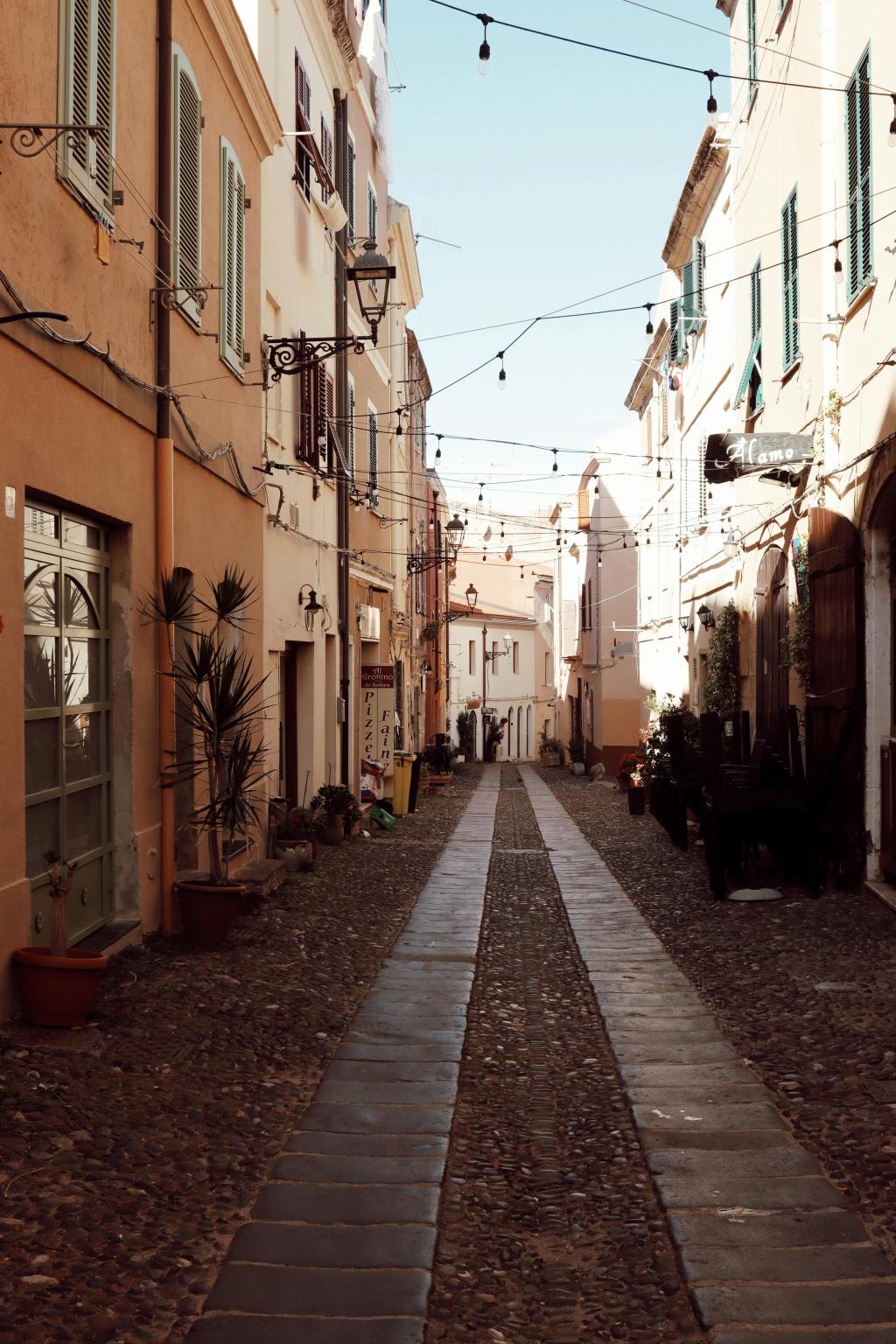
Sardegna, the small island where I was born, yet one of the biggest in the Mediterranean sea, known for its breathtaking coastlines, hides a tradition that I myself found out about only last year: fillus de anima.
Literally “soul’s child”, fill’e anima is a kid, usually between ten and fourteen years old, unofficially adopted by someone who’s wealthier than their biological family and can provide for them.
Michela Murgia, writer and feminist activist born and raised in Sardegna, in one of her novels she writes “fill’e anima are the kids born twice, from one woman’s poorness and from the infertility of another one”. Murgia herself was a fill’e anima, entrusted by her biological family to another one, who took care of her as their own daughter. Later in life she did the same, unofficially adopting four children who are now her heirs, after she passed away. In her latest book she tells how people often couldn’t understand the relationship she had with the four of them, since jurisdictionally they weren’t her children.
The thing is, I guess, that sometimes we forget minors in need are a community issue. In Polynesia, for example, caring for the kids in the community is an act of compassion, which some Polynesian adults say western people lack.
We got stuck in the idea that nuclear families are the only families existing or even the only type of family that should exist. As T. W. Osher says each family defines itself, meaning a family is a group of people who see themselves as one. Isn’t family the people who love us and whom we love? The people we trust and the ones who teach us what’s wrong and what’s right? Or, at least, isn’t that what family is supposed to mean? Bell Hooks, American author, says “Love is nurturance and care and nothing else, and that love is the core of a family”.
Going back to Murgia, in an interview the writer says that fillus de anima are the only kids who are asked to be born, since they actively give their consent in being entrusted to someone else. Adults and kids choose each other, in a voluntary act of trust. Meanwhile the community testifies and approves the new situation, working almost as social services.
Nowadays things have changed. Bureaucracy came along and as Murgia said a piece of paper has now more value than the consent of an entire town. Which is not that wrong, but still, adoption as we know it would mean getting a new family and getting separated by the biological one, while fillus de anima still spend time with their original parents, siblings, relatives.
Some cultures stick with “it takes an entire village to raise a child”, which Hooks sees as revolutionary as it stands in opposition to the idea that parents, especially mothers, should be the only “child rearers”. Imagine having such a big safety net that you feel free and confident to experience, challenge yourself, because you know someone is going to help you, someone is going to be able to help you if things go wrong. Something that not every family has the means to do.
I myself have different families, each of them took care of me in different moments of my life and I will forever be grateful. It definitely took a village to make me who I am today.
Ilenia Pisano
Sources
• Love Does Not Abuse: The Parenting Philosophy of bell hooks – R.L. Stollar
• Fillus de anima: la tradizione sarda e il significato per l’adozione
• Michela Murgia Fill’e anima : Dialogo sul ruolo della famiglia
• “Dare la vita”, Michela Murgia (Rizzoli Editore, 2024)
• Frontiers | It Takes a Village to Raise a Child: Understanding and Expanding the
Concept of the “Village”.
 VOICES
Leave a comment