
Which kind of transportation do you use? How do you go to your work or your school? Do you have a car or a bicycle? All these questions are an essential part of our future. The evolution of the transport modes is an imperative thing for the following times.
Our planet needs this evolution because the global change is due, in a main part, to our transport modes which produce too much greenhouse gas. But to move and to have the possibility of traveling, exchanging, is also an essential requirement for people and for the new generations. So we have to find new ways and new technologies to get around. Green technologies and more respectful environment solutions are the solutions. We don’t have the choice to trust in innovation if we want to expect a better future for the world. In this article we are gonna present a few of these innovations and check which solutions exist to continue to have the possibility to move fast and far. Because exchanges between peoples in the world are also essential for all of us.
The first innovation to be presented in this article is also the most widespread at the moment: it’s the electric car. You must know the brand Tesla, but today a lot of traditional car constructors make this new type of motors. The main advantage of electric cars is that their motor doesn’t produce any carbonic gas. That’s why it’s a good solution against the pollution in the cities and global warming. But they also have some inconveniences. First, electricity can be a green energy but it’s not if we use fossil energy to produce it (like in the coal-fired power station). And then, to make electric cars, and especially their batteries, we need a lot of chemical products and rare metals and this makes the fabrication of electric cars a really polluting process. But another solution exists to make the cars less polluting, the hydrogen car. This type of motors use hydrogen, a non polluting fuel, to produce their own electricity. So we don’t need batteries anymore and hydrogen gas is not a greenhouse gas (actually, it’s just water). The only problem is that it’s costly and difficult yet to produce a lot of hydrogen gas.
The next interesting innovation is concerning trains. Trains are already a non-polluting way of transportation (when they are electric). But the future of trains is speed, huge speed. The goal is that they become a serious alternative to the plane, which is really polluting. And this alternative is called the Maglev train. Maglev trains use magnetic suspensions to float on rails. This technology gives the train the possibility to reach high speeds, faster than the classic ones. These kinds of trains already exist across the world and some lines are operational in Japan, in China or in South Korea. But the next step for this technology is called Vactrain. Vactrain is a Maglev train but inside vacuum tubes. This reduces air friction and makes the speed higher again. Different prototypes already exist, the most famous is the “Hyperloop” from Elon Musk. But no lines are already operational today. These trains will reach speeds between 6 000 km and 8 000 km!
Concerning boats, the new innovation is actually not really an innovation, but an evolution of an old technology: the sail. The idea came from France and the first prototype of a sail liner was developed in the shipyards of Saint-Nazaire. The project is named “Solidsail” and the idea is to create a new sail technology to use the wind’s force to tow big boats without using fossil energies. Wind is a green energy, infinite and emits no CO2. The first of this boat should be finished in 2026.
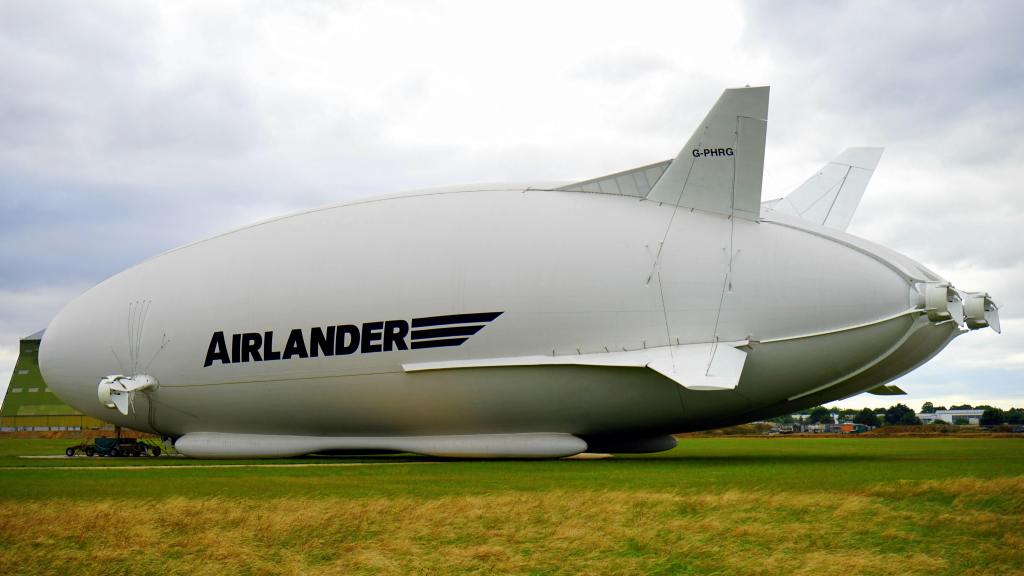
The last innovation to be presented in this article is also an upload of an old technology, the airship. This technology is well known in air transport. It was used a lot before World War II but it was abandoned after several serious accidents. The problem came from the gas used to make the airship float, the hydrogen. It’s a very flammable gas and a lot of airship fires happened in the past, and caused a lot of deaths. After this, they were abandoned and nobody uses this technology today. But a British company is developing a new prototype, with a new gas, the helium, which is non flammable. The project is named Airlander and is developed by Hybrid Air Vehicles. The general principle is the same as before. This kind of vehicle is much slower compeared to planes, but far more ecological because it needs less gasoil to make distances. Moreover, the flight autonomy is increased because Airlander will be able to stay 4 days in the sky and to browse 7 000 kilometers.
We have just seen a few of the innovations for the future of transportation but there exist many others too. We need to find new ideas to reduce our carbon impact and to continue to get around the world. And often, the best innovations come from the past and the simplest ideas can be the better. That’s why we also shouldn’t forget the solutions which already exist and which just need to become more generalized. The future is also in the simple things, like bike, walk or, in general, soft mobilities. So we have to not forget that a lot of solutions exist and that they just need our interest to change things. Future is already in front of us and above all in our hands!
Augustin Magaud
Sources:
“Hyperloop” – Wikipedia
“Vactrain” – Wikipedia
“Train à sustention magnétique” – Wikipédia
“Le paquebot à voile des Chantiers de l’Atlantique va voir le jour avec le groupe Accor en client” – Francebleu.fr – 11/12/2023 – Hélène Roussel
“Les ballons dirigeables vont-ils renaître?” – Bilan.ch – 12/03/2024 – AFP
 VOICES
Leave a comment