
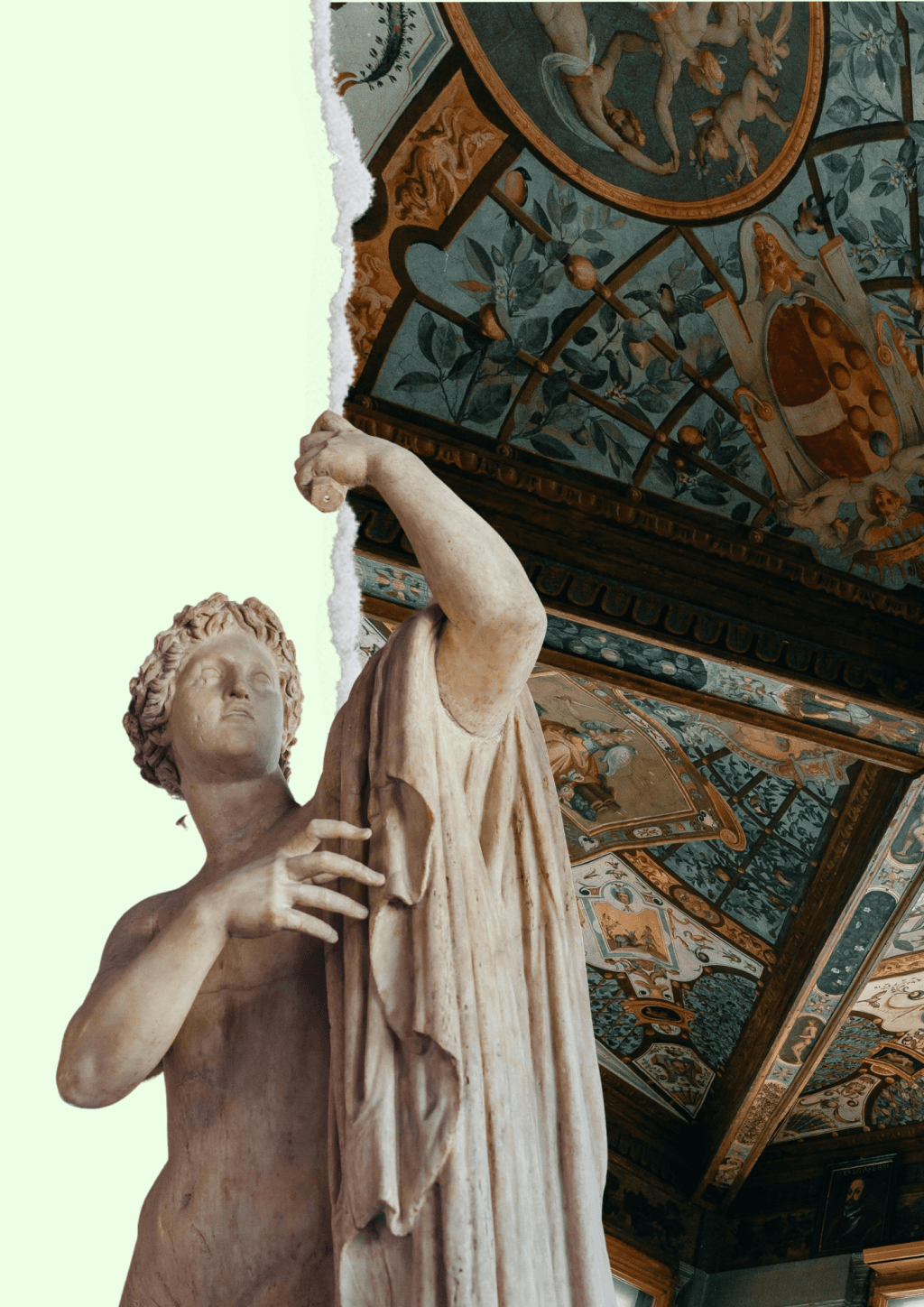
People can be poisoned by the food they eat. When the right chemicals do not enter the body, our body tries to create a reaction to this and fights the poison. So, what happens to us if the food we feed our souls is poisonous? Art is food for the soul. In other words, any art element is food. Music, paintings, architectural structures, sculptures… However, the disease that arises from a chemical disorder in food poisoning is due to the fact that the food here becomes almost perfect. Stendhal Syndrome, which is a psychological disease, causes rapid heartbeat, fainting and hallucinations when exposed to works of art or magnificent and aesthetic phenomena.
The real origin of this syndrome dates back to Florence, Italy. In the most shocking of many cases, a tourist suffers a heart attack while looking at Sandro Botticelli’s painting “The Birth of Venus” in the Uffizi in Florence. In the same way, he suffers an epileptic seizure while looking at “Spring”, another Botticelli’s painting in the Uffizi. In 1979, Italian psychiatrist Graziella Magherini conducted research on the syndrome, observing that such cases were very common, and reached important results. Magherini reveals this interesting syndrome by studying foreign tourists who present to the emergency room with symptoms such as dizziness, fainting, etc. Then, through a series of experiments and observations, she checks whether this disorder really exists. Visitors to the Medici Riccardi Palace in Florence are observed. In the Medici Riccardi Palace, tourists visiting the chapel decorated with frescoes are asked to record the images of the visitors looking at the frescoes after examining their heart rate and breathing rate, blood pressure, eye and muscle movements, and write down how they feel while looking at the works. In the experiment, it was determined that some visitors’ facial muscles relaxed, their pupils shrank, and their heartbeat, breathing rate and blood pressure changed while looking at the artifacts. When visual artworks were accompanied by auditory stimuli, it was observed that the activity in the brain increased even more. Some of the visitors described their feelings as “overly emotional” and “sweetly tired”. As a result of these findings, scientists said that Stendhal Syndrome is a real psychosomatic disorder (the naming used for physical diseases of psychological origin) and passed this disease into the literature as Stendhal Syndrome. They have determined that 1 out of every 100 people in the world has this syndrome.
The main reason why this syndrome is called Stendhal syndrome is as follows: Stendhal, who is a true art lover, went to Florence, Italy on a horse from France. During this visit in 1817, Stendhal visited the Basilica of Santa Croce, where the tombs of Galileo Galilei and Machiavelli are located, and when he saw the basilica covered with Giotto’s frescoes, he wrote that he experienced weakness and rapid heart palpitations, just like the subjects of the experiment.
“I was overwhelmed to be in Florence, to walk around the graves of those wonderful people. The thought of this sublime beauty held me in the palm of my hand. For a moment, I was immersed in divine feelings. At that moment, everything began to speak to my soul with authenticity. Oh, I wish I could forget. My heart was racing. Life had receded from my eyes. I was afraid of rolling down and walking away.”
There is evidence that other artists, not just Stendhal, have had this syndrome. For example, it is said that Fyodor Dostoevsky, an epilepsy patient, was ecstatic while looking at Hans Holbein’s painting “Dead Christ” during his visit to Basel. It is also known that Sigmund Freud observed and worked on this syndrome. In many parts of the world, there are people who are taken to the emergency room with this case. Such cases have been found in the Louvre Museum in France, the Hagia Sophia Museum in Turkiye, the Museum of Contemporary Art in Macedonia, and the Vienna Museum of Art History in Austria.
In addition, this syndrome was the subject of a movie of the same name in 1996. Directed by Dario Argento, the film tells the story of a serial killer with Stendhal Syndrome.
It is obvious that the impact of art on people is at an unpredictable level. It is also a good thing that the effect of art on human beings has been scientifically proven. This interesting syndrome is a very good example of how art can deeply affect the human psyche.
Ömer Çakmak
 VOICES
Leave a comment