
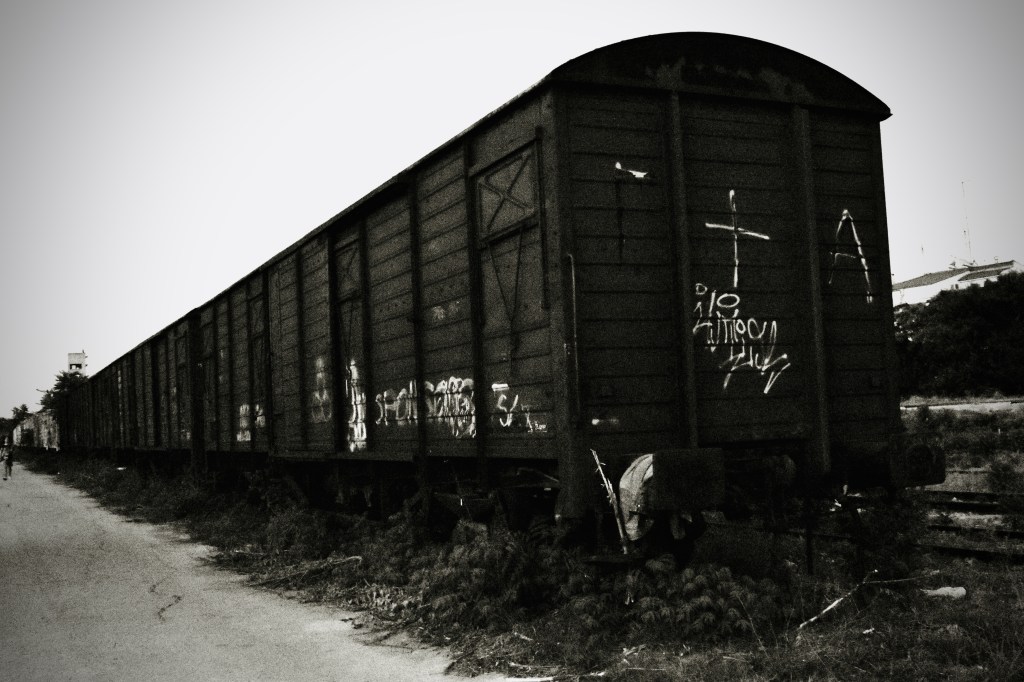
The abandonment of train stations in Greece invites reflection on the country’s socio-economic transformations and infrastructural challenges. Once bustling hubs of activity, many of these stations have ceased operations, creating a stark contrast between their vibrant past and desolate present. This has sparked discussions among local communities about the underlying causes. Key factors include the severe economic crisis of the 2010s, a shift towards road transport, urban migration, and insufficient investment in rail infrastructure. These issues contrast with neighbouring countries that have maintained functional rail systems through consistent investment and modernization.
Despite this trend, the Alexandroupolis railway station remains a significant hub in Northern Greece. Its establishment and continued development have played a crucial role in the region’s economic and social growth, ensuring vital connections with the rest of Greece and neighboring countries. This underscores the importance of sustained investment in rail infrastructure. Moreover, the abandoned stations, rich in history and architectural beauty, present unique opportunities for creative reuse. These spaces are being transformed into vibrant centers for artistic and cultural activities, engaging local communities and revitalizing the stations through performances, exhibitions, and other events. This creative repurposing highlights the potential for art to breathe new life into public spaces, fostering social cohesion and cultural expression.
The idea of uniting countries through UNESCO buildings typically refers to UNESCO’s efforts in preserving and promoting cultural and historical landmarks of significance. While UNESCO does not directly build or create train stations, the concept of connectivity and cultural exchange facilitated by transportation infrastructure, including train stations, aligns with UNESCO’s mission to foster international cooperation and understanding through heritage preservation. The slogan about uniting countries through train stations has resonated from the early days of railway development to the present. Initially, train stations served as pivotal nodes connecting regions within countries and facilitating international travel and trade. They symbolized progress, modernity, and the ability to overcome geographical barriers.
The abandoned train stations of Greece stand as silent witnesses to an era when railways were the primary mode of transportation. Today, these once-bustling hubs have been revitalized as vibrant centers for artistic and activist activities. Their rich history and architectural beauty inspire artists and activists who transform these spaces with graffiti, murals, and installations that convey powerful social and historical messages.
The stations come to life through theatrical performances, music concerts, and photography exhibitions, drawing interest from both the local community and visitors. These artistic endeavors highlight the importance of preserving and restoring these historical sites, thereby enhancing cultural life and fostering social cohesion in the region. As a result, the abandoned railway stations of Greece are being transformed from neglected relics into dynamic centers of creativity and community engagement, illustrating the profound impact of art in revitalizing and redefining public spaces.
The first railway lines passing through Alexandroupolis were constructed in the 1870s, linking the city to Constantinople and Thessaloniki. The completion of the Thessaloniki-Alexandroupoli line in 1896 transformed Alexandroupolis into a key transport and commercial hub. Today, perceptions of a country’s railway system encompass various elements, including the state of train stations, wagons, tracks, security, and surveillance. When problems arise, especially political ones, public discourse often centers on broader systemic issues rather than just the trains. Questions frequently arise about whether city officials, including mayors, have neglected citizen concerns due to political interests, with speculation about political motives affecting railway operations.
A compelling vision for revitalizing abandoned railway stations in Greek villages is to establish Integrated Multipurpose Centers for Culture, Tourism, and Education. These centers could host a diverse range of activities, providing enriching experiences for both locals and visitors. Transforming an abandoned railway station into such a multifunctional hub could yield substantial benefits for the local community, enhancing cultural engagement, boosting tourism, and providing educational opportunities. This initiative would not only rejuvenate these historical sites but also attract visitors from Greece and abroad, turning the railway stations into vibrant, bustling centers of activity once again.
It appears that discussions surrounding abandoned train stations in Greece often become entangled with political dynamics or frustrations. Every year, I find myself eagerly anticipating action to address these neglected stations, only to see little progress. While politics inevitably influences these matters, I believe it’s crucial to focus on what truly matters: revitalizing these stations for the benefit of our communities and preserving their historical significance. Despite the complexities involved, my priority remains practical solutions that can make a tangible difference in restoring these important landmarks.
On the contrary, can we really separate the issue of abandoned train stations across different countries from political influences? Citizens not only represent themselves but also their national interests, inherently intertwining political considerations into these discussions. While assessing the current political climate is complex, historical context suggests it’s been more stable. Yet, the predominant issue remains the excessive focus on politics. Since I first became aware of these issues, it’s been a constant. Time-traveling to an idealized past isn’t feasible, nor do I wish for it personally. Instead, I acknowledge the progress made, particularly the commendable efforts aimed at revitalizing abandoned train stations and advocating for their importance within our communities.
The pace of change in our world, much like the evolution of train travel itself, is swift and transformative. It seems that abandoned train stations have reached a critical juncture, and only time will reveal their path forward. Can we now discern what truly holds significance? Amidst these shifts, it is vital to clarify our priorities: preserving cultural legacies, revitalizing communal spaces, and promoting sustainable development. The future of abandoned train stations depends on our collective ability to appreciate their historical value and envision them as dynamic centers of activity and connection. By focusing on these core values, we can shape a future where these stations not only reclaim their place in our communities but also contribute meaningfully to our shared heritage and identity.
Tania Karaouli
Sources:
Abandoned or Degraded Areas in Historic Cities: The Importance of Multifunctional Reuse for Development through the Example of the Historic Commercial Triangle (Emporiko Trigono) of Athens.
Ai Weiwei: ‘An Artist Must Be An Activist’ (The Guardian).
Alex Greenberger, “‘Art Without Permission’: Tania Bruguera and Dread Scott Discuss Art and Activism at the Brooklyn Museum,” ArtNews, December 14, 2014.
Boris Groy (1941,East Berlin) . On Art Activism.
Elias S. Tzioras . On the 1st day God built the Railway, on the 2nd the Port: The example of Alexandroupolis.
Migrants in the Old Train Wagons Borderland in Thessaloniki: From Abandonment to Infrastructures of Commοning.
Roine, V. (n.d.). “ACTION, NOT CONSCIOUSNESS-RAISING”: GUERRILLA GIRLS AND PERFORMANCE AS THEIR ARTISTIC STRATEGY.
Stein, G. (2011). Guerrilla Girls and Guerrilla Girls Broad Band: -Inside Story. Art Journal, 70(2), pp.88–101.
Walter Benjamin- The word of art in the age of mechanical Reproduction.
 VOICES
Leave a comment