
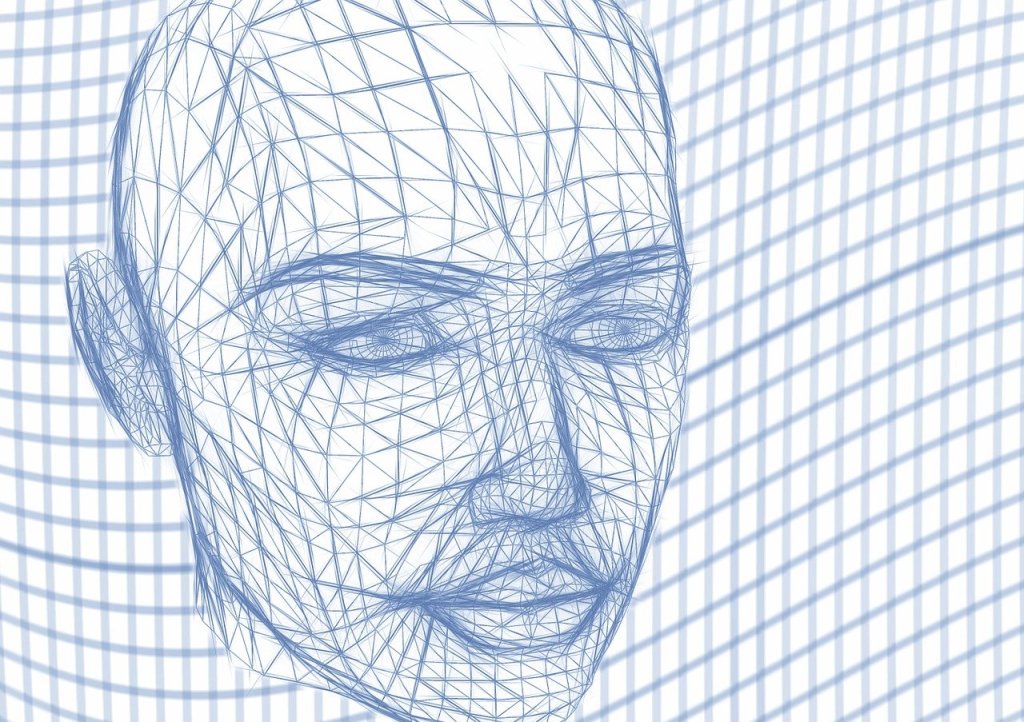
Imagine watching a high-budget movie, where animated characters are almost indistinguishable from real actors, yet something about their movements makes your skin crawl. Maybe you’ve seen those eerie human-shaped robots that try to mimic human behavior, but end up feeling more alien than familiar. Or a face with too much botox that seems normal, except it doesn’t move at all while the person is speaking. Even dolls or wax statues with their lifeless eyes can evoke this strange discomfort. Has this ever happened to you? Well, this is what we’re talking about today – a phenomenon called the uncanny valley, a place where the almost-human becomes strangely unsettling.
What is it all about?
The concept of the uncanny valley was introduced by Japanese roboticist, Masahiro Mori, in 1970. He noticed that when a robot or animated character becomes more human-like, we start to feel more positive and empathetic about it. Think about a small personal robot that you can keep on your desk, with a simple animated face and LEGO-like arms waving at you – you’ll probably find it very cute, right? However, when we make the robot more realistic and it starts looking almost exactly like a human (but with small, noticeable flaws), it makes us uncomfortable. This sudden drop in comfort is called the “uncanny valley”. Once the realism increases even more and something looks perfectly human (or, basically, IS a human), our comfort level goes back up.
Probably the most mentioned moment in uncanny valley’s history was the release of the movie “The Polar Express” in 2004. It was the moment when animation reached very realistic levels, and it turned out… we don’t necessarily like it. Lots of people associate watching this movie with a weirdly unsettling feeling.
Interestingly, even though this term was around for many years, recently describing things as “uncanny valley” has suddenly become popular in social media comments. Not to mention the trend of doing “uncanny valley makeup” on TikTok at the end of 2023 – you don’t want to look it up, trust me…
Why do we feel like this?
Despite the fact there’s been a lot of research done about uncanny valley – as you would expect for a phenomenon known for 50 years – we’re still not sure why it happens. One of the speculations says that it’s related to our evolution and avoiding diseases. The discomfort might be a defensive reaction from our brains, assuming that “something being off about this individual” might mean they are sick, so it’s better to avoid them.
Uncanny valley may also be triggered by cognitive conflicts it creates. For example, if we see a robot looking like a human, we expect it to act and move like a human, but we notice slightly unnatural, robotic movements instead. The mismatch between expectations and reality confuses our brain. Some researchers suggest that human-shaped robots can make us think they have feelings, which makes us uncomfortable because we consider this a unique characteristic of humans. There are many more potential causes of uncanny valley, but so far we can’t tell what the main reason is.
For me, the uncanny valley phenomenon is a fascinating example of how our brains struggle with quickly developing technology. Some people say that younger generations are already more “immune” to this feeling, as they are surrounded by technology from a very young age. I wonder what will come first – robots and animations that look so realistic that they don’t freak us out anymore, or being resilient to an uncanny valley because we’ll get so used to seeing human-like creatures that aren’t necessarily perfect?
Anna Wojdziak
Sources:
Zhang, J., Li, S., Zhang, J. Y., Du, F., Qi, Y., & Liu, X. (2020). A literature review of the research on the uncanny valley. In Cross-Cultural Design. User Experience of Products, Services, and Intelligent Environments: 12th International Conference. Springer International Publishing.
Wikipedia: Uncanny valley
 VOICES
Leave a comment