
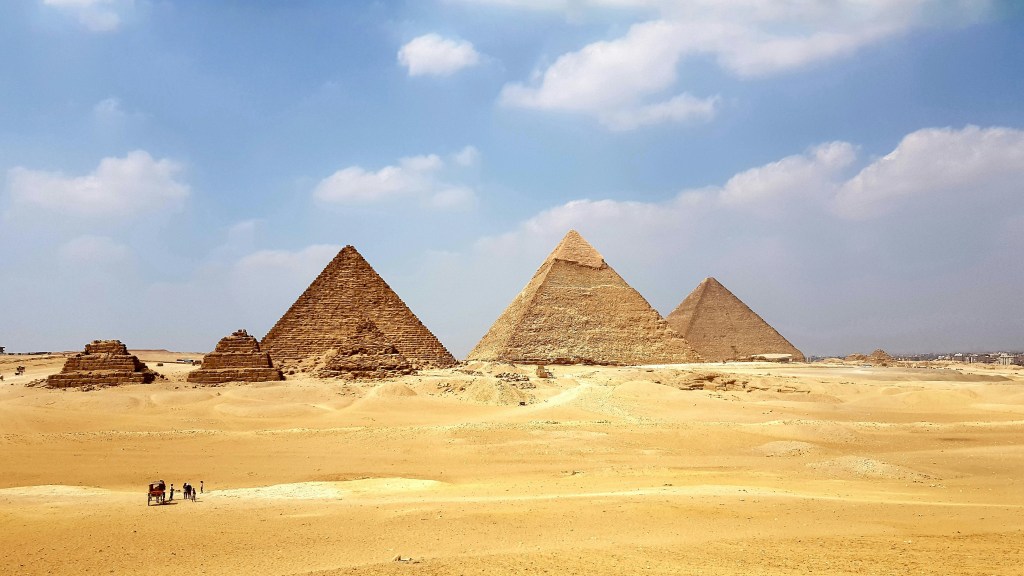
Egypt, a land steeped in ancient history and vibrant culture, has long fascinated the world. Nestled in the northeastern corner of Africa, it is a country that straddles the line between antiquity and modernity, offering a unique blend of timeless wonders and contemporary experiences. From the enigmatic pyramids to bustling cities, Egypt is a treasure trove of experiences waiting to be explored.
The Enigma of the Pyramids
No discussion of Egypt would be complete without mentioning its most iconic landmarks: the pyramids. The Great Pyramid of Giza, constructed around 2580–2560 BC for Pharaoh Khufu, stands as a testament to ancient engineering prowess. Originally built as a tomb, the pyramid has puzzled scholars and tourists alike with its precise alignment and the sheer scale of its construction. It was the tallest man-made structure in the world for over 3,800 years, a feat that remains awe-inspiring.
The Pyramid of Giza is part of a complex that includes the Sphinx, a colossal limestone statue with the body of a lion and the head of a Pharaoh, traditionally believed to represent Khufu’s likeness. The Sphinx, with its serene yet enigmatic expression, guards the pyramids and continues to captivate the imagination of those who behold it.
The Nile: Lifeblood of Egypt
Central to Egypt’s history and culture is the Nile River, the longest river in the world. Flowing from south to north, the Nile has been the lifeblood of Egypt since ancient times, providing water, transportation, and fertile soil to the otherwise arid landscape. Ancient Egyptians revered the Nile, and its annual inundation brought rich silt to the fields, ensuring agricultural abundance.
Today, the Nile remains vital, not only for agriculture but also for tourism. Cruises along the Nile offer a glimpse into Egypt’s past, passing by temples and tombs that date back thousands of years. These journeys allow travellers to experience the grandeur of the past while enjoying modern comforts.
Ancient Temples and Tombs
Egypt’s temples and tombs are treasures that provide insights into the spiritual and daily lives of its ancient inhabitants. The Karnak Temple complex, located in Luxor, is one of the largest religious complexes in the world. Dedicated primarily to the god Amun-Ra, Karnak’s massive columns, towering obelisks, and detailed hieroglyphics illustrate the architectural and artistic achievements of ancient Egypt.
Luxor, often called the world’s greatest open-air museum, also boasts the Valley of the Kings. This necropolis on the west bank of the Nile was the burial site of many Pharaohs, including Tutankhamun, whose nearly intact tomb was discovered in 1922 by Howard Carter. The vivid wall paintings and intricate tomb decorations offer a glimpse into the afterlife beliefs and rituals of ancient Egyptians.
The Rich Tapestry of Egyptian Culture
Modern Egypt is a vibrant blend of traditional and contemporary influences. Cairo, the bustling capital, is a city where the ancient and modern worlds collide. Its markets, such as the Khan el-Khalili bazaar, offer a sensory overload of sights, sounds, and smells, where visitors can shop for spices, textiles, and handcrafted goods.
Egyptian cuisine is another reflection of its rich cultural heritage. Dishes such as koshari, a hearty mix of rice, lentils, and pasta, and ful medames, a fava bean stew, are staples of Egyptian gastronomy. The use of fresh herbs, spices, and vegetables highlights the country’s diverse culinary influences.
The Impact of Islam and Coptic Christianity
Islam and Coptic Christianity have profoundly shaped Egyptian society. Egypt is predominantly Muslim, and Islamic traditions are deeply embedded in the country’s culture. The Islamic architecture of Cairo, including the Citadel of Saladin and the Al-Azhar Mosque, showcases the artistic and architectural achievements of the Islamic world.
Coptic Christianity, which dates back to the early centuries of Christianity, also plays a significant role in Egyptian life. The Coptic Church has a rich heritage, and its monasteries and churches, such as the Hanging Church in Cairo, offer a window into the early Christian period in Egypt.
Modern Challenges and Opportunities
While Egypt’s ancient heritage is a source of immense pride and global fascination, the country faces modern challenges. Economic issues, political instability, and environmental concerns are pressing problems that impact daily life and the tourism industry. Efforts to address these issues include initiatives to promote sustainable tourism and improve infrastructure.
Despite these challenges, Egypt remains a land of opportunity and potential. The government’s focus on developing new tourist destinations, such as the New Administrative Capital, aims to boost economic growth and provide modern amenities while preserving the country’s rich heritage.
Egypt is a land where ancient history and modernity intertwine in a captivating dance. Its pyramids, temples, and tombs stand as enduring symbols of human achievement, while its bustling cities and rich culture offer a glimpse into the vibrant life of a contemporary nation. Whether exploring the mysteries of the past or engaging with the dynamic present, Egypt continues to inspire wonder and curiosity in all who visit.
Ilysha Milton
Sources:
- “The Oxford History of Ancient Egypt,” Ian Shaw, Oxford University Press.
- “Egypt: A Short History,” Robert L. Tignor, Princeton University Press.
- “The Complete Pyramids: Solving the Ancient Mysteries,” Mark Lehner, Thames & Hudson.
- “Alexandria: City of the Western Mind,” Justin Pollard and Howard Reid, St. Martin’s Press.
- “The Nile: A Journey Downriver Through Egypt’s Past and Present,” Toby Wilkinson, W.W. Norton & Company.
- “Cairo: The City Victorious,” Max Rodenbeck, Alfred A. Knopf.
 VOICES
Leave a comment