
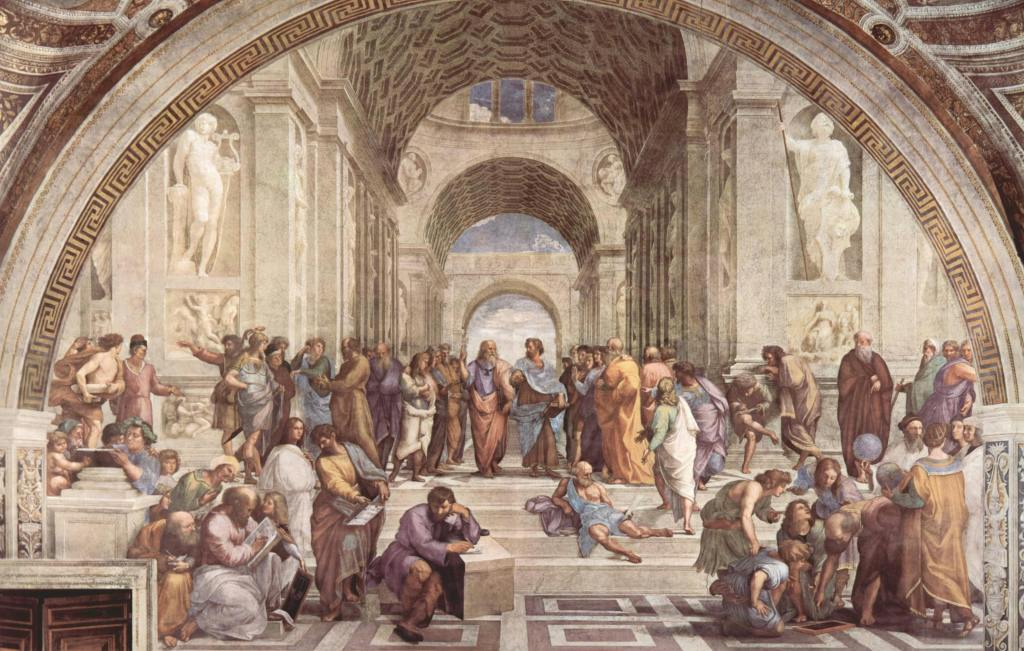
When we look at the history of the world from where we stand, one of the most important breaking processes is the period of Alexander the Great. What we are going to talk about is not Alexander’s conquests, but the story behind this great influence. Because Alexander the Great’s conquests were not only the result of the sword, but also as a result of ideas, and this is how the story was written. We will examine the big names behind the story and their relationship with Alexander.
First of all, it is necessary to mention Hellenism. In its simplest sense, Hellenism is the introduction of Ancient Greek culture and thought into the West with Eastern culture and religious thought. Hellenism is a dialectical concept that consists of the mixing and merging of currents coming from these opposite directions. One of its most important consequences for today’s world led to the establishment of the Roman Empire. Because after Alexander, this empire became the soldier of the Hellenistic period and reached its most magnificent spread in Roman times.
As a king, he set out to conquer the richest and most precious parts of the entire known world, and what led to the merging of the two cultures, was that Alexander was not a cruel, malevolent conqueror. Alexander’s rational character, where people respect him, and act like a true ruler comes from his mentor, Aristotle. Alexander the Great received education from Aristotle at the age of 13. This education, which lasts for 3 years, is an education consisting of the disciplines of politics, philosophy, ethics and strategy based on raising wise and correct people, which are one of the great virtues of the Hellenistic Period. Aristotle, who became Alexander’s mentor after 3 years, gave lessons to Alexander on how to bring prosperity, development and modernity to all the lands he conquered on nature walks and boat trips with Alexander.
Another influential figure in Alexander’s life is the Cynic philosopher Diogenes. Diogenes lived in Athens and Corinth and witnessed Alexander’s conquests. One of the stories for which Diogenes is famous is his encounter with Alexander. Legend has it that Alexander wanted to see Diogenes one day and told him, “Whatever you wish from me.” Diogenes, on the other hand, because he sat in the shadow of Alexander, replied, “Do not cast a shadow, I do not want any other bestowal.” While this event emphasized Diogenes’ philosophy of simplicity and naturalness, it also led Alexander to understand the necessity of being modest and humble.
Diogenes inspired Alexander in many ways with his lifestyle and philosophical teachings. This encounter shows that Alexander was more than a mere conqueror, he was a leader in search of humanity and wisdom. Alexander, inspired by Diogenes, revealed that behind his conquests was not only his desire to gain territory, but also a greater purpose for humanity.
In conclusion, the story behind Alexander the Great’s conquests and achievements was shaped not only by his military genius, but also by the values that thinkers such as Aristotle and Diogenes added to him. The lessons he learned from these great philosophers allowed Alexander to create a cultural unification and richness in the lands he conquered. This story behind Alexander’s success is an indication of how a leader who changed the course of history conquered the world not only with the sword, but also with wisdom and humanity.
Ömer Çakmak
 VOICES
Leave a comment