
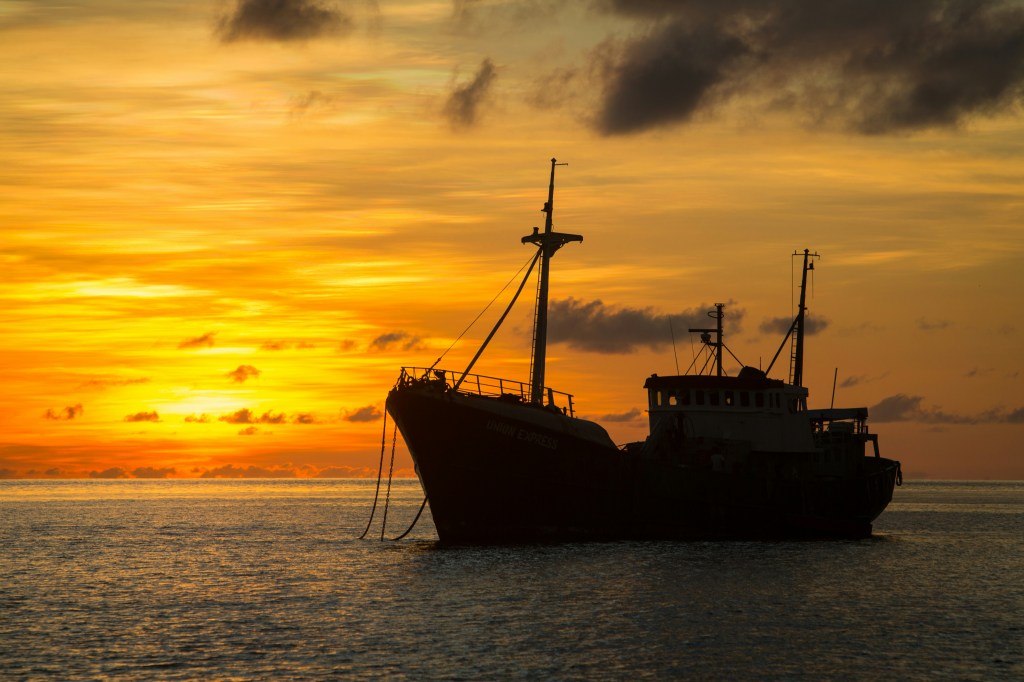
Guadeloupe (Gwadloup in Guadeloupean Creole, also known as Karukéra in Kali’na language) is a French-Caribbean archipelago, shaped like a butterfly, mostly populated by African and Indian descendants, with native influences. The country has been inhabited since 3000 BC by the natives (Arawaks, then Kali’na) and has been living on income from fishing or hunting before the arrival of the Europeans.
Christopher Columbus landed on the island of Marie Galante on 3rd of November 1493, and the next day on the “continental” Guadeloupe (the principal main island). He decided to call the archipelago “Guadalupe’’ because of a monastery in Spain where he went to pray before the colonization of the Americas. The Spaniards stayed in Guadeloupe until 1635.
The French already colonized the archipelago of St Kitts and Nevis, then they arrived in Guadeloupe to expand their territories. They enslaved natives to cultivate tobacco and sugar cane. The natives started to fight with the settlers, but because of diseases and forced labor, most of them died, and others escaped to Dominica. At the same time, the French already started to bring West and Central African people to the Americas. They were Wolof, Pulaar, Kongo, Igbo, Yoruba, Bamileke. From 1635 to 1664 they deported more than 6300 Africans. The British and the French began a fight about the control of Guadeloupe, and between 1666 to 1763 the country was bombed. For the country to be rebuilt, almost 78000 Africans have been deported by French settlers.
At the end of the 18th century, the French Revolution was in full swing. Then, the deported Africans began rioting. From 1792 to 1794, the Africans guillotined all the slave owners, and the governor of Guadeloupe and Haiti declared the abolition of the slavery. But Napoleon took power in France. He was married to a Béké (name of the white slave owners) and she asked Napoleon to re-enslave the Africans. So, the Haitian and the Guadeloupean started a revolution.
In Haiti, they reached independence, but France imposed an embargo and a huge debt (almost 100B$, 25B initially, 75B with the taxes). In Guadeloupe, there were not enough revolutionaries, and Delgres, the chief of the revolution, with other people (Solitude, Ignace…) decided to commit suicide in a powder keg. It was at this moment the Guadeloupean motto was created: “Live free or die”.
The slavery continued until 1848. After another riot, the slave owners stopped the “traditional” slavery to deport Asian people – especially Annamese, Japanese, Cantonese, Tamils, and Bengali people – to forced work with a contract for 3 to 7 years. Most of them couldn’t go back to their countries. They were officially almost 50,000; now they are part of the Guadeloupean population. They obtained French nationality in 1925, thanks to Henry Sidambarom.
We are at the beginning of the 20th century, and the last population to immigrate to Guadeloupe was the Levantine people – Lebanese, Syrians, Jordanians, and Palestinians who fled the Ottoman Empire as they were Christians.
Finally, the Guadeloupean people are a mix of 4 continents: Africa, America, Asia and Europe. We can see all the influences everywhere; the names of the animals, vegetables, fruits, and plants are from the natives. They also gave us some dishes, like the kasav, cassava flour or hot chocolate. From the African influence, we have music (Gwoka), kyenbwa (syncretism with Christianity and animism), Mayolè (martial art), accras (cod fritters), kalalou (dish with yam leaves or cassava leaves and rice). From the Indian influence, we have kolonmbo (curry goat), dal, loti a pouli (potato roti), vadè (lentils fritters), pannalon (sweet fritters), nadrom (musical theater), holi, deepavali, samblani, mayenmen (hindu celebrations), mango, spices, madras fabric and Hinduism. The Europeans left Christianity, carnival, marzuka (Mazurek), Quadrille, boudin, chodo (eggnog), French language and more.
When we mix all of this, it gives us Guadeloupean-Creole culture. My culture. Made by us, for everybody. And the most popular thing we gave to the world is Zouk. Maybe we can talk about it another day…
Terry Ruart
Sources:
La Guadeloupe en bref – https://tinyurl.com/ydvra58x
Nadrom – https://tinyurl.com/2p9d7tht
Les levantins de la caraibe – https://tinyurl.com/2czudkrv
Région Guadeloupe (in english) https://tinyurl.com/36entahk
Natives of guadeloupe (in english)
 VOICES
Leave a comment