
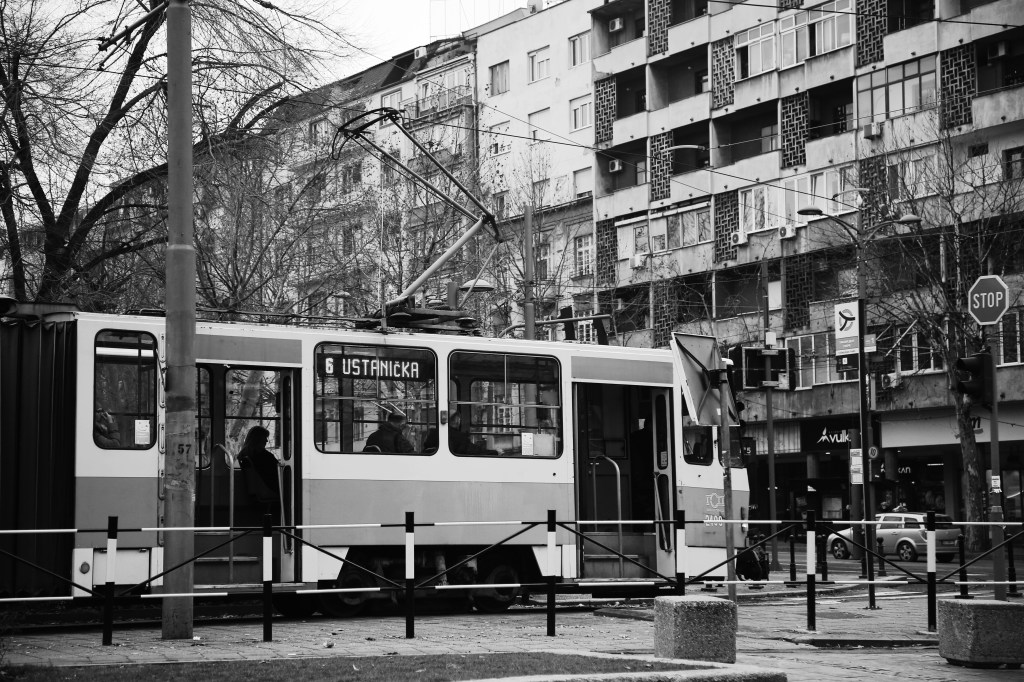
I’ve never liked the smell of spring. Maybe it’s because it reminds me of all the springs before. A sudden realization of how much time has passed, once again. A bittersweet sadness that hits me every year. This feeling has always confused me, because what can be better than warm rays of the sun on your face and days getting longer? It all comes together – the warmth, the memories, the passing time – into the strange mix we call nostalgia.
Cambridge Dictionary definition of nostalgia is a feeling of pleasure and also slight sadness when you think about things that happened in the past. Well, if you asked me, the definition would be my childhood summer house, Nirvana songs I used to listen to in middle school and collecting stickers. But nostalgia isn’t just mine to feel. If you let my dad talk freely about any topic he wants, I can assure you, he’ll sooner or later start talking about the first computers he used when he was still in high school, or the Eastern European buildings out of the huge gray panels that he remembers from his youth.
The thing is, I’m not sure if I would describe it as pleasure. In fact, at first nostalgia was considered a psychiatric disorder related to homesickness, with symptoms such as anxiety, irregular heartbeat or insomnia. It’s not recognized as a disease anymore, and happiness accompanies sadness in today’s definition of the phenomenon. However you experience it, have you ever wondered why nostalgia even exists…?
One of the reasons is a psychological bias called rosy retrospection, causing us to remember the past more positively than it actually was. Think of your last holidays. It’s very likely that you think ‘oh man, I wish I was there again’, but the frustration of waiting two hours for a lost bus or your travel companion being late doesn’t feel relevant anymore. What can I say, we tend to romanticize the past a lot. The reason behind it is quite simple – our brains get rid of some of our memories to work faster and more efficiently. A lot of people imagine memory as a film of reality saved in our heads, but it’s not how it actually works. It might sound surprising, but not only forgetting things is completely normal – having so-called ‘false memories’ is too. Your memory isn’t complete when the event comes to an end. It can still get influenced by something you see or hear after it, as well as your own beliefs and previous experience. If you’re around people always talking about the ‘good old days’ while your own memories get blurred with time, you might start remembering them as much better than they actually were in the moment.
You might ask, why is our selective memory so positive when it comes to nostalgia, though? I’d say another special ingredient of nostalgia is a mix of the fear of change and comfort of the known. Better the devil you know than the devil you don’t, right? We often cling to the past even though it doesn’t serve us anymore, or we can’t go back there – like our childhood or school days. It seems easier because it’s… already done.
Well, it explains the mechanism of nostalgia quite well, but the question remains: what is the purpose of all of this? Turns out there are several possible reasons. In a way, nostalgia connects our past selves with the current self. Reflecting on important events in our lives unites the sense of who we are and creates personal continuity. Some researchers say it helps in times of anxiety, loneliness, or transition in life. Nostalgia reassures us that we made things work in the past, so we can do it now too. It also gives us a better idea of who we want to become in the future.
Once again I’m thinking about the lunches at my grandma’s house, about the walks in the forest that I knew through and through, about rushing home after school to watch another episode of Death Note. To be honest, remembering all these things makes me deeply sad. And scared, scared of how fast the time flies. I’m turning 23 in less than a month, but I swear I was 16 last year. I can feel I’m carrying all the past versions of myself, not sure how to take care of them. I hope I’ll make peace with them one day, even though I think my heart will always be a little bit broken.
Anna Wojdziak
Sources:
Cambridge Dictionary – Nostalgia https://dictionary.cambridge.org/dictionary/english/nostalgia
Loftus, E. F. (1975). Reconstructing memory: The incredible eyewitness. Jurimetrics Journal, 15(3), 188-193.
Medical News Today – Why do we need nostalgia?https://www.medicalnewstoday.com/articles/why-do-we-need-nostalgia
Wikipedia – Rosy retrospection https://en.wikipedia.org/wiki/Rosy_retrospection
 VOICES
Leave a comment