
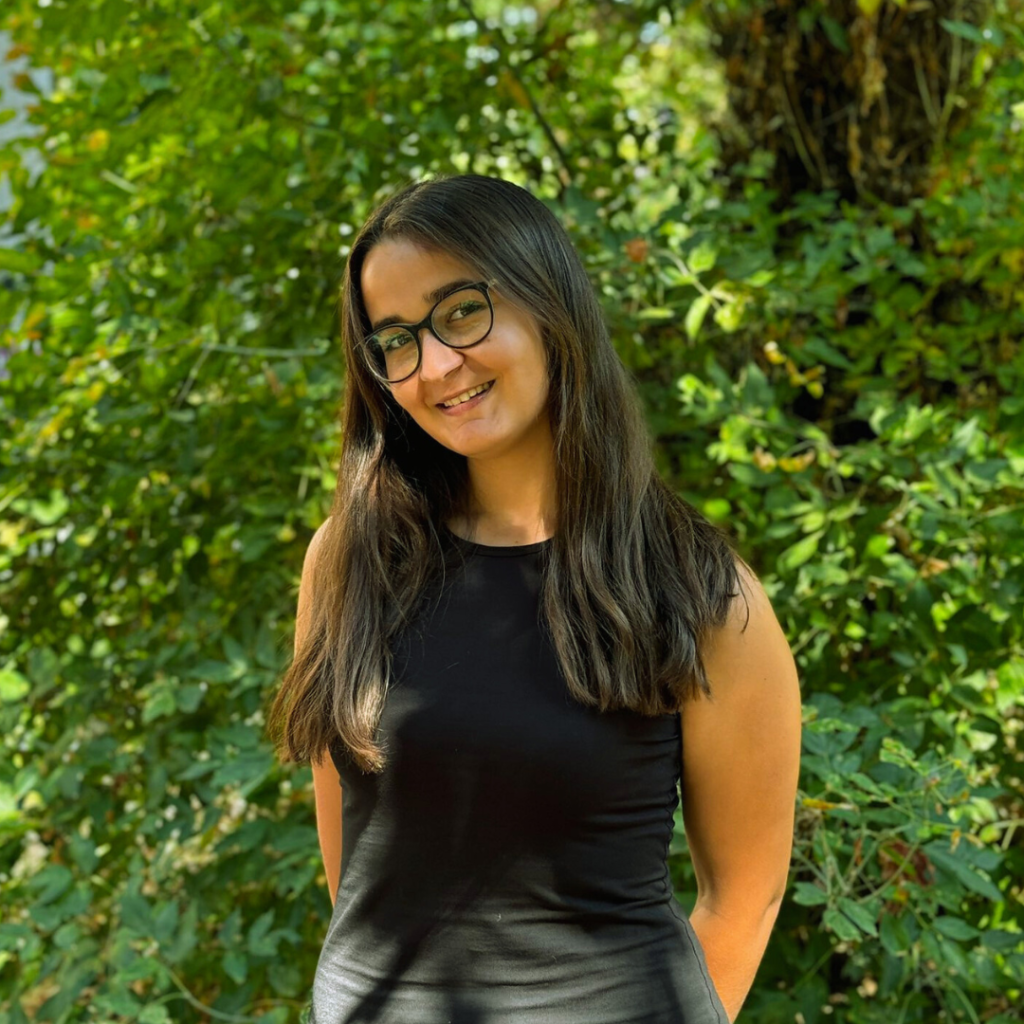
Interview with Angela Zimbakova the Youth Erasmus Coordinator and Assistant of GoGreen
This month I visited the GoGreen office in Skopje and talked with their Youth Erasmus coordinator and assistant Angela to learn more about their NGO
Can you briefly introduce GoGreen and your main mission?
GoGreen is a non-profit organisation. Its mission is to protect the environment and raise awareness about climate change and related topics. “But it’s more than just raising awareness, it’s working together”. The NGO additionally works for raising awareness for health. “Because that means we need first to protect ourselves and then the environment. So we can all live in a free space, in a safe space, a space that everybody needs”.
Climate change and environmental pollution is affecting the whole world. What are some of the biggest challenges Macedonia faces?
Angela defines air pollution as the biggest challenge in Macedonia. In the summer, it is not that present, however, according to her, that is the time where action needs to be taken and the pollution in the winter is a consequence of the inaction during the rest of the year. In general, inaction is a big challenge for them also when it comes to water pollution or garbage. I think our non-consciousness is the root of our inactivity to solve the climate change problems”.
What role does GoGreen play in fighting these challenges?
GoGreen has a huge amount of activities and projects about various topics related to their mission. An important part of their work is to include the local community in their projects. “We want to connect the volunteers, the youth, the older ones, the population in Macedonia to be part of our (projects and mission)“. At the moment, for example, they are working on food waste projects as well as on a project about Lake Prespa, which is mostly about raising awareness of environmental protection. Raising awareness is a fundamental part of their work. “Focusing on the positive sides of Macedonia, that we need to keep[…] as a treasure for our country”. Additionally, they support sustainable transport, for example, adapting more bike roads in Skopje. Angela’s main field is connecting mental health and environmental health “[…]First, we need to be conscious about ourselves. Our mental well-being, our well-being to protect ourselves. So we can see that we need to protect the environment. […]Environmental consciousness is nothing without self-consciousness, and the other way around. Self-consciousness is nothing without the environment”. The environment directly affects our well-being e.g. through air quality and the nature around us.
Nature and climate protection are deeply connected to social inclusion, equality and justice, as well as community. Can you explain in which way that is, why it’s important and where you see it in your work?
“Justice is something that we must implement as a society, as individuals […] First our own justice and then the countries and the world justice”. To implement it, Angela explains that first you have to have moral priorities. She gave an example of river pollution. If it‘s polluted now by some people, it‘s gonna also have a negative effect on the next generation in regards to physical and mental health.
When it comes to inclusion, it‘s part of a lot of projects of GoGreen. On the one hand, to include everybody in their projects, but also to work for everybody, having the same resources. For example, they are trying to include people outside from city areas, on the one hand, to include them in their work, and on the other hand, to work for their villages and e.g. save resources there.
Dealing with climate change can be very frustrating, scary and depressing. How can people,especially young, deal with those feelings?
Angela is a psychology student. She explained to me that there is a terminology often used nowadays that is called climate anxiety. “Fear is an emotion that protects us in some kind of way […] I need to run from something and I need to take action”. In this case, action is the way to deal with those emotions and maybe slightly shorten the problem. Those feelings are also the fuel to climate activism. “First you need to accept them [the feelings], and let‘s find a solution”. “You take action. That‘s how you become the solution”. This sounds very easy in theory, but can be very difficult to actually do and implement.
You also work on climate mitigation, especially for vulnerable groups. What are some projects regarding this and how can mitigation work?
Angela described the mitigation work as risk management in the meaning of reducing the risks of climate change. “Again it all comes to action and our projects and our mission, aside from the project, is to take action for the things that we want to find a solution (for) and to solve them”. This is an everyday process in which it can be very easy to lose yourself in it e.g. in the administration. It is important to keep in mind your vision to not let certain tasks like administration stop you.
What do you say is the biggest challenge for you in your work for your mission?
“Administration definitely, and when you have to be on the computer for like five hours straight”. However, the other part of the work is very rewarding and fun. “When you have an event, when you meet people […] when you see how people feel what you work and what you do it‘s an accomplishment for me. […] Last year when we did an Erasmus youth exchange, it was all about the areas of health […], and it was a precious project of mine. We had the exchange for ten days and the kids were crying in the end, because (they didn’t want to leave) […] It was fantastic and that was an accomplishment. So that‘s how you love your job. I mean nothing is perfect and it shouldn’t be perfect. Those kinds of things are the motivation”.
Why did you decide to do a lot of things especially with young people?
GoGreen started as a youth organisation. “You always put young people and it‘s how you build the generations after you”.
Why did you personally decide to work for GoGreen? And what does the vision of the future of GoGreen mean personally to you?
“Actually, that‘s a funny story”, said Angela. After an invitation from her high school teacher, she applied for a youth exchange of GoGreen in Croatia and got accepted. “And the first youth exchange motivated me so much and gave me so much love, acceptance, freedom”. After that, she continued volunteering in GoGreen e.g. at events. “I loved hanging out, the work, the logistical things, the organisations”. Then they asked her to join their team. “And I was like: okay, yeah. And now I am part of the team and it‘s fantastic to be”. There are also things that she personally grew in and it is still a journey of learning and growing. “It‘s not something you get, like, from today to tomorrow. It‘s something that you work everyday with”.
How can people get involved with your goals? Either with GoGreen or on their own?
GoGreen is still working on the way to communicate to new volunteers or interested people, because they are a new team. However, at the moment there is a group chat on Viber and everybody who is interested can join the group. Right now it is not that active but that‘s gonna change in 3-4 months, after working on some things inside GoGreen. Also, you can follow them on Instagram @gogreen.mk. You can also take action on your own and find your way of being active in those topics. “If you don‘t try you‘ll never know. I call it not trying out, but doing an experiment with yourself. Do it not only for the environment but for yourself.[…]. And if you don‘t do it, who will?”.
Maike Seuffert
 VOICES
Leave a comment