
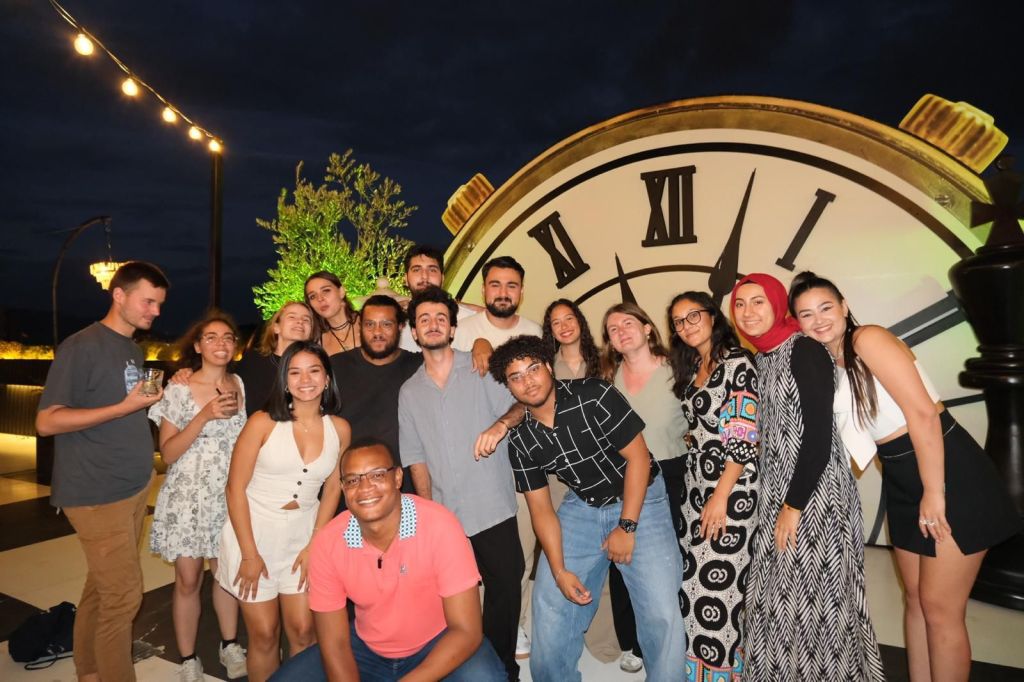
It’s well known that travelling from one country to another isn’t always easy; depending on the agreement between the two countries or current qualifications, some countries may require passports and visas from others. However, while this situation may create physical barriers, it demonstrates that emotional bonds cannot be affected by these barriers.
Empathy and friendship do not require passports or visas.
I’m involved in a volunteering project, which is one of the easiest ways to make sense of this, and I write this as a global volunteer. The globalization of hearts reveals the sense of responsibility people feel not only to their communities but also to people around the world. Saying “Hello” in a new language allows a person to step outside their comfort zone and culture and connect with someone perhaps thousands of kilometers away. Furthermore, wherever they go in the world, people carry only their good intentions and open hearts with them—or at least that’s how it should be. When they make eye contact with a child, hold the hand of an elderly person, or respond to a natural disaster, it’s not their identity documents that speak, but their humanity. Because empathy is innate and cannot be contained by identity documents. In this context, empathy is not a privilege; it’s a responsibility, even a duty. We seek refuge in empathy to avoid remaining silent in the face of global crises. It’s easy to ignore the world, but the people have to choose to share that responsibility, and this choice brings us together; it brings distant things closer.
As I mentioned, volunteering projects play a key role in sharing this kindness. Experiencing and learning about different cultures is a powerful tool for both personal growth and strengthening your connections with people from diverse backgrounds. For example, I’d like to tell you a little about my personal development during my time here. Thanks to my volunteering project, I’ve had the opportunity to reach people from countries nearly 10,000 km away. Isn’t that cool? Meeting people from such distant places isn’t easy in real life; there are so many cultures that may not even be aware of each other. This way, we can see that the friendship I’m talking about isn’t just local; it can form all over the world, and we can find a place in their hearts.
What connects us to each other?
In my opinion, there’s no clear answer to this question, because connecting with people doesn’t have to be tied to any particular situation. However, there are various ways to strengthen it. During this heart-to-heart learning process, trying the food of different cultures and sometimes a song melody you hear from different cultures, can significantly enhance your ability to empathize with them. Sharing the joys and pains of another society not only helps you discover other people but also yourself, thus replacing prejudices with curiosity and distance with closeness. Because I have the experience to share these thoughts and easily connect with people who are geographically difficult to reach through empathy and friendship, I feel like I’ve broken through boundaries!
Efe Özyalçın
 VOICES
Leave a comment