
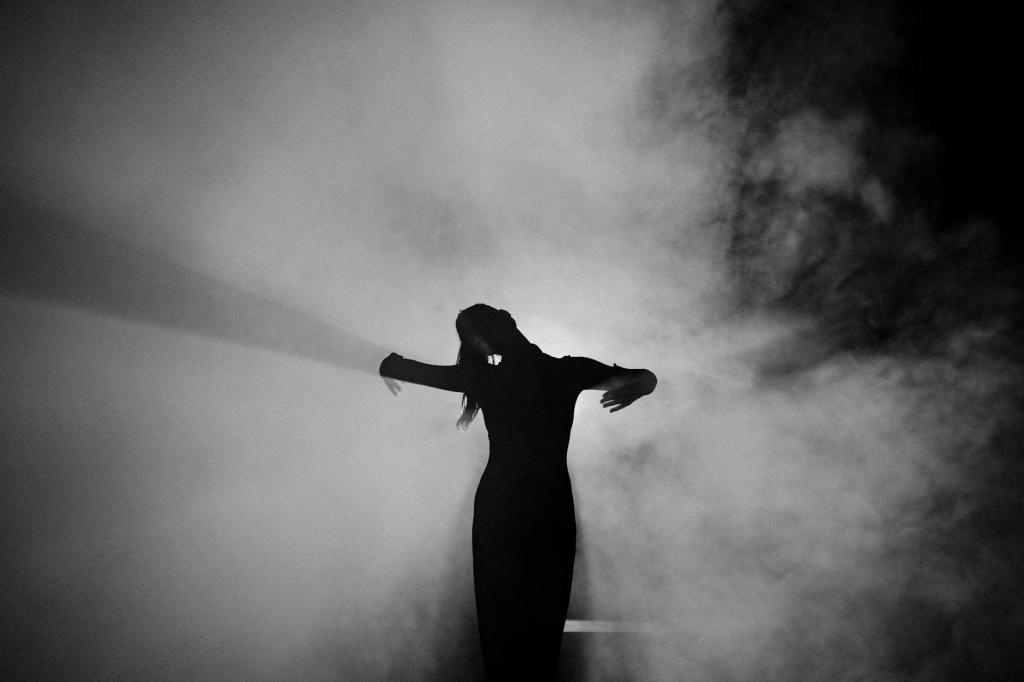
Throughout history, women were often silenced. Yet the stage gave them a way to speak, to protest, and to resist.
The theatre stage is more than entertainment. It shows hidden problems, social pressures, and unspoken dreams. Particularly for women, it became a place of rebellion. When they could not join public debates, they found their voices in plays. Sometimes through humor, sometimes through sadness, and sometimes with one strong act that touched whole communities.
This article looks at four famous women on stage: Lysistrata, Adela, Nora, and Emel. They are not real people, but their stories tell real truths. They represent women’s search for freedom in Ancient Greece, 20th-century Spain, and 19th-century Norway. Emel, however, was played by Afife Jale, the first Muslim Turkish actress. Her acting turned fiction into real resistance. Their stories also connect to women thinkers like Hipparchia, Federica Montseny, and Mary Wollstonecraft. All remind us that while times change, the fight continues. It reveals the essence of living within the struggle for freedom against oppression.
Lysistrata: Humor as protest
In 411 BC, Aristophanes wrote “Lysistrata”. In the play, women refuse to be intimate with their husbands until the men end the war. It looks like comedy, but its message is serious: even without political rights, women together could influence history.
Lysistrata’s brave declarations continue to resonate:
“Women! The moment has arrived to put an end to men’s endless wars. We will withhold our beds and our love until they lay down their arms. If they seek conflict, let them battle against their own desires! We possess the true power, and we will prevail!”
Lysistrata shows that turning private life into political power is a form of resistance. This idea also links to Hipparchia, a woman philosopher who rejected traditional roles and lived freely. Both women show that saying “no” to male control is a political act.
Similarly, the philosopher Hipparchia of Maroneia (c. 350–280 BC) embodied defiance in her own existence. Rejecting the societal expectation of marriage, she lived as a Cynic philosopher and boldly declared: “You cannot compel me to conform to your definition of womanhood.” Through distinct means, both Lysistrata and Hipparchia illustrate that a woman’s refusal to accept male-imposed roles constitutes a form of political resistance.
Adela: Tragedy at home
In Federico García Lorca’s “The House of Bernarda Alba” (1936), a mother forces her daughters into eight years of mourning. Adela refuses: she wants love, freedom, and life. She cries out against her prison-like home. But her fight ends in tragedy, as she dies for her rebellion.
“I cannot accept this! I cannot fade away within these walls! This house is not my grave! If a woman loves, she must truly love. If a woman lives, she must genuinely live! I will strive for my freedom, even if it means opposing my own mother!”
Lorca shows that oppression often comes not only from men but also from women who accept the system. Adela’s words echo Federica Montseny, Spain’s first female minister, who said: “Women who want freedom will be free.” Adela’s story proves the high cost of this desire.
Nora: A door closed, a new life opened
Henrik Ibsen’s “A Doll’s House” (1879) shocked audiences. At the end, Nora leaves her husband and children to find her own identity. At first, she acts like the perfect wife, but later she sees the truth: she was treated like a doll, first by her father, then by her husband.
When Nora slams the door, it is more than theatre. It is a call for independence. It started debates about marriage and women’s rights across Europe. Nora reflects Mary Wollstonecraft’s idea: “Women do not need power over men, only over themselves.”
Emel and Afife Jale: fiction meets reality
In early 20th-century Istanbul, Hüseyin Suat’s play “Yamalar” told the story of Emel, a woman trapped by family and society. But the character gained real power through Afife Jale, the first Muslim Turkish actress. At that time, women were not allowed on stage, yet Afife performed. By acting as Emel, she turned fiction into real protest. She opened the way for future actresses in Türkiye.
Despite being distanced by time and culture, all heroines embody a shared truth: the struggle for women’s freedom is ongoing, even as its expressions differ. For Lysistrata, liberation meant united opposition to warfare; for Adela, it signified breaking away from suffocating familial expectations; for Nora, it involved self-realization and independence; and for Emel, it was about unveiling the societal “stitches” that restrained women.
Their narratives also illustrate the variety of results: comedy, tragedy, liberation, and experiential resistance. Some acts of rebellion blossom while others hesitate, yet each leaves a mark. Every defiant gesture contributes to a broader historical range of women’s struggles.
And always, there is a woman poised to challenge the status quo.
As Virginia Woolf (1882–1941) observed: “The beginning is always today.” As long as these voices are heard, women will never be silenced. They come from different places and different times, yet share the same cycle of life, ready to break this chain. Because there is eternally a Lysistrata, an Adela, a Nora, an Emel. They will start their story from today and this ‘today’ will echo across countless presents. These four women, like the four seasons of a year, followed one another and revealed the greatest illusion of this world even in this short article.
Ilgın Sabuncu
Sources:
- Aristophanes. Lysistrata. 411 BC.
- García Lorca, Federico. The House of Bernarda Alba. 1936.
- Ibsen, Henrik. A Doll’s House. 1879.
- Hipparchia of Maroneia. Fragments cited in Diogenes Laertius, Lives of Eminent Philosophers. c. 3rd century.
- Montseny, Federica. La Mujer, Problema del Hombre. 1932.
- Wollstonecraft, Mary. A Vindication of the Rights of Woman. 1792.
- Woolf, Virginia. A Room of One’s Own. 1929.
 VOICES
Leave a comment