
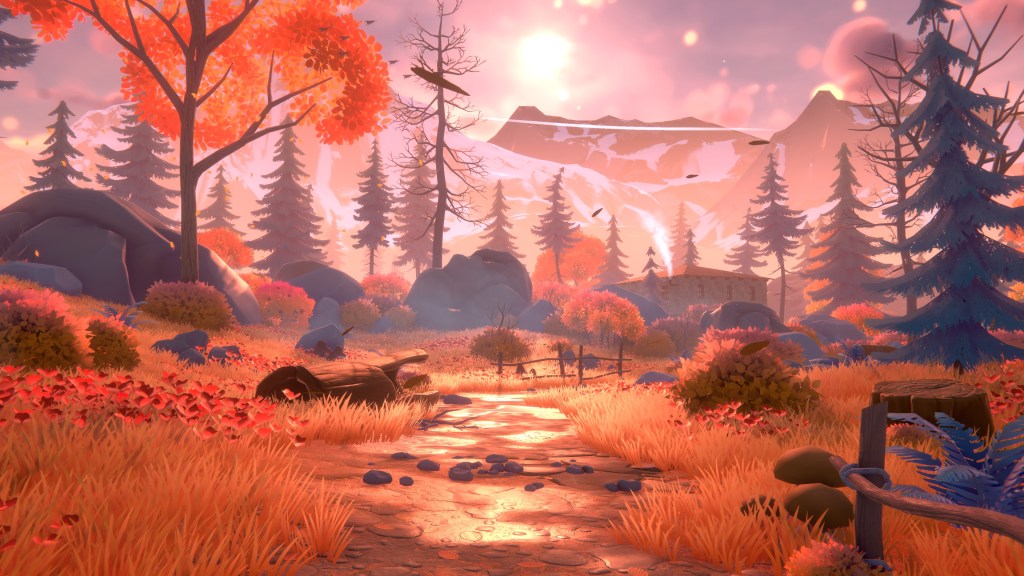
In a gaming world obsessed with speedruns, kill counts, and endless notifications, Workbench Entertainment is choosing to press pause. The small independent studio from Skopje makes games for players who want to wander instead of rush, listen instead of react, and feel instead of win. Their work is somewhere between memory and place, turning quiet moments into playable stories, and game Olga is where that philosophy comes alive.
“Workbench Entertainment was founded as a natural extension of our creative work across design, storytelling and interactive media, with Olga becoming the project through which we defined our identity most clearly”, the team at Workbench explains.
They don’t have rigid job titles or separated departments. “We are a small team… we lean into each person’s strengths and adapt to the evolving stages of development.” This flexibility shapes not only how the studio functions, but also how its games are made.
Their philosophy is especially evident in how creative and technical work intersect. For the team “narrative, visual atmosphere, sound design and programming all influence each other”, particularly in a game like Olga, where meaning emerges through subtle details rather than complex mechanics.
Learning to collaborate at that level didn’t happen overnight. In the early days, the team experienced some challenges. “Communicating abstract emotions and translating them into systems, environments and interactions took time. Over time, this process became one of our strengths and today collaboration is central to how we work”, the team notes.
At the same time, the realities of being a young independent studio are impossible to ignore. “The biggest challenges are resources, time and visibility”, the team explains. Developing games in Macedonia means working with limited support, which forces the team to be deliberate with every creative and technical decision they make.
What keeps the team motivated is not commercial success or technical spectacle, but emotional connection. “What fulfils us most is creating games that allow players to slow down and observe.” The studio is drawn to quiet, intimate moments, things often overlooked both in games and in everyday life. The idea for Olga itself didn’t begin with a plot or a single defining event. Instead, “It started from a shared emotional space, mainly childhood memories of rural life, time spent with grandparents and places where time seems to stand still.” From there, the team focused on small sensory experiences: the sound of footsteps on dirt paths, the texture of old wooden houses, and the silence broken only by nature.
Those memories eventually found a home in Belovodica, a real village in Macedonia where Olga is set. While the game doesn’t aim to recreate the village exactly, the team says the location gives the experience authenticity and emotional weight. “The village becomes a character”, they explain, shaped by its architecture, silence, and the feeling that time has slowed down.
Setting the game in a real place also carries a deeper intention. Olga allows younger players to connect with ideas of place, memory, and cultural roots without explicitly explaining them. Instead, the game lets those meanings emerge naturally through exploration. “We intentionally chose a slow approach.” “Olga isn’t about action or urgency, it’s about presence.” The tension in the game doesn’t come from combat, but from atmosphere: light, sound, distance, and subtle interactions. “Slowness is a design decision”, they add. For the team, games don’t always need to deliver constant dopamine hits. Sometimes, enjoyment comes from simply walking through a quiet forest or watching the sun dip below the horizon. “We have to stop treating our downtime like another race to the next checkpoint”, the team reflects.
This belief also shapes how Workbench views games as a storytelling medium. Compared to film or literature, games allow players to participate in meaning-making. “Games create meaning through interaction, movement, waiting, and observation”, they explain. In Olga, even the smallest actions can carry emotional weight.
When asked what advice the Workbench team would give to young people interested in game development, they keep it grounded. “Start small, learn to finish projects, and don’t rush to imitate trends.” They also encourage aspiring developers to look beyond games for inspiration: toward art, literature, film, and real life.
Asked how they see the company in the future, the team hopes the studio will still be creating emotional, story-driven games. Stories that feel personal but resonate universally. “We want to make games that stay with players long after they finish them.”
In an industry that constantly demands more speed and more noise, Workbench Entertainment is quietly building something different: games that ask players to slow down, listen, and remember.
Lea Schwegmann & Jolanta Ciopcinska
Sources:
Workbench Entertainment: https://workbench-ent.com/
Steam: https://store.steampowered.com/app/2836740/Olga__Episode_1/
 VOICES
Leave a comment