
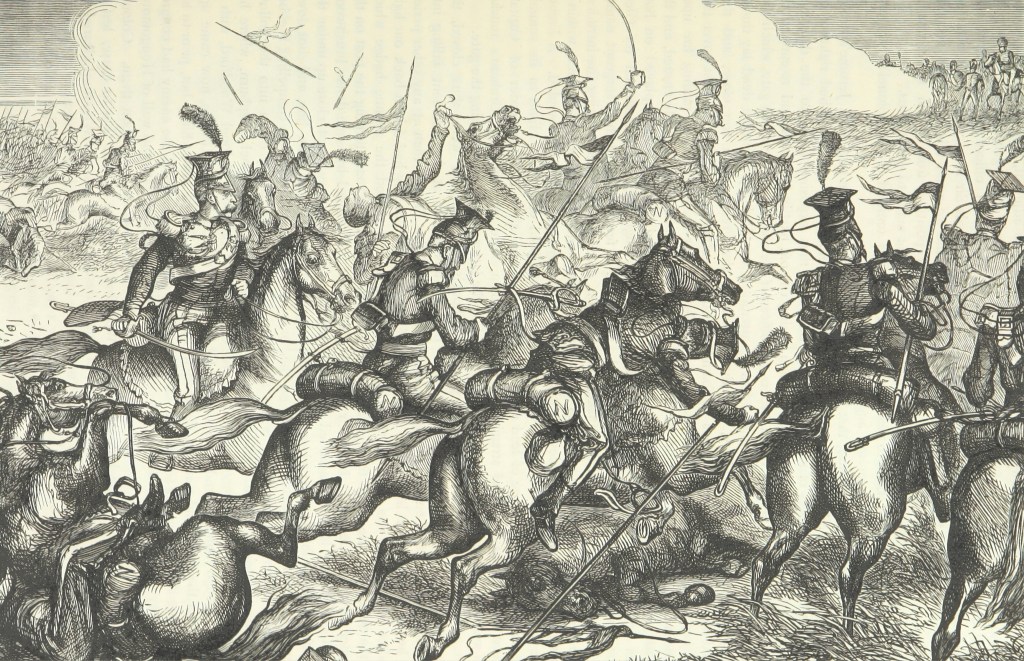
On September 20, 1792, a wheat field near a remote village in Champagne, France, witnessed not a small random battle, but the pivot in modern European history. The Battle of Valmy, often described as more of a prolonged artillery duel than a bloody melee, was a moment of profound psychological and political shockwave. In essence, it was the day a ragged, revolutionary patriotic French army stood its ground, and in doing so, ensured the survival of the French Revolution.
By the summer of 1792, the Revolution was in peril. Following the dramatic overthrow of the monarchy in August, the new French Republic found itself encircled. From the east, a huge coalition of professional armies, primarily Prussian under the veteran Duke of Brunswick and accompanied by Austrian allies and French royalist émigrés, advanced into France. Their stated aim, in the Brunswick Manifesto, was to restore King Louis XVI to his full powers, threatening Paris with “exemplary vengeance” if the royal family was harmed. Morale in the French ranks was low, supplies were short, and the revolutionary government itself was riven by factionalism. Many, including the invaders, expected a swift collapse.
The invading force, around 35,000 soldiers, represented the ancien régime: disciplined, professional, led by aristocratic officers, and steeped in the linear tactics of Frederick the Great. They were confident of an easy victory over what they saw as a disorganised rabble.
Facing them were two French armies, under Generals Charles Dumouriez and François Kellermann, who had managed to combine forces, totalling around 50,000 men. This force was a chaotic embodiment of the Revolution itself. It mixed remaining units of the old royal line army with fresh battalions of National Guardsmen and untested volunteers—the famous fédérés. Their officers were often elected; their loyalty was to the Nation, not a king. Crucially, their artillery arm, under the reformed system of Jean-Baptiste de Gribeauval, was excellent, manned by highly trained professionals who had remained largely loyal to the new regime.
Brunswick’s Prussians manoeuvred to cut off the French from Paris. Kellermann, taking a defensive position on the low hills around the Valmy windmill, drew his lines to block them. As the morning fog lifted, the Prussians advanced in perfect, intimidating order. What happened next was anticlimactic in terms of carnage but electric in tension.
Instead of ordering a bayonet charge, Kellermann held his ground. He raised his hat on his sword and sparked a scream that would echo through history: “Vive la Nation!” The shout was taken up by the entire French line, a powerful declaration of their new political identity. The battle then devolved into a massive, long-range artillery duel. The French gunners, well-positioned on the slopes, held their own against the Prussian batteries. The famed Prussian infantry, waiting for the French lines to break under the bombardment, began a hesitant advance, but were halted by the sustained and effective French cannon fire and the impassable mud churned up by the shells.
For hours, the two armies exchanged artillery fire with relatively few casualties. The critical moment came when Brunswick, after a private council with his officers, called off the infantry assault. The professional soldier had assessed the terrain, the enemy’s resolve, and the lengthening supply lines behind him, and decided the cost of a direct attack was too high. The French line, bolstered by revolutionary fervour and good cannon, had not flinched.
The immediate casualty figures were minuscule (fewer than 500 total). But the strategic and symbolic consequences were colossal. The Prussian-Austrian advance stalled and then, plagued by dysentery and foul weather, began a humiliating retreat out of France. The invasion intended to snuff out the Revolution had been decisively halted.
Politically, Valmy was a thunderclap. In Paris, the newly convened National Convention, emboldened by the victory, formally abolished the monarchy and proclaimed the French Republic on September 21. The battle had created the political space for the radical next phase of the Revolution to unfold.
More broadly, Valmy announced the arrival of a new kind of warfare and a new kind of nation. It demonstrated that citizen soldiers, motivated by patriotic ideology, could stand against and defeat the mercenary armies of kings. As the German poet Johann Wolfgang von Goethe, who witnessed the battle with the Prussian camp, famously remarked to his dejected comrades that evening: From this place and from this day forth commences a new era in the history of the world.
He was right. Valmy did not decide the fate of the Revolution, the Terror, the rise of Napoleon, and decades of war still lay ahead but it guaranteed that the Revolution would have a future. It was the moment the “Nation in Arms” was born, a concept that would redefine European politics, warfare, and national identity for centuries to come. The cannonade at Valmy was the defiant answer to the monarchs of Europe: the Revolution would not be extinguished.
Arthur Bonhoure–Tolfo
 VOICES
Leave a comment