
In 1976, Belgian anthropologist and filmmaker Jean-Pierre Dutilleux went to meet the Toulambi community in Papua New Guinea.
During his stay, the anthropologist brought a mirror and showed it to the men he met.
When they saw their reflection, each man was shocked. This discovery of their own faces, which they were seeing clearly for the first time, frightened them.
The invention of the mirror, first made from polished stones thousands of years ago, followed by metals in Mesopotamia and Egypt, radically changed the way humans related to the world and their awareness of themselves.
If, in nature, we could originally only perceive our physical appearance through the blurred effect of water, to what extent then did the invention of the mirror change our relationship with our bodies and the world?
In a world where selfies reign supreme, where we can completely alter our appearance or know every detail about it, it is likely that our connection to others and to ourselves is distorted, if not completely skewed.
The first disruption we can see is that today, comparison dominates, even unconsciously, and clouds the image we have of ourselves.
We look at ourselves in the mirror or through the camera, then look at others, not out of curiosity but out of a desire to observe them precisely and see how they differ from us, constantly feeding the ego and superficiality.
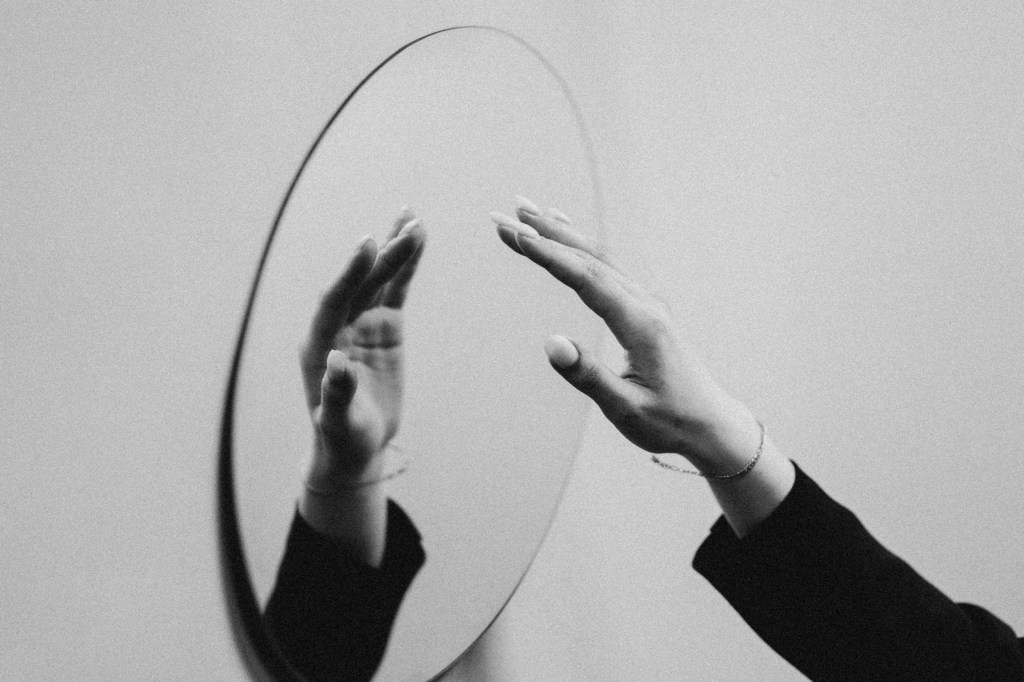
The “I” is objectified; the mirror is no longer just a reflection of ourselves but creates a subject that looks at itself as an object.
This dual perception of ourselves, which could be linked to an over-awareness of the “self,” distorts our relationship with the world.
Whereas humans once looked at the world to find their place in it, they now look at themselves to adjust to it.
In this context, the mirror is no longer a simple reflection, but a space for negotiating identity. What we see is no longer just our face, but the set of social, aesthetic, and cultural norms that we have internalized.
The majority of men therefore have a distorted relationship with their world, either because they do not consider themselves attractive enough for society, or because they are drowning in their own reflection.
The aesthetic and social movement of dandyism, which emerged in England in the early 19th century, highlights this special relationship between men and their image.
Indeed, the origin of this movement, used by the aristocracy to assert its superiority, allowed men to emancipate themselves through image, controlling their actions and gestures in order to master the reflection perceived by others and society.
This movement is the apogee of this over-perception of oneself, creating a bridge between nature and culture, while representing the very precise distinction between social classes and their hold on societal strata.
When interacting with others, we not only have our eyes on them, but also on ourselves: we know what they see and project onto them the idea we have of ourselves.
The gaze, initially directed outward, turns inward to the self. It is no longer just a matter of seeing, but of seeing oneself being seen. This reversal of the gaze profoundly changes our relationship to otherness: we no longer encounter others for who they are, but for what they reflect about ourselves.
In this way, full knowledge of ourselves also involves an understanding of our external and subjective self, and fully influences the way we establish our position in society.
This is what Jean-Paul Sartre evokes in his work “Huis Clos” when he says “Hell is other people” to explain this particular relationship with others and with ourselves, explaining that others are both indispensable to self-awareness but also make us prisoners of their perspective.
Luna Serrano
Sources:
“Du dandysme et de l’élégance”, article by John Slamson
 VOICES
Leave a comment