
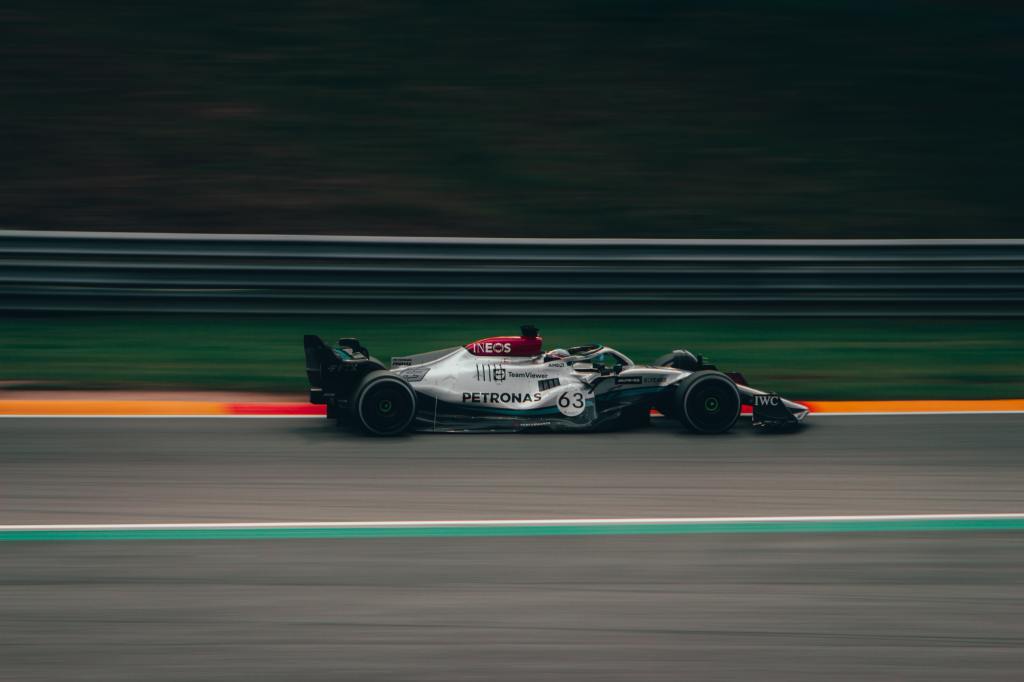
Formula 1 is a sport where 10 teams and 20 drivers travel each year all over the world and drive in circles to determine the fastest driver and the best car. With climate change as one of the most challenging problems of our time, Motorsport seems to thrive to be more sustainable. However, how valid are these claims? Is it just an attempt to make the sport appear environmentally friendly so that it is not the most polluting sport out there?
Car racing has existed in Europe since the late 1890s, but racing in Formula 1 has its origins in Silverstone, England, in 1950. The first drivers’ championship began there and the Fédération Internationale de l’Automobile (FIA), the governing body of F1, announced the first official rules. At that time, there were seven races in total. Six in Europe and one in the USA at the end. In the current 2023 season, there are 23 races. Almost on every continent. Next season, there will be one more race to match the year with 24 races in total. In the last few years, the races were never in geographical order. At some point in the 2019 season, the race order was Monaco, Montreal, and then France. Monaco is a 2-hour drive away from the French Grand Prix.
In 2019, the whole F1 produced 256,551 tons of CO2 E (carbon dioxide equivalent). 45% of that is caused by logistics, which include the moving of equipment and cars to different countries and cities. The second biggest cause is business and travel for all the people and workers in F1, with 27.7%. Although the sport revolves around cars that can burn up to 3000 litres of fuel during a race day, the power unit emissions account for just 0.7% of Formula 1’s total carbon footprint. Therefore, the most emissions do not even come from the cars themselves, but from everything around the races. That raises the question of why the race order is rather like a zigzag than a line, which would produce less CO2. Crossing the Atlantic once is probably less complicated than going twice. The FIA claims that they want to change the calendar to make the sport more sustainable and reach their goal of “net zero” by the year 2030.
To become more sustainable, the sport has made some changes in the past. The FIA started the Campaign “Make Cars Green” in 2007. With this Campaign, the 10 teams are obligated to build their cars more efficiently. Through obligations like this, new technologies were developed. In 2009, hybrid engines were introduced and energy that was wasted could be recovered with the Kinetic Energy Recovery System (KERS). They also banned the V8 engine and refuelling during the race. Everything to reduce CO2 emissions.
However, with tonnes of CO2 emissions produced each year, the sport is still very environmentally unfriendly. It is still a long way for F1 to reach “net zero”. Sebastian Vettel agrees and is trying to raise awareness of the issue. Before his retirement in 2022, the four-time championship winner spoke many times about the environment. Moreover, he believes that the sport should do a lot more than they’ve done so far. Many believe that the lack of environmental change in the sport was a big part of his decision to quit. At the Japan Grand Prix, the former German driver introduced the “Buzzing Corner”, which is a project that raises awareness about biodiversity.
The sport got a lot of attention and gained many new fans through the Netflix documentary series “Drive to Survive.” The show follows the race weekends, teams, and rivalries. It also reveals details that you cannot see over the broadcast. The car racing show gained many new fans for the sport. The number of fans increased from 44.9 million in 2019 to 49.2 million in 2022, which is about 2.3%. It was under the top 10 shows in many countries. Many young people show more interest in the sport. More than 70% of the new fans are between 16 and 35 years old, making the fan base younger than before. On Twitch, a popular streaming platform, the younger generation of drivers such as Charles Leclerc, Lando Norris, George Russell and Alex Albon are connecting with their fans and promoting the sport that way. Furthermore, a new movie featuring Hollywood star and actor Brad Pitt is currently being produced. The sport is getting more and more attention in various ways. Mainly it appeals to the younger audience. With this new attention, it is even more important to question the actions of those who make decisions.
Formula 1 is one of the biggest polluters among the sports. To change that and therefore working against the fast moving climate change, the sport has to stay within their plan to reach “net zero” by the year of 2030. Through the new gained fans, many of the conversations should revolve around the topic of environmental change. Shining more light to this topic, for example with the “Buzzing Corner” is a step forward to reduce the huge CO2 emissions. However, there should be bigger changes too!
Fiona Schaumann
Sources:
formula1.com
sport1.de – Geschichte der Formel 1 – so entand die Königsklasse des Automobilsports
TechTalkers – Die Formel 1 und Nachhaltigkeit: Passt das zusammen?
quarks.de – Ist die Formel 1 wirklich eine Umweltsauerei?
sportspromedia.com – Study: F1 on course to reach 1bn fans in 2022 with 16-35 audience on the rise
Media Play News – Nielsen – Netflix´s Formula 1: Drive to Survive´ Ups Sports Popularity in U.S.
 VOICES
Leave a comment