
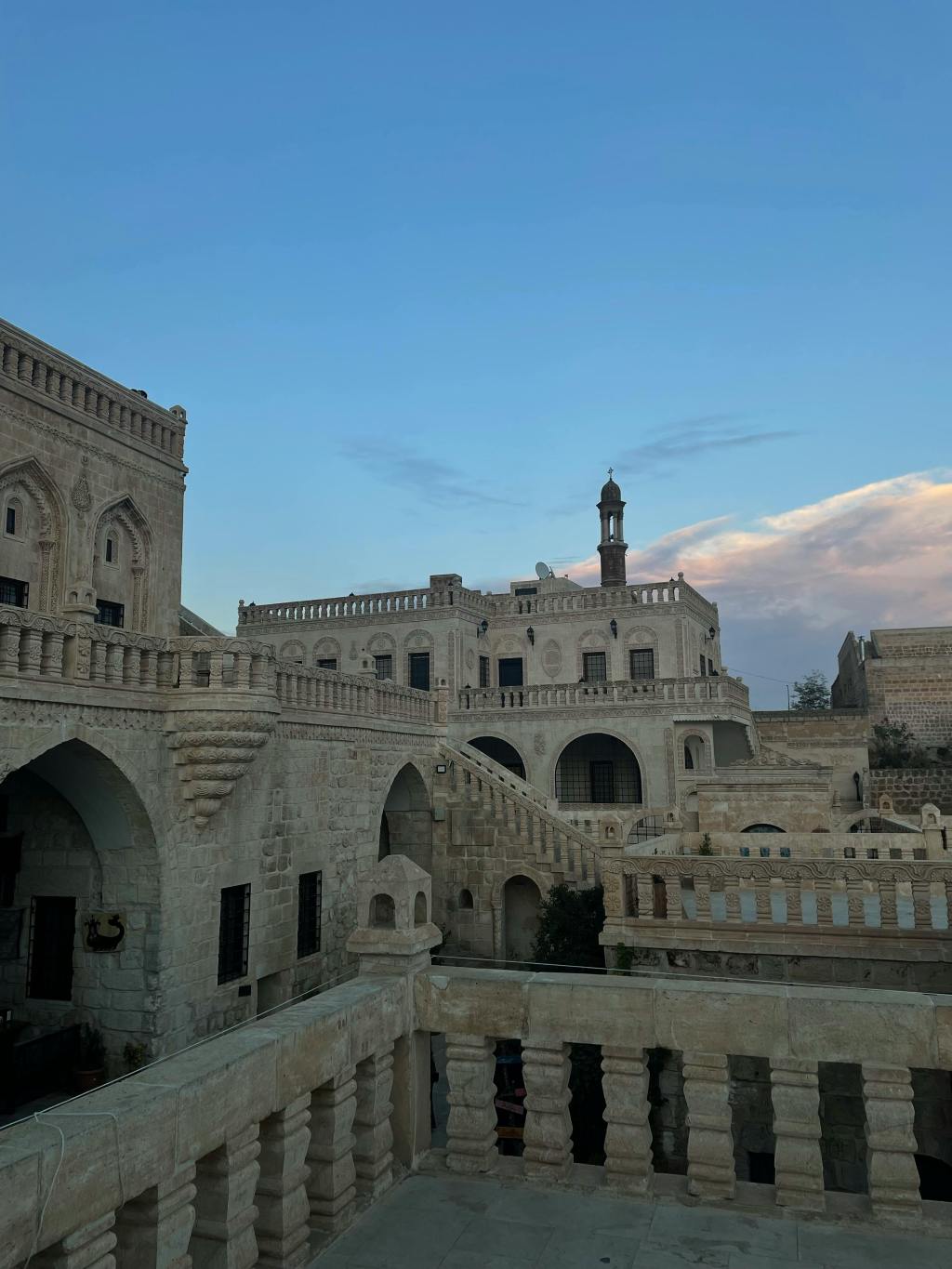
The Syriac Orthodox Church is one of the oldest churches. It was founded by the Apostle Peter in 34 AD. The Syriac Patriarch carries the office of the Apostle Peter and is his legal successor. The number of people belonging to the Syriac Orthodox Church is approximately 5,500,000. They speak Aramaic, the language spoken by Jesus Christ.
The Syriac Orthodox Church is Oriental Orthodox and recognizes the first 3 councils. These councils are as follows: First Council of Nicaea, First Council of Constantinople and First Council of Ephesus. However, they reject the belief of the council held in Chalcedon in 451. Cyril of Alexandria developed the christological perspective known as miaphysitism, or occasionally henophysitism and Syriac Orthodox Church accepts this view. This viewpoint holds that Jesus is a single structure, with both human and divine natures. Put another way, as the word “mia” attempts to convey, it has a singular essence that does neither mix with, nor separate from, one another but rather exists together and so keeps its divine and human characteristics.
Assyrians used to worship the sun and had temples. Today, the old sun temples are used as monasteries and churches. In the Syriac Orthodox Church, resource transfer is traditionally done by monks in monasteries.
In the Syriac Orthodox Church, worship begins with sunrise and is repeated 7 times a day. However, due to secularization, worship during the day has decreased to 3 times nowadays. Worship is performed in congregation and includes prostration. Sections from the Psalms are read during prayers and there are different voice modes in worship. Prostration is not performed on Sundays and holidays. In addition, prostration is not performed during the 50-day period between Easter and Pentecost. All prayers are made standing.
The highest official of the Syriac Orthodox Church is the patriarch and the clergy are divided into three categories.
- Bishopric:
- Bishop
- Metropolitan
- Mafiryan
- Patriarch
- Priesthood :
- Monk (Ebuna)
- Horebishop
- Diaconate :
- Murennim (Mzamrono)
- Reader (Koruyo)
- Typesetter (Afodyakno)
- Archdeacon (Deacon with the Gospel)
- Arhedyakno (Head of the Deacons)
Syriac priests have different subjective situations in their monastic lives.
- Hbishoye: Imprisoning oneself for the purpose of worship.
- Estunoye: Imprisoning oneself in high towers.
- Abile: Constantly being in a state of mourning.
- Hinvoye: Being constantly busy with worship.
- Madbroye: Living in deserts for worship purposes.
- Nugrite: Self-forgetfulness, self-alienation.
Nineveh Fast
The legend goes that Prophet Yavnon, also known as Jonah, was sent by God to warn the inhabitants of Nineveh to repent, but instead he boarded a ship and traveled for Tarshish. Later, the ship that the Prophet stepped onto met with calamity. Casting Prophet Yavnon into the water was the only way out of this mess. After spending three days and three nights in the stomach of a huge fish, Yavnon was spat up on the beach by the fish. Following the 7th century, Syriac Orthodox Christians also began keeping this fast, and they still do so today.
The Nineveh Fast, also known as the death fast, lasts three days during which no food or liquids are consumed. Following the Nineveh Fast liturgy done in Syriac Orthodox churches at the end of the third day, the fast comes to an end.
Mor Gabriel Monastery
The monastery is located in the Midyat district of Mardin city in Türkiye. Mor Shmuel and Mor Simon placed the monastery’s foundations in 397. Byzantine and Roman emperors helped to complete the construction of the monastery and the building was finished quickly. Both inside and outdoor additions were completed on various dates. The monastery was invaded during the Mongol period and the gold and silver on its ceiling were looted. The monastery is still active today and 60 people live there. Syriac language education is provided to students living here. In the monastery, there are the Virgin Mary Church, the Church of the Apostles, the Church of the Forty Martyrs, and the Mor Shmuel Temple.
Deyrulzafaran Monastery
It is a monastery built on an ancient sun temple in the 4th century. It is called Deyrulzafaran today due to the saffron plant grown around it. The Arabic terms “deyr” (meaning monastery) and “zaferan” (meaning saffron) are the source of the name. With extensions made at various times beginning in the 5th century, the three-story monastery took on its final appearance in the 18th century, after serving as the home of the Syriac Orthodox patriarchs for 640 years until 1932.
Comparison between Macedonian Orthodox Church and Syriac Orthodox Church
They are members of two distinct communions: Eastern Orthodox and Oriental Orthodox. Despite attempts at mutual understanding and ecumenical cooperation, their liturgical and theological traditions remain separate. Even though there is no direct relationship between these two institutions due to their geography and theological differences, the roots of both traditions are the same (Early Christian Church).
Ahmet Yiğit Bircan
Sources:
https://tr.wikipedia.org/wiki/S%C3%BCryani_Ortodoks_Kilisesi
http://www.suryaniler.com/forum.asp?fislem=cevaplar&kategoriid=4&ustid=2534
http://www.deyrulzafaran.org/turkce/detay.asp?id=148&kategori=MAKALELER
https://www.gazetesabro.org/2022/02/14/suryani-ortodokslarin-ninova-orucu-basliyor/


Leave a Reply