
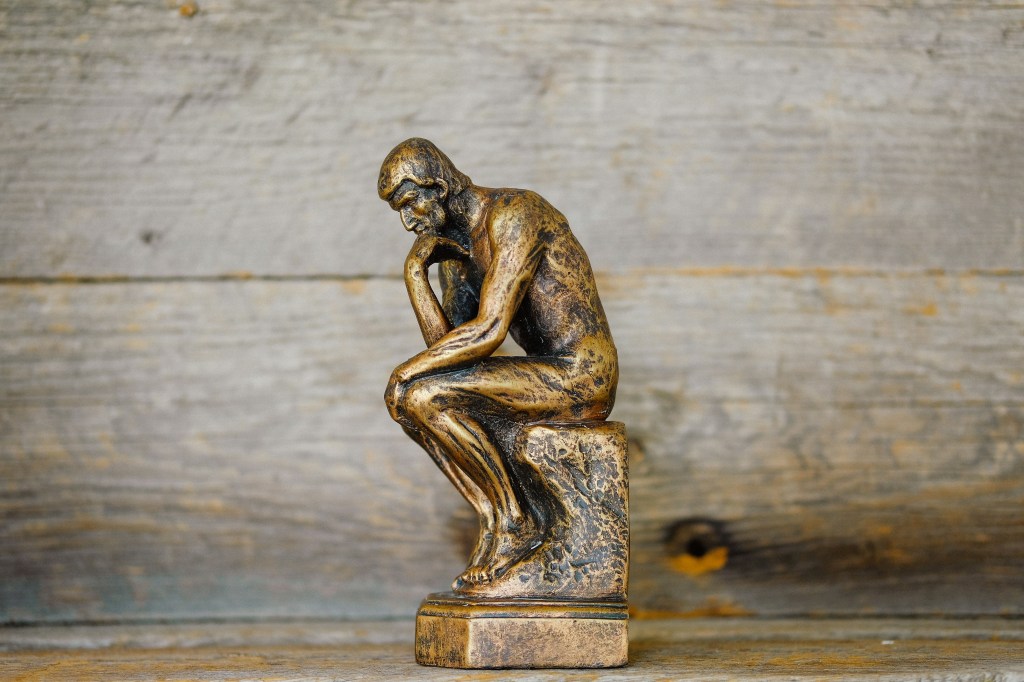
Part one – Is this true?
I have approximately 5 seconds to catch your attention, so I will go straight to the point—we live in a polarized society. People are angry about what is happening around the world and want to speak up. But we are drowning in an overwhelming amount of information. Everyone has access to information, but what is reliable, what is fake, and what is manipulated? These questions are popping up and are not so easy to answer. Now that I have your attention, I will introduce you to the art of critical thinking.
Let’s not be abstract and start from the very beginning—what is critical thinking? The ability to think critically allows you not only to search for and gather the information you need but also to carefully examine it and determine whether it is reliable. It means questioning the source of the information you receive. Let’s use an example: You see a TikTok video of a famous influencer passionately explaining a new method for losing weight, or you receive an email newsletter with news about a political party. It could be anything. Before blindly sharing this TikTok with your friends and reacting emotionally, would you stop for a moment to research and check if there is a reliable source or a trustworthy expert on the topic that supports the statement? Do you read the full article or only the catchy headlines? In short, critical thinking is the ability to think rationally and understand what you consume. And you understand by questioning, researching, and double-checking.
Sometimes, it may be tricky to understand what people are trying to tell us. Influenced by their tone, emotions, choice of words, or even emojis, we may get confused and misinterpret their message. One can easily get lost, but it is important to critically question whether what we are reading or hearing is a fact—a proven piece of information—or someone’s opinion and assumption.
The next time we hear someone’s statement, let’s ask: “Is this true?” Facts are rational and can be verified. Facts don’t tell us what is good or bad or what we should do. For example, when we read that Skopje is a capital city, we can ask, “Is this true?” and easily research the answer. However, if I say that Skopje is a city everyone must visit, that is my own opinion. This is the key action required to critically engage with the information we consume every minute.
Let me sum it up for you:
- Always question the validity and reliability of the statements you hear. The more you question, the more you learn about the world and how to recognize true information.
- Check multiple sources. Even sources we trust can manipulate us, and it’s not always easy to notice when this starts happening. Checking multiple sources helps us step back and assess information objectively.
- Research and translate. People often use foreign words or professional terms to confuse their readers or listeners. Simplify and translate difficult statements—complex language can sometimes be a tool for manipulation. Also, double-check the sources of images, as they may not be relevant to the statement (for example, they may have been taken at a different time than what is being discussed) or could even be AI-generated.
Will you benefit from this article? Maybe. The way you judge, perceive, and understand the world evolves throughout your life. But if, the next time you hear a politician, influencer, author, or even a friend or family member, you pause to question what they said, that will be your first big step toward critical thinking. The next step will be learning how to respond—how to think critically in discussions, avoid logical fallacies and engage in meaningful debates. Let’s explore that in the next edition!
Lucia Marciová
Sources:
N Magazín 10/2024 – Ján Markoš (in Slovak)
dennikn.sk
Thinking Fast and Slow by Daniel Kahneman
gre.ac.uk – What is critical thinking?
thesquaremagazine.com – Critical Thinking


Leave a Reply