
Interview with Ivana Markoska
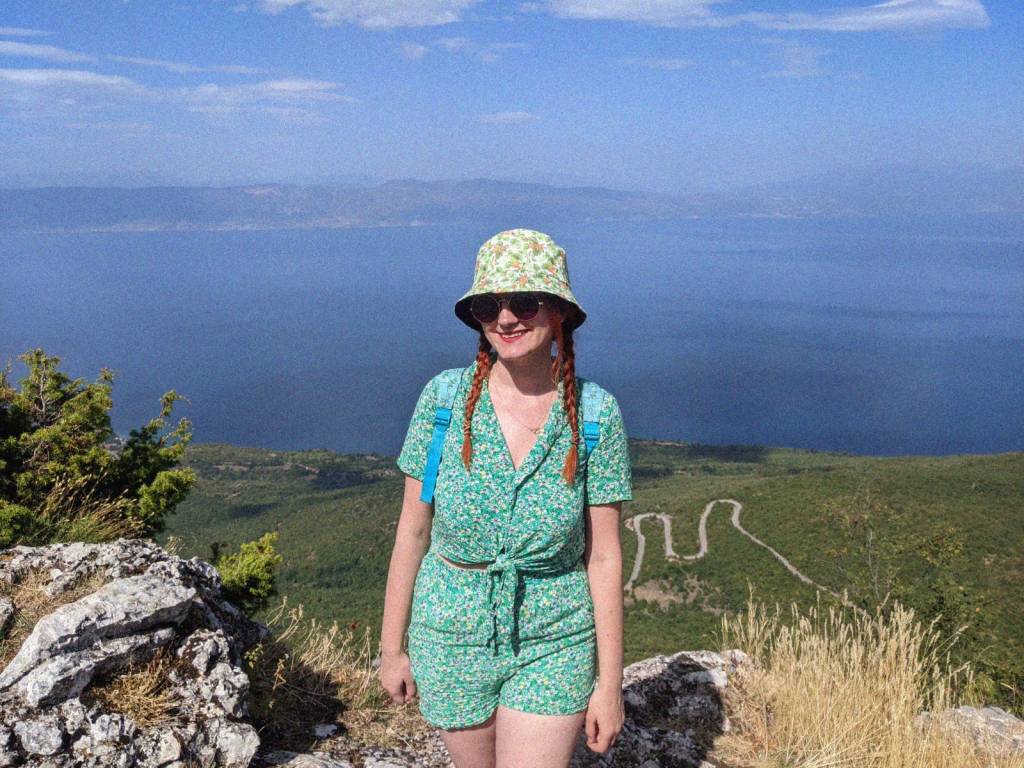
Barren mountain slopes, fields of flowers, green forests and wide lakes – Macedonia’s nature is stunning and has an impeccable diversity and richness of biodiversity. To learn more about this incredible ecosystem I had the chance to do an interview with Ivana Markoska, in which she shared a bit of her knowledge about Macedonian nature including flora, fauna and fungi, especially in the national parks. So let’s explore it together!
Can you briefly introduce yourself and your work as well as personal relation to biodiversity and nature in general?
Hi there! My name is Ivana Markoska. I work as a graphic designer, illustrator and lecturer; and I am also a graduated Forestry Engineer, specialising in Landscape Architecture. Though my professional work is mostly focused on art and design; I’ve remained in close proximity to nature with volunteer field work – planting trees, nature walking, phenological observations; as well as through raising awareness for ecological subjects and including diverse plants, mushrooms etc. in my illustrative work.
Can you give us a short overview over the different biodiversity and ecosystems in the different regions of Macedonia?
Our country has a rich variety of ecosystems due to its diverse terrain, geography and climate. It is estimated that this tiny country is a home to 16,000 wild species. It includes mountainous forests, Mediterranean shrublands, freshwater lakes (which contain completely different microfloral and microfaunal ecosystems within themselves), rivers and river valleys, and highland pastures. This diversity supports many endemic and rare species, making the country a biodiversity “hotspot” in Europe.
Let’s focus on one national park now and dive deeper into it. The Galicica national park is beautifully located between the two biggest natural lakes of Macedonia and has an incredible amount of unique flora and fauna. Can you give us an overview over the flora, fauna and fungi in Galicica and their ecosystem and show us what is specifically unique about Galicica regarding the plant and fungi world?
To start with the flora – Galicica is very interesting because it has a unique mix of plant species. Certain parts of this mountain and entire national park are home to plants that flourish in sub-Mediterranean, warm, and dry climates, while others are dominated by species that thrive in extremely cold conditions. It is a home of 600 different plant species, some of which are endemic specifically to that region; for example, the floral shrubs – Centaurea galicicae, Dianthus galicicae, Festuca galicicae, Laserpitium ochridanum; the succulent Sempervivum galicicum; etc. There are also findings of the Macedonian Pine (Pinus peuce) – even though this tree is the symbol of the national park Pelister; it can also be found on the higher parts of Galicica.
An interesting mushroom to note is the Geastrum fornicatum, which is actually native to the United States and is strangely also found in this area. There are also many edible, and even hallucinogenic mushrooms!
In the fauna world, the most notable animals specific to the Balkans that can be found in Galicica are: the Balkan lynx, the Balkan snow vole, the Balkan mole and many others.
How is the state of the national parks and nature in general in Macedonia and especially the one of Galicica? How are humans affecting biodiversity?
Even though the nature in Macedonia is incredibly rich and diverse, there are many human-brought threats to its survival. Mostly illegal trafficking of endangered species, habitat degradation and climate change. For example, at the moment there is an active petition circulating online about saving the Macedonian grayling butterfly (Pseudochazara cingovskii); a rare butterfly, endemic to the Pletvar area in Macedonia. This butterfly is extremely endangered because of the illegal international trade between collectors, but also because of marble quarrying, directly destroying its habitat.
When it comes to Galicica specifically, I would say that the summer wildfires pose the biggest threat to the ecosystems. In 2024, on Galicica, almost during the entire month of August there were severe wildfires that extended for around 6500 hectares of land. A huge portion of endemic plants to Galicica were burned, and many animal species lost their natural habitat. The local government believes that these wildfires were caused by human neglect and accidents.
Why is biodiversity important for a healthy ecosystem, what is being done to protect it and what would be needed in the future?
Everything in nature is circular. Biodiversity is important because it keeps nature healthy, balanced, functional and resilient. Different species all help in their own ways : pollinators help plants reproduce, plants feed many living species, predators control pest populations, decomposers recycle nutrients etc. When there are lots of different living things, nature is stronger and can better withstand problems like diseases, natural disasters and climate change. In Macedonia, there is more research done in the last few years, and there are active efforts for more places to become national parks. For example, Shar Planina was established as a national park in 2021, and this means that this is an area of very strict protection of natural resources. Still, there should be more funding into research and monitoring, more government involvement as well as heavier fines for human disruptors.
Lastly, do you have one or a few favourite plants or fungi that we can look out for while exploring the nature of Macedonia and what are their characteristics?
Though it’s very hard to pick just one, I would like to add onto my previous comments about human disruptors of ecosystems. So, I would mention a mushroom that is very often the reason for people starting fires – namely, Morchella Conica, the morel mushroom.
Morels are extremely delicious mushrooms and they are known to be very expensive. Another curious fact about them is that they are the first fungi to appear in an area after a forest fire, because they thrive in the heated soil and the fire has cleared out competing life forms feeding from the soils’ nutrients.
This is where human greed comes to play. Unfortunately, greedy people who want to sell the morels, often start forest fires in places where morels have previously been seen. They know that the fire will bring perfect conditions for the dormant mycelium to create fruiting bodies. They basically burn entire ecosystems for financial gain.
Last October I made an illustrative series of witches, where I represented different fungi and plants found in Macedonia through a witch. This is the witch I made for the morel mushrooms:

Are you already intrigued to go out in nature and experience it first-hand? Me too. Now after learning about it even more than before. So many different species, all with their own purpose resulting in one or many incredible (eco-) systems. So let’s keep in mind to protect biodiversity and nature in any way to preserve this amazing nature. Finally, I would like to thank Ivana Markoska for this amazing interview.
Maike Seuffert
 VOICES
Leave a comment