
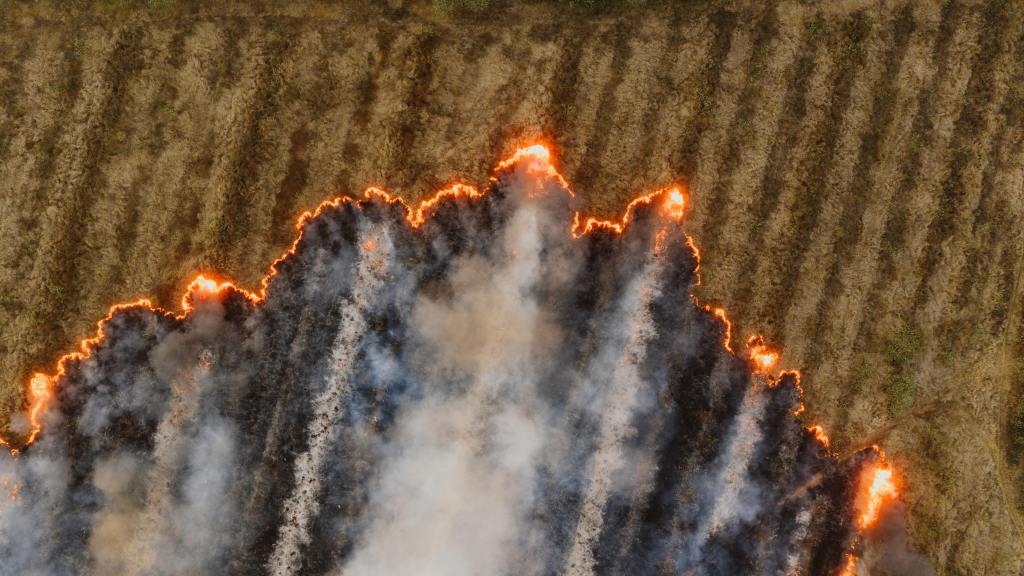
The history of agriculture in Macedonia can be traced to an ancient period more than 8000 years ago. The fertile region of Pelagonia is one of the first regions on earth where humanity started agriculture. In the past the weather was perfect for farming and pastures. However, with the recent negative shifts connected to global warming farmers face significant challenges. Due to the increasing amount of weather anomalies both plants and animals are endangered. According to the World Meteorological Organization in the next 25 years the days with critically high temperatures above 35°C are expected to increase by 35%. This will lead to an increase in heat related health risks and mortality rates. Especially in the cities, where low wind combined with asphalt and concrete trapping heat will lead to unimaginable temperatures. Without significant climate adaptation measures, the economic toll from extreme weather events is projected to escalate. Over the past 20 years, climate related disasters have already caused a total of 35 000 million MKD in losses. In 2050 annual damages in lost economic output are expected to reach 32 000 million MKD every year. According to the United Nations Office for Disaster Risk Reduction and the World Bank, the global economic burden of natural disasters has surged, now reaching a scale that exceeds the direct costs of modern armed conflicts.
Especially dangerous for the Macedonian agricultures will be heat waves and flash floods. In the past during winters snow would accumulate on the neighbouring mountains. During hotter seasons it would gradually melt and go down to the valleys watering the plants and providing water source to the animals. Nowadays however, sudden spikes in temperatures lead to significant amounts of snow melting at the same time and flooding the land. Premature snowmelt leads to floods in January and February, followed by severe water shortages in July and August.
To fight the warming and floods farmers are forced to use seeds that are selected not by harvest yield but by their resistance to heat. In extreme cases this can half the amount of food grown. Floods are especially dangerous to the most popular plant grown in Macedonia which is tobacco. Because of tobacco’s short root system 2-3 days of too much water on the field is enough to kill the crops. It is often the crop that produces the highest monetary value per hectare, which is why many farmers stick with it despite the labor intensive nature and social cost.
Tobacco is the most heavily subsidized crop in the country, receiving roughly 40% of all crop specific government spending while occupying only 3% of land. As Macedonia aligns its agricultural standards with international and EU frameworks, there is a growing focus on prioritizing food security over industrial crops. 77% of tobacco farmers admit they would stop growing the crop immediately if the subsidies were removed, proving the crop is not economically viable on its own. Large companies sign contracts with individual farmers before the season begins. These family labor operations are paid at the end when the crop is sold. Almost all family members, including the elderly and sometimes children, participate in the labor intensive tasks of picking and drying the leaves. This contract based model places the burden of environmental risks such as flash floods and heat waves directly on individual families. Furthermore when the cost of the family’s labor is actually calculated at a fair market wage, nearly 50% of tobacco households actually lose money. ~25% of tobacco farmers are below the poverty line, which is significantly higher than ~10% of farmers who grow other crops.
For Macedonian agriculture to continue farmers will need to focus on strong crops ready to survive both floods and heat. Significant investments will have to be made in order to water the fields artificially during summers as well as protect animals from heat waves. Addressing these challenges is not only a matter of farming. It is a critical issue that will determine the national food security, economic stability, and everyday life of all Macedonian citizens.
Piotr Mucha
Sources
worldbank.org : North Macedonia Country Climate and Development Report
worldbank.org : North Macedonia CCDR Key Highlights
klimatskipromeni.mk : Fourth National Communication on Climate Change
analyticamk.org : The Economics of Tobacco Farming in North Macedonia Policy Note tobaccopreventioncessation.com : The Economics of Tobacco Farming in North Macedonia undrr.org : Global Assessment Report 2025


Leave a Reply