
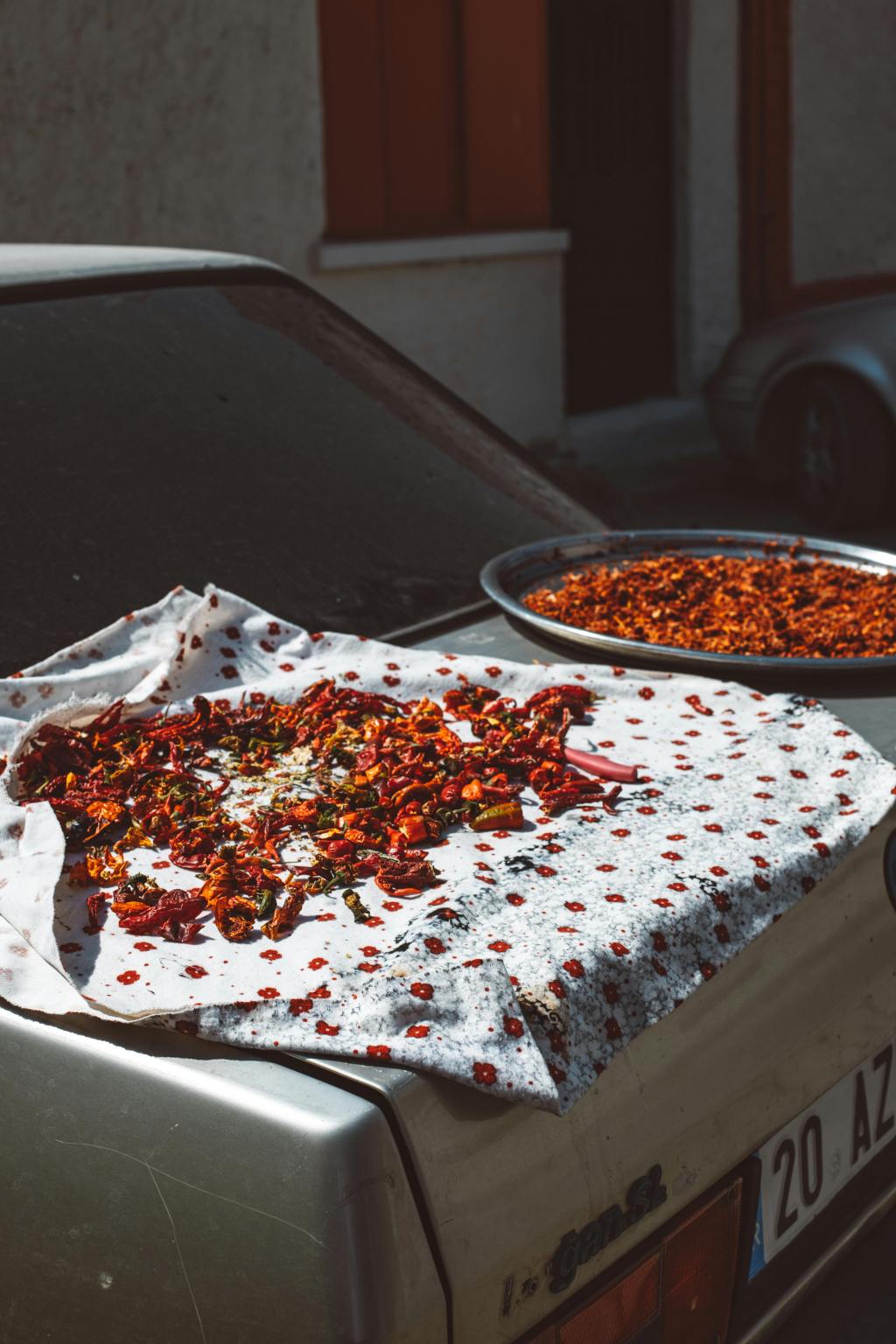
Take some bell peppers, eggplant, a little salt and pepper, or even add a tomato as well – mix it all together – and you have the perfect example of the traditional cuisine and national pride of the various Balkan states, also known as “ajvar”.
This red paste made from various vegetables, also called the “hummus of the Balkans,” is currently really trending.
People in this region still often make it themselves at home, and supermarkets here can’t really be called supermarkets if they don’t carry at least a small selection of ajvar.
However, the spread is also becoming increasingly popular in other parts of Europe, such as the UK and Germany. Denmark and Sweden have even added the word to their dictionaries. Understandably so, as it’s more versatile than almost anything else. Whether as a spread, an addition to pasta or stews, or even on its own, ajvar always works. And is even vegan!
But we wouldn’t be talking about a traditional Balkan dish here if not at least two countries were claiming it for its origin.
For Macedonians, it’s naturally Macedonian; for Serbs from Serbia, and for Croats, it’s Croatian. And, of course, everyone is right.
When the popular singer Dua Lipa, originally from Kosovo, described ajvar as Albanian in 2020, a massive online debate erupted between the countries over the paste’s origins. There have even been lawsuits between companies from different countries over the spread.
But back to the actual facts about this famous spread: the word ajvar comes from the Turkish “havjar,” which means caviar. Some kafanas in the 19th century probably sold it as “red pepper caviar” due to the high prices of oil and pepper, and helped the paste to its famous name today.
However, the exact country where it was first made is unknown.
Wherever it actually originated, the tradition of making it is similar in many countries. In the fall, large quantities of the necessary vegetables are gathered, after the peppers are roasted and peeled in a lengthy process before finally being processed. This is often an occasion for the whole family to gather and carry out this process together.
Nowadays, there are even entire “Ajvar tours” in the Balkans, restaurants across Europe that specifically promote the paste, and it can be purchased in many supermarkets around the world.
One thing is definitely certain: ajvar has earned its reputation as “caviar of the Balkans”, and is a star of the Balkan cuisine.
Lea Schwegmann
Sources:
http://balkankitchen.co.uk/2020/12/16/ajvar/


Leave a Reply