
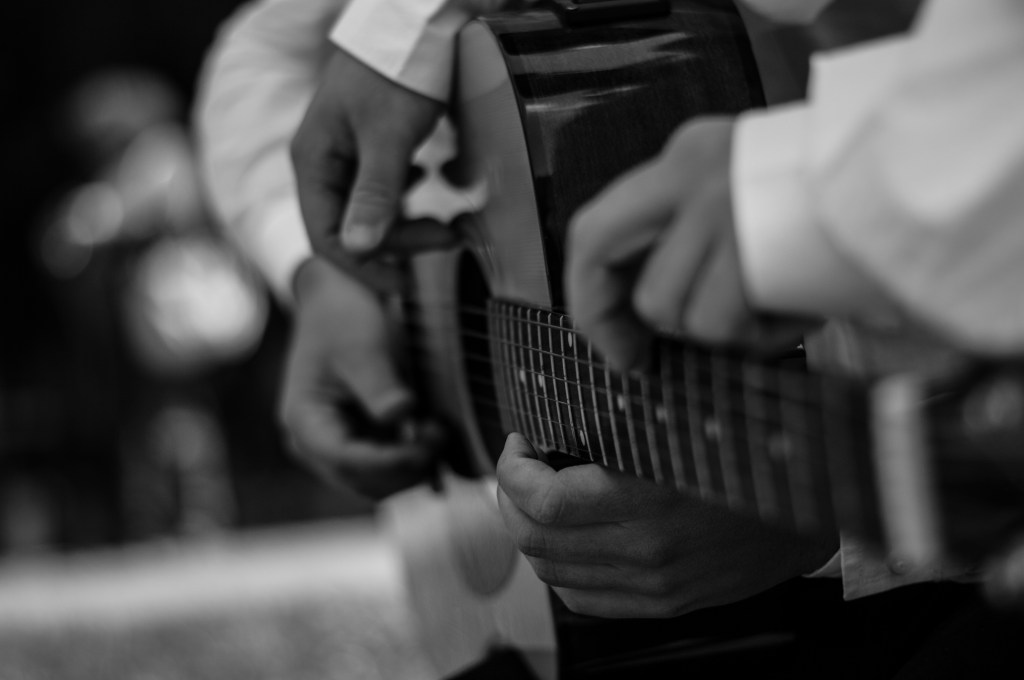
Balkan music is one of the most unforgettable parts of life in Skopje. While walking through the city center, sitting in kafanas, crossing the Stone Bridge at night, or listening to street musicians by the Vardar River, music feels present everywhere. It does not stay quietly in the background, it becomes part of the atmosphere of the city itself. In cafés and nightclubs, people do not simply dance to Balkan songs, the rhythm changes the entire mood of the place. The way people move, sing together, and celebrate creates a feeling that is emotional, energetic, and deeply connected to Balkan culture.
Balkan songs are special because they combine many different emotions at once. Some songs sound nostalgic and heartbreaking, while others suddenly become lively and impossible not to dance to. This emotional contrast is one of the defining characteristics of Balkan music.
Traditional Balkan songs often include instruments such as trumpets, accordions, clarinets, violins, and drums, creating melodies that sound dramatic, passionate, and full of life. Unlike much of modern Western pop music, Balkan music has a very recognizable identity and rhythm. Even people who do not understand the language can still feel the emotion carried by the songs.
Another reason Balkan music feels unique is the shared cultural history of the region. Because of centuries of Ottoman influence and close cultural interaction, many Balkan melodies resemble Turkish folk music and arabesque. For Turkish listeners especially, Balkan songs can feel strangely familiar, almost like hearing a forgotten memory in another language. Many melodies travelled across borders and survived through generations by adapting into different cultures while keeping the same emotional spirit.
I felt this connection most strongly while visiting the Holocaust Memorial Center in Skopje. Inside the museum, I heard the melody of “Üsküdar’a Gider İken,” a traditional Turkish song many of us grow up singing in school. A few moments later, the same melody continued in another Balkan language. It was a beautiful and emotional moment because it showed how music can move through different cultures, histories, and generations while still keeping the same soul. At that moment, the borders between countries felt almost invisible.
This is what makes Balkan songs so meaningful. They are not only entertainment, they carry history, migration, memory, and identity. The same melody can belong to different people at the same time, connecting cultures without needing translation. In Skopje especially, Balkan music feels alive everywhere, from crowded nightclubs to quiet streets at night. It turns ordinary moments into memories and gives the city a warmth that is difficult to describe. That is why Balkan music is not only something people listen to, it is something people truly feel.
Berna Demirci


Leave a Reply