
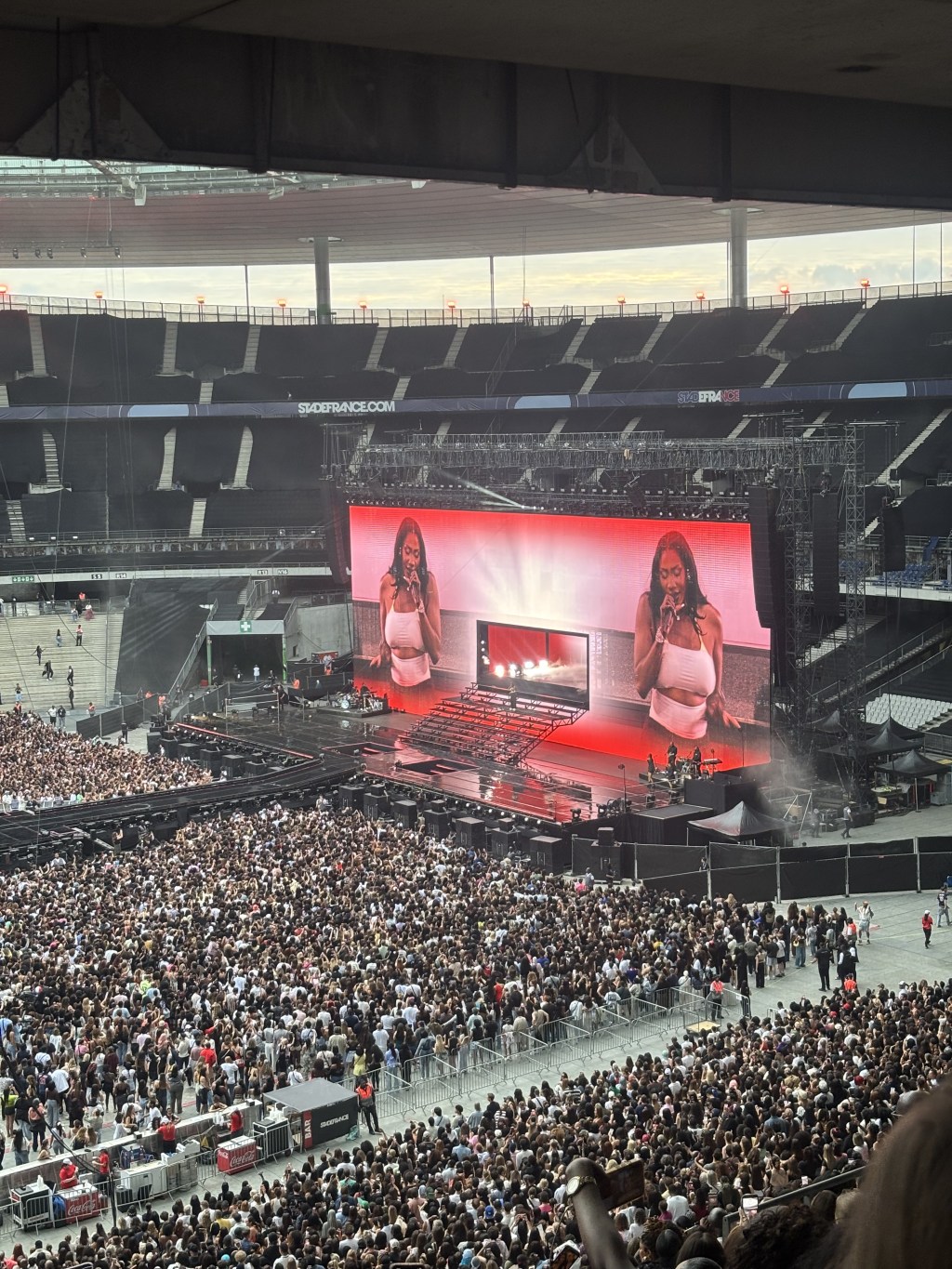
Aya Nakamura will be remembered after filling the Stade de France three times, on May 29, 30 and 31, 2026. In front of thousands of spectators, the singer delivered an ambitious show combining music, dance and visual effects. With these concerts, she took an important step in her career and confirmed her rank among the most popular Francophone artists of her generation.
On stage, Aya Nakamura showed on the big screen the critics who accompanied her journey before turning them into a sensational moment. This scene was talked about a lot, because it seemed to be the revenge of an artist regularly criticized, but who is now experiencing great success.
Since her debut, Aya Nakamura has been regularly criticized. It is certain that her musical style, her language and her artistic universe have sometimes aroused mixed reactions. However, these controversies did not hinder the progression of the singer’s popularity, both in France and internationally.
Over the years, her career has been troubled by several controversies. One of the most covered events was when she was cited as a potential singer who will represent France for the Paris Olympics. This position had aroused many reactions on social networks and in the press. This difficult period also highlighted the essential role of the artist in the French cultural landscape.
These critics did not stop her series of success. Her songs reach millions of listeners, and she keeps a loyal audience. Her career proves that we can continue the career despite the controversies.
The Stade de France concert was not a simple succession of songs. Aya Nakamura chose to share part of her journey thanks to the scenography and images broadcast on large screens.
In a particularly striking passage, the show incorporated various allusions to the criticism she received during her career. Then, in a stage show, these elements were symbolically destroyed in front of the audience. The moment provoked a strong reaction from the spectators who welcomed this original way of reviewing her story.
And this artistic choice is strong because it shows that Aya Nakamura does not seek to hide the difficulties she has encountered. Instead, she integrates them into her show to show the distance travelled. The stage then becomes a space to express her confidence and evolution as an artist.
The sequence also makes the concert more intimate. It helps the audience understand the singer’s journey better and strengthens the show’s message of perseverance.
This moment will forever change the public perception of Aya Nakamura. She has often been controversial for some of her interventions or artistic positions, but today she is established as a success and her influence is recognized in the musical field.
Filling the Stade de France three times is an extraordinary feat. Few French artists have achieved such success. This victory shows how popular she is, and that her fans are loyal.
The concert also gives the impression that Aya Nakamura has taken a step back from the critics who have marked her journey. By transforming them into a show element, she shows that they no longer define her image. It is now her performance and success that are in the spotlight.
Through these concerts, the artist appears more confident than ever. She is no longer content to respond to criticism: she surpasses it by highlighting her work and success.
The event at the Stade de France goes far beyond the dimension of a simple visual effect. It is the story of an artist who, after suffering many criticisms, finally obtained exceptional recognition.
By transforming these episodes into an artistic moment, Aya Nakamura demonstrates how you can regain control of your image. Her triumph at the Stade de France thus illustrates a musical success, but also the ability of an artist to strengthen her career.
Sophia Ali


Leave a Reply