
136 km from Warsaw (the number according to Google Maps), down in eastern Poland, there is a city called Puławy. There is nothing particularly unusual about the city, it’s not very big, although located on the biggest Polish river, Vistula (Polish: Wisła). It’s pretty, neat, and very green, as are many such small cities in Poland. It also has quite a rich history, and to prove it, there are many interesting historical monuments that you may find while visiting. But why exactly I invite you in this article to go to this–you may say, and I totally agree–“very random” city in Poland, is that it has a very special museum which throws you straight in between white icebergs and deep blue water.
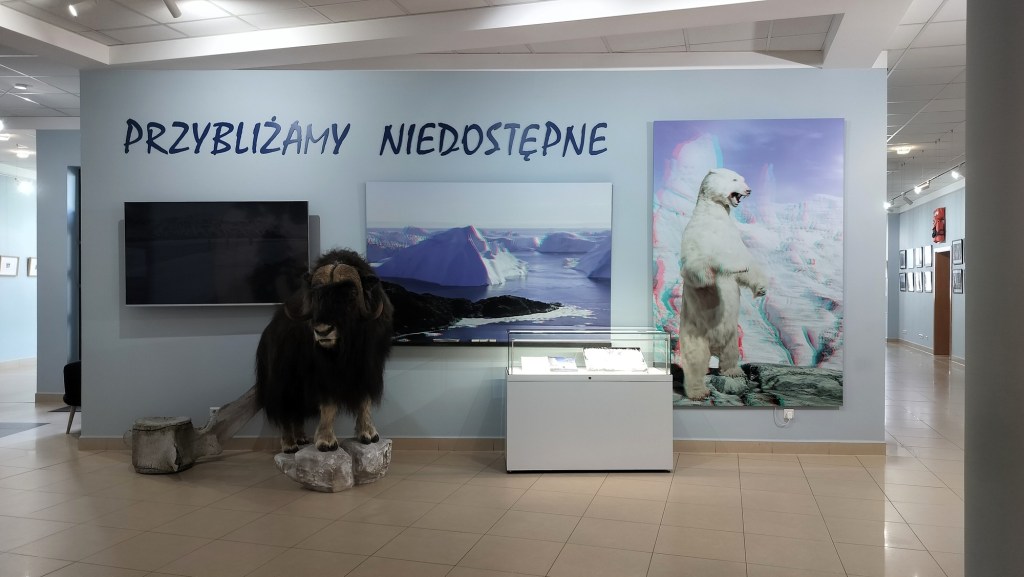
The Museum of Polar Research is the only such institution in Poland. And all that you can find there are traces of Polish expeditions in polar regions, together with their discoveries, and supported by research. And not only. The exhibitions have different formats, from arts to multimedia, and next to contemporary one, they are changing to constantly offer its visitors a place, where they can return with curiosity to explore something on their own. But, above all, as the motto says, it serves as a place that “brings closer the inaccessible”.
I’m not a person who is fond of cold, ice, and winter generally, but I sure am a curious one. And there is something fascinating in the big white North. It’s like an unreachable dream, mesmerizing and at the same time a dark space, which–cold, empty, inhabited–gives you chills, literally. When I found this museum, I had to go there. When I walked through the museum hallways, I thought that it would be great to be part of this institution. But when I saw the photos of the employees in the museum, who went far north on the Spitsbergen archipelago to visit, I said “cool” in both meanings of this word.
I first entered this cold and icy, but really warm and cozy space on a sunny May afternoon. The white and blue exploded in front of my eyes. On the right, a life-size polar bear welcomes the visitors (I believe it is a life-size, as I’ve never seen one in my life!). Straight from the entrance, a huge snow scooter invites you to take a ride. And you may actually have a seat on (I even have a picture, me pretending to ride a snow scooter, a child inside applauding).
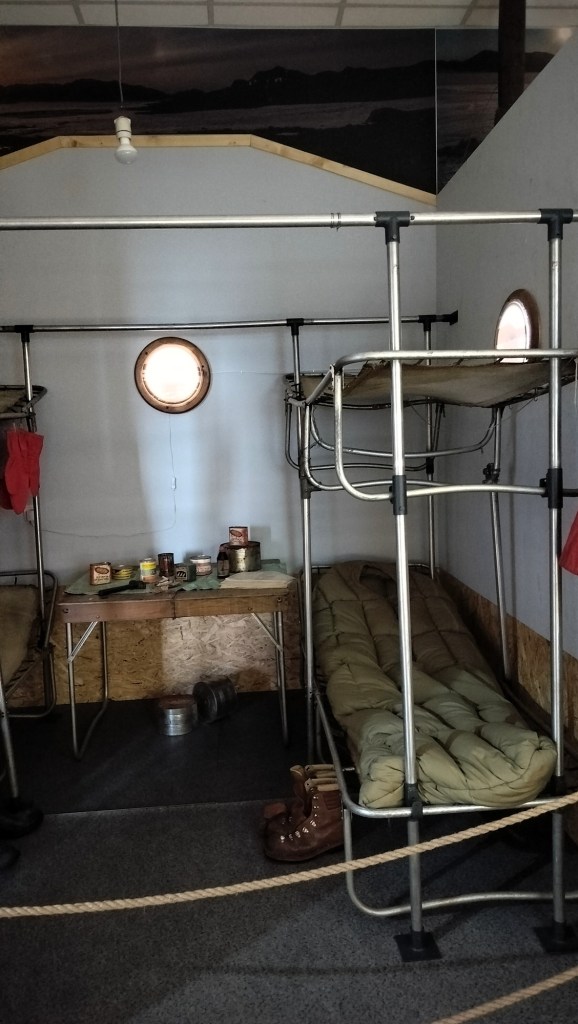
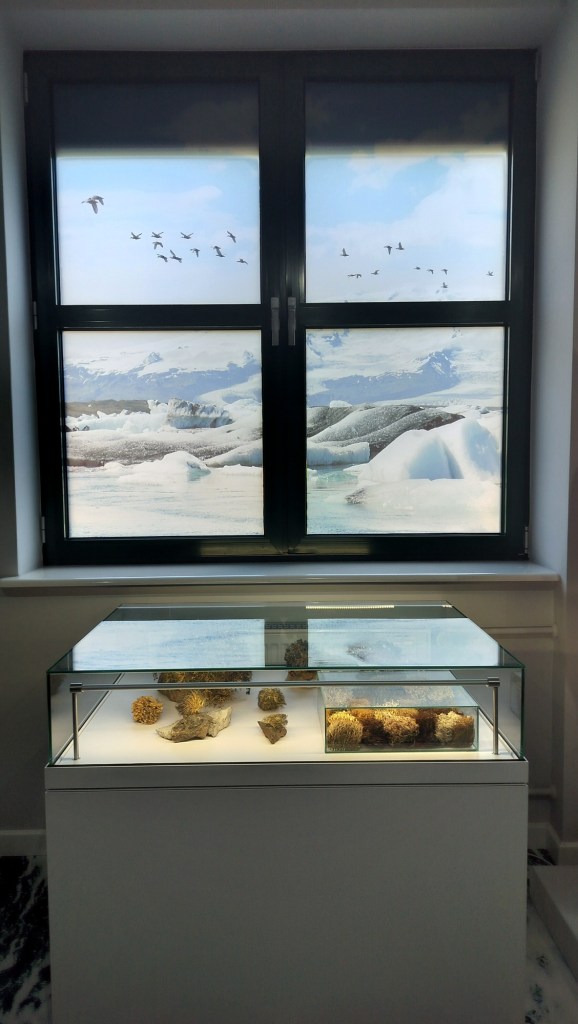
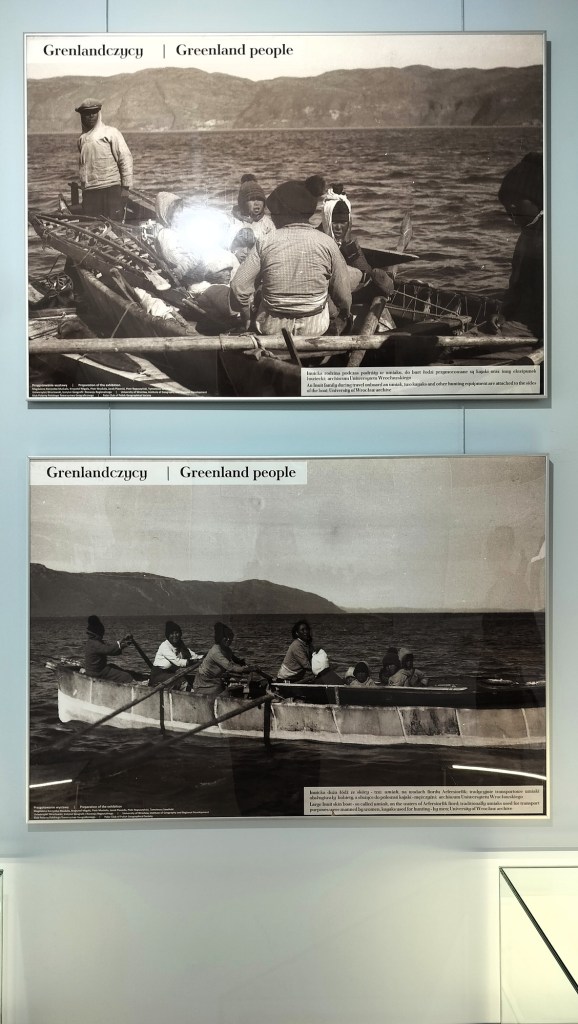
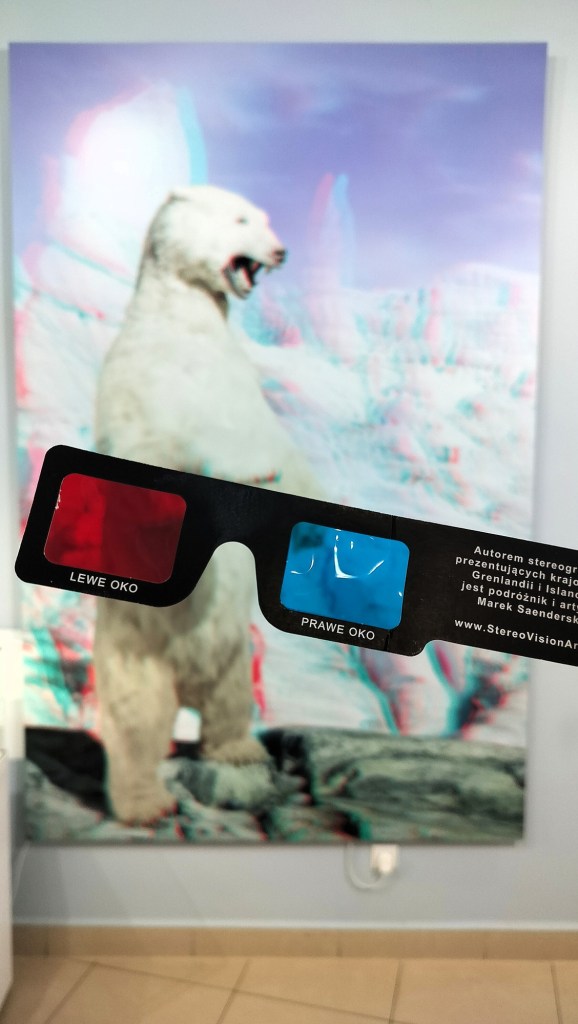
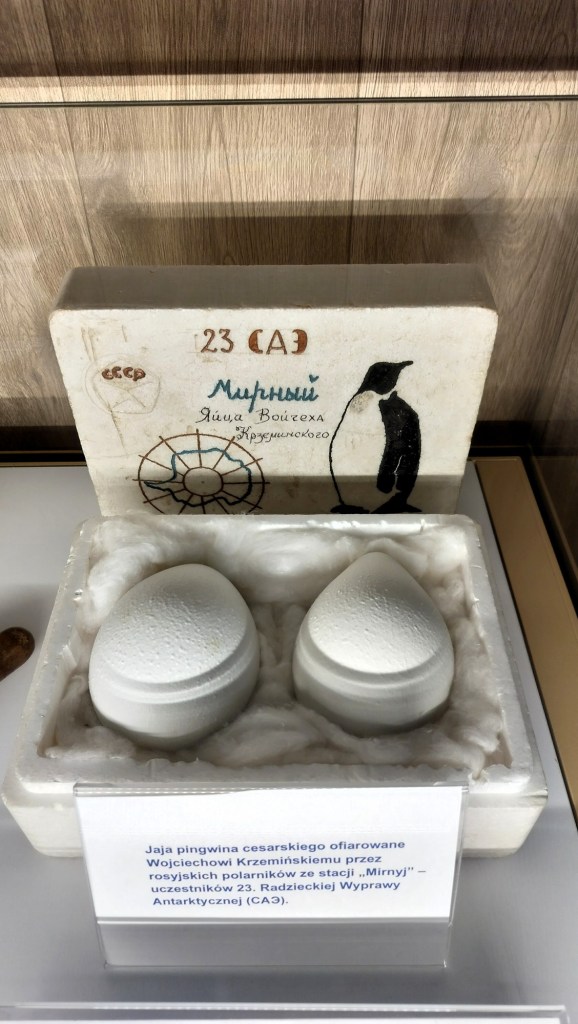
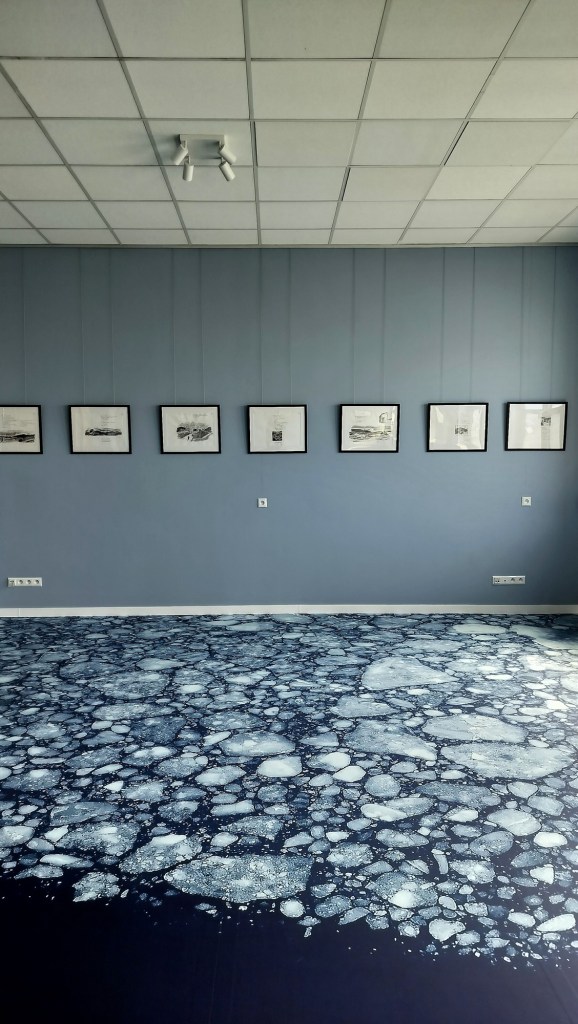
How does the museum feel or look inside? Ice white walls are filled with many windows that are coated with Arctic landscapes, half-transparent to let just enough light inside. The floors in different rooms make you feel like you are stepping on a Northern bare land, from glaciers and snowy pathways to blueish water-like surface and a rocky, barren coastline. Every person moves through the museum in the rhythm, direction and way only understandable to them. Exploration is something so personal, almost intimate, and is best experienced by following your own path. Even if you came to the museum with a friend, like me, you are then separate atoms in their own movements and on their own mission. I admired the pictures on the walls. Small stories coming from the times when the world still didn’t know color photography, that were telling me about the typical day of Greenlandic people going on the fish hunt. The bones and skeletons of sea animals, hanging here and there, with very precise explanations, what you are looking at and small facts to add to it. I saw the real eggs of the Emperor penguin, a trophy from one of many expeditions. I moved through the cabins of the researchers, being very faithfully reproduced, places where they slept, ate, and simply sought shelter from cold, or at least a break. I could touch and inspect enormous machines and devices that were used for the research. In the multimedia room, I put on the 3D glasses to experience the majestic strength of the Arctic Ocean in its dance between the glaciers. The polar bear stood in front of me, scary, I could almost touch it, and it could almost hunt me. To my joy, among all the animals, especially penguins, I found a polar fox (yes, fox is an animal that specifically excites me). I learned a thing or two about Henryk Arctowski–one of the first two Poles to reach Antarctica. I finally sat in the auditorium where the meetings with the researchers, specialists, and many interesting people take place. And the auditorium is the most beautiful finish of this journey, because right above your head, on the ceiling, you can see aurora borealis, or to say simply – the northern lights. Mesmerizing.
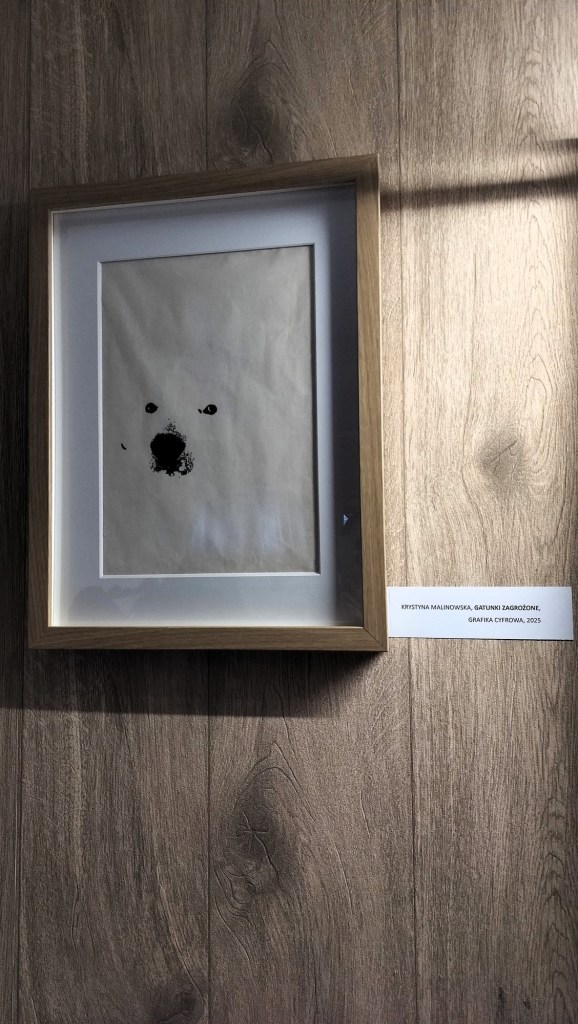
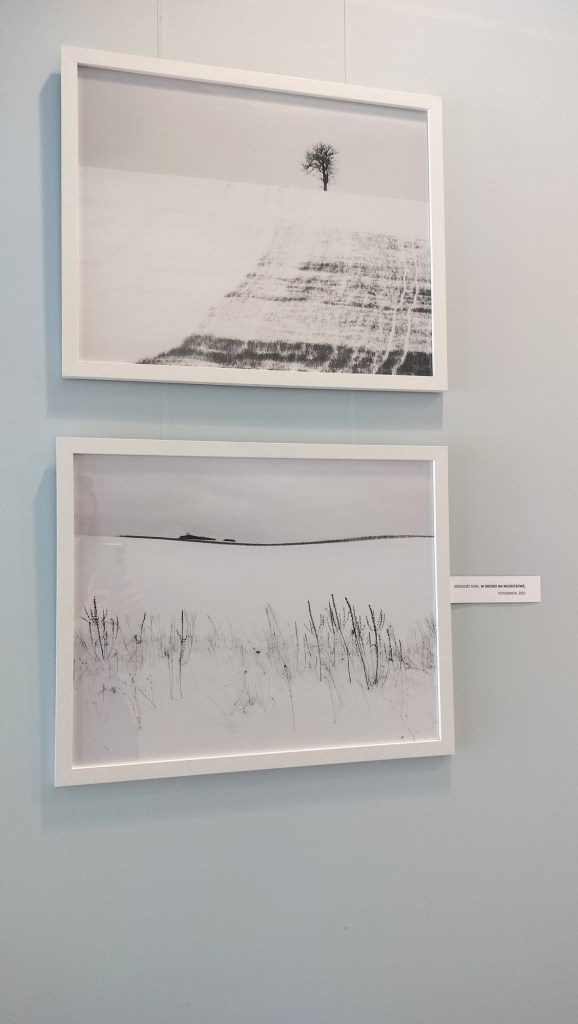
At the time when I visited the museum, the temporary exhibitions were Oblivion and A Whiter Shade of White. The first was a display of a graphic story by Frédéric Roussel, consisting of charcoal drawings and narrating text. A lonely man is going into a forlorn stretch of land in order to explore it – one simple explanation. The second exhibition showcased different artists’ works, from acrylic and oil paintings on canvas to sculptures. One would expect to see white and only white, but some of the artists showed a real explosion of colors. And that is why I liked this simple explanation of Łukasz Konieczko, an artist-painter, in his reflections on the title: “Some argue that black is “the absence of color”, while white can be considered “the sum of all colors” (a balanced mixture of simple hues)”. Stepping into the Museum of Polar Research, one surely expects the white, sometimes maybe dotted with blue or gray. One rarely expects the journey through colors. I can call my visit a colorcoaster with a dominance of white and blue. I will definitely come back, not just once, to catch the color reflections on my face from the northern lights displayed on the ceiling, or to meet head-on the polar bear again.
Ewelina Chańska
Sources:
A Whiter Shade of White booklet (the promotional material of the exhibition)
The Museum of Polar Research


Leave a Reply