
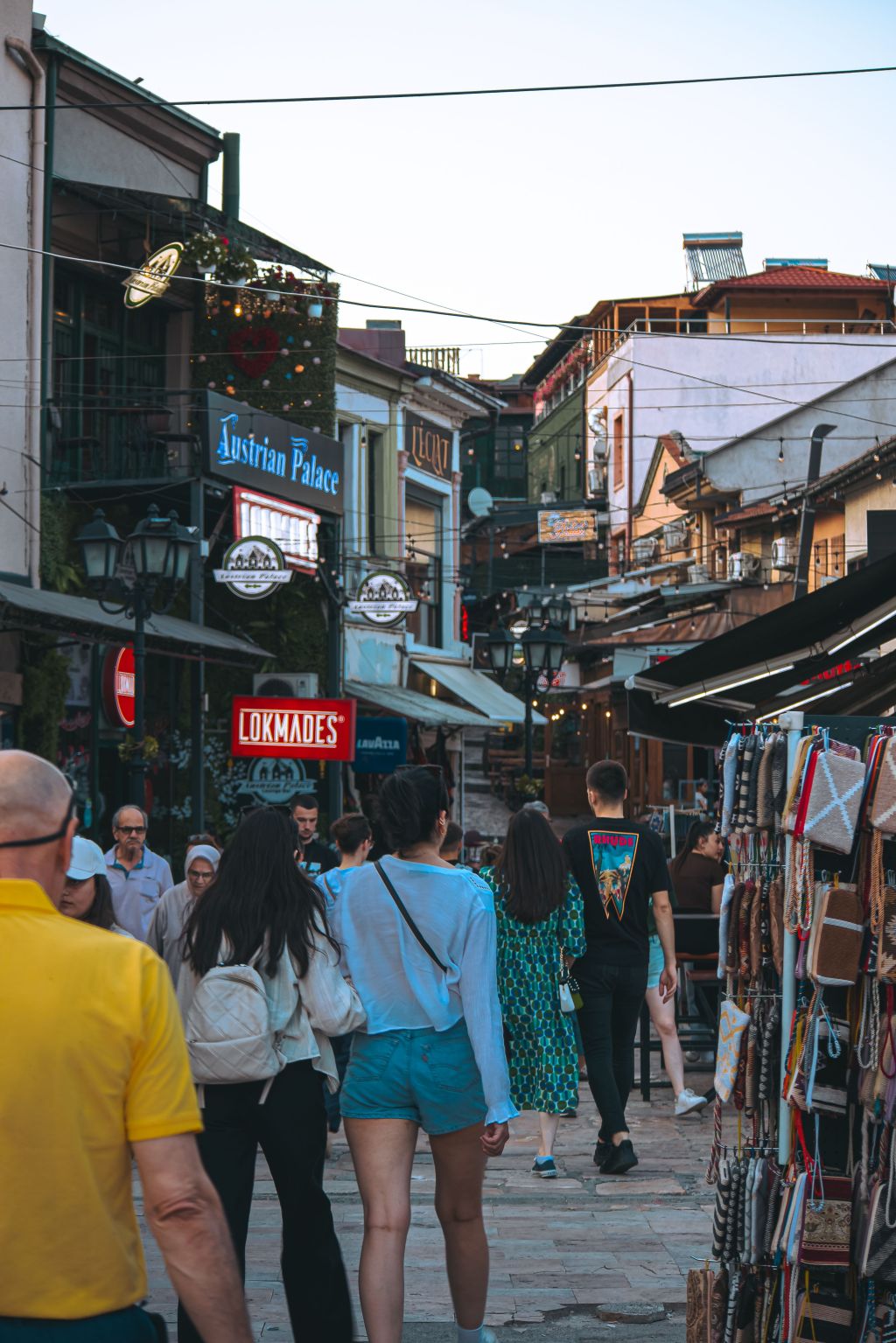
For many of us, walking is one of our body’s most vital functions, spanning from infancy to the end of our lives. Beyond serving as our primary mode of transportation for centuries prior to the invention of the automobile, it occupies a central place in our lives, often without us even realizing it. We arrange our homes and workplaces by calculating how to move through them most effectively, striving to optimize our movement for both functionality and enjoyment. Given this, it is easy to see the necessity of designing our cities around walking, which is an activity of such great importance to us. However, before digging deeper into this conclusion, let us take a closer look at the role walking plays in our lives.
Since childhood, we have received messages from various sources about the importance of an active lifestyle and walking for our health, and we may even observe these effects in our own lives. We might feel restless after staying indoors for a few days; when our activity levels drop, we may feel stuck, lose motivation, or experience anxiety about falling behind in life. Such declines in quality of life are also corroborated by the relevant literature. Increased walking time can lead to improvements in blood pressure and heart health, higher blood oxygen levels, and lower cholesterol levels (Hanson and Jones, 2015). The health benefits of walking extend beyond the physical; walking is also associated with a reduction in symptoms of anxiety and depression (Xu et al., 2024).
The benefits of walking are countless, yet we cannot view walking merely as an individual activity. Like everything else, our walking habits are shaped by our environment and politics. Factors such as the suitability of our surroundings for walking, our environment having an accessible structure that affords us room for movement, the ability to commute to work or school on foot, whether the environment is car-friendly or pedestrian-friendly, and having the necessary time and energy all influence our walking habits and motivation. In this context, the pedestrian-friendliness of urban designs is analyzed, and cities conducive to walking are termed “walkable cities.”
I remember the first time I heard the term “walkable cities.” Last year, while aimlessly scrolling through social media videos, as I often do, I came across a video by someone. The person in the video was discussing how public transport could be improved to solve Ankara’s traffic problems and the benefits of making cities pedestrian-friendly rather than car-centric; notably, she referred to cars as if they were pests. She explained how traffic is a leading cause of death (unrelated to old age), attributing this primarily to car dealerships and urban planning that encourage everyone to drive. In her view, traffic did not merely harm people indirectly; it claimed lives, causing the deaths of thousands of people worldwide every day. Although the language used initially struck me as somewhat extreme, as I watched more videos, her passion began to rub off on me. I hope to do something similar for our readers.
So, what are the characteristics of walkable cities? In his book on walkable cities, urban planner Jeff Speck outlines four fundamental conditions that must be met for walking to be a preferred choice for individuals: it must be useful, safe, comfortable, and interesting. For a city to be “useful,” locations essential to daily life must be situated close to residential areas and organized around pedestrian pathways, enabling individuals to easily meet their needs. The “safe” standard requires that pedestrians can move about without the fear of being struck by vehicles and feel secure while walking. The “comfortable” standard entails that walking areas feel like an extension of one’s home, ensuring individuals do not feel alienated from their surroundings while walking. Finally, the “interesting” standard requires that the walking environment captures people’s attention and fosters a welcoming atmosphere that facilitates interaction with others.
City walkability yields biological, psychological, and social benefits for individuals. Environments favourable for walking increase residents’ activity levels, which can lead to improvements in physical health. Given the link between low activity levels and mental health issues such as depression and anxiety, increased activity can also improve mental well-being. Furthermore, because pedestrian-friendly cities facilitate movement within local areas, they encourage residents to interact and build relationships, thereby strengthening local communities, and social networks. “Naturally occurring retirement communities” are emerging for the aging population in these places; such areas and the communities within them support the independence of older adults. Walkable cities benefit more than just pedestrians; as local activity increases, small businesses in these areas become profitable, creating more customer opportunities for local shopkeepers. Moreover, pedestrian-friendly cities are also environmentally friendly, as they reduce the number of people reliant on cars that pollute the environment with carbon emissions.
Although my interest in walkable cities began long before I arrived in Skopje, that interest deepened once I moved here from Ankara and was able to navigate the city on foot. Being able to get around without relying on or being exposed to public transport or heavy vehicular traffic, combined with the structured lifestyle I adopted here, has allowed me to start my day feeling more motivated and active. The main reason I lacked this in Ankara was the traffic congestion and the fact that the distances to my daily destinations were far greater than those in Skopje. Statistics show that while the average daily commute for a resident of Ankara covers 17.72 km, the figure for Skopje is 7.59 km. According to the same data, traffic congestion, time spent in traffic, and traffic inefficiency are all higher in Ankara than in Skopje.
Of course, these statistics certainly do not imply that Skopje is a pedestrian paradise (as they also don’t imply Ankara is a pedestrian hell). Factors such as the distance between the places I need to visit regularly or the neighborhoods I live in within these cities play a significant role in differentiating my experiences in the two cities. However, having been here for less than two weeks, I neither possess the necessary information nor have the standing to offer a definitive opinion on the matter. That being said, I can certainly say that we all deserve to live in places where we feel at ease, where our health is positively impacted, and where we can age comfortably. It should be unacceptable to the public that—due to economic inequalities engineered solely for the profit of a select few—renting a home in walkable areas has become unaffordable, while urban services remain inadequate and city planning fails to prioritize the needs of residents.
In line with this, I would like to conclude by leaving a wish for the future: I hope that one day, we all have living spaces that support us. Places where we can walk freely, breathe easily, feel safe, socialize, and grow old. Environments that make us feel as comfortable and at ease as sinking into a cozy armchair.
Zeynep Sargın
Sources:
Hanson, S., & Jones, A. (2015). Is there evidence that walking groups have health benefits? A systematic review and meta-analysis. British journal of sports medicine, 49(11), 710-715. https://doi.org/10.1136/bjsports-2014-094157
Numbeo. (n.d.). Cost of living comparison between Ankara and Skopje. Retrieved September 23, 2026, from https://www.numbeo.com/traffic/compare_cities.jsp?country1=Turkey&country2=North+Macedonia&city1=Ankara&city2=Skopje
Speck, J. (2012). Walkable city: How downtown can save America, one step at a time.
Xu, Z., Zheng, X., Ding, H., Zhang, D., Cheung, P. M. H., Yang, Z., … & Wong, S. Y. S. (2024). The effect of walking on depressive and anxiety symptoms: systematic review and meta-analysis. JMIR public health and surveillance, 10(1), e48355. https://doi.org/10.2196/48355
Yürünebilir Şehirler. (n.d.). Yürünebilir Şehirler [YouTube channel]. YouTube. https://www.youtube.com/@Y%C3%BCr%C3%BCnebilir%C5%9Eehirler


Leave a Reply