Imagine. An afternoon in December 2026. It feels like a late evening as the night falls down faster in Europe during wintertime. It’s cold outside, so staying home feels cosy. Stefan with his grandpa, arm in arm, are playing a new video game. Another household, another family, at the exact same time. Sara is doing a crossword with her grandparents. Eva is crocheting with her grandma. The whole family, children, parents and grandparents are having a competition in Kahoot on their mobiles.
Sounds unrealistic?
Or, maybe another question: sounds fun?
In the past few days, I was thinking more than ever about intergenerational learning. How far we are from having it right and how close it is to achieve with a little bit of empathy.
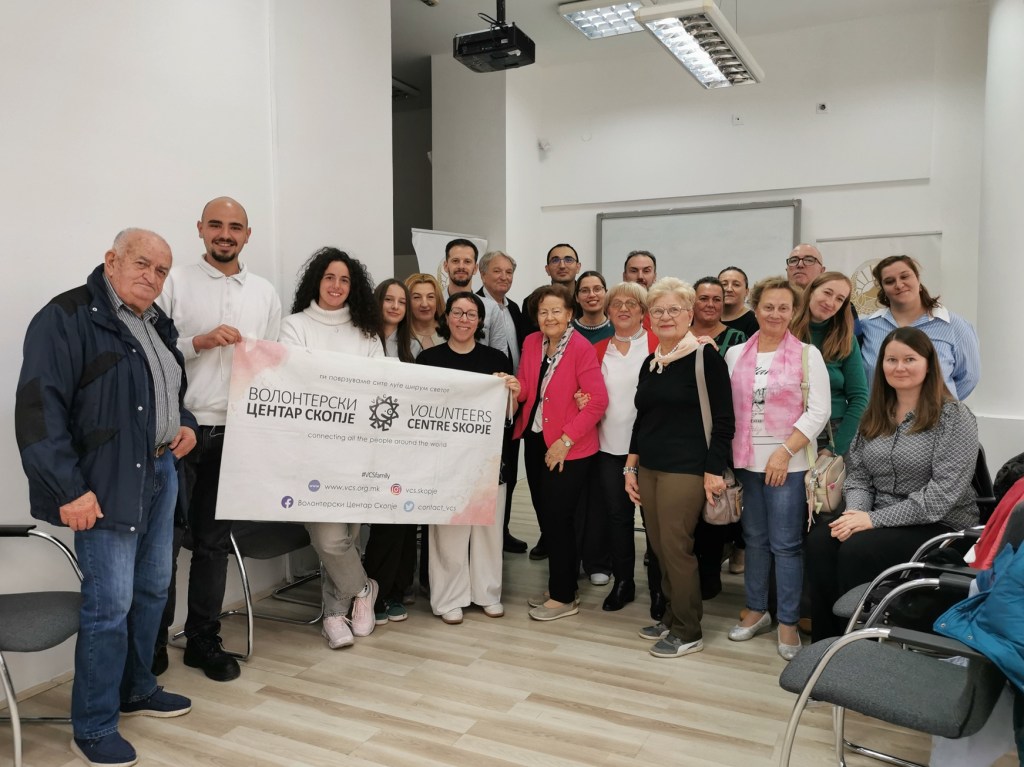
Volunteers Centre Skopje organised the Intergenerational Public Parliament that—despite planting unexpected solutions to bridge the gap between the generations—also gave us more food for thought.
What do young people think about seniors and the other way round? How do we feel about each other? What are the stereotypes that create this barrier between the generations?
We asked the questions and we tried to find answers to them. It was a revelational experience. One room, day and time brought generations together – youth and seniors. The initial goal of the event was to exchange perspectives, challenge stereotypes, and discover what we can learn from each other. To explore how to communicate better, overcome barriers, and turn our ideas into practical ways to build a stronger community. And I think we went beyond. It felt “real”, because the participants gave examples from their lives. Young people talked about their grandparents, reflecting on the relations they had with them, but also about the other older people they may encounter every day: on the street, in shops, in the bus. The seniors, who we also called lovingly “young with experience”, shared their perspective too. One of the things that kept repeating was “spending time on the phones”; it’s how they see the young people nowadays, which is a sad truth. But one lady openly wished to be offered the opportunity to play mobile games with her grandchildren. And that is one of many cracks in this barrier between youth and seniors that we were happy to discover.
Both sides spoke. Both listened. Both agreed or disagreed, but at the end of the day–both understood. Intergenerational connection started.
But what does that even mean: intergenerational? Involving different generations. But involving how? That’s what we are studying through this event and through the Erasmus+ KA2 project. The Intergenerational Public Parliament was part of the project “Très Share Generation”, a Small-scale Partnerships in youth project connecting young people and seniors from France, Spain and Macedonia through intergenerational and intercultural learning. The project creates opportunities for participants to share life experiences, practical knowledge, traditions and skills through workshops, mobility activities and informal learning.
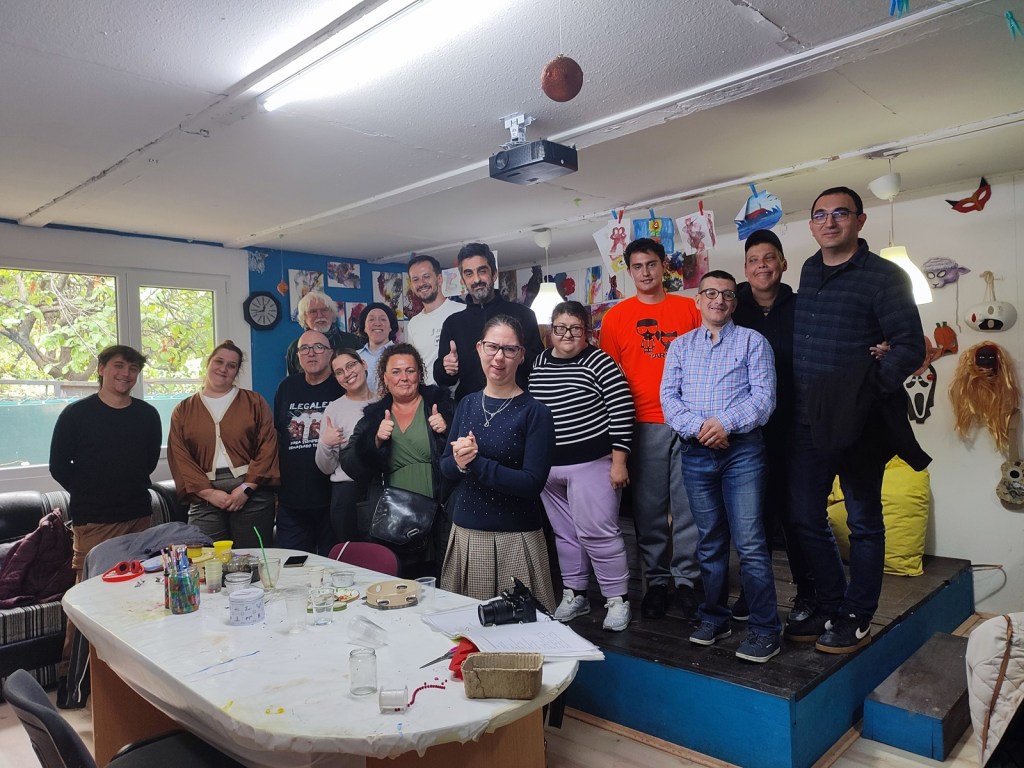
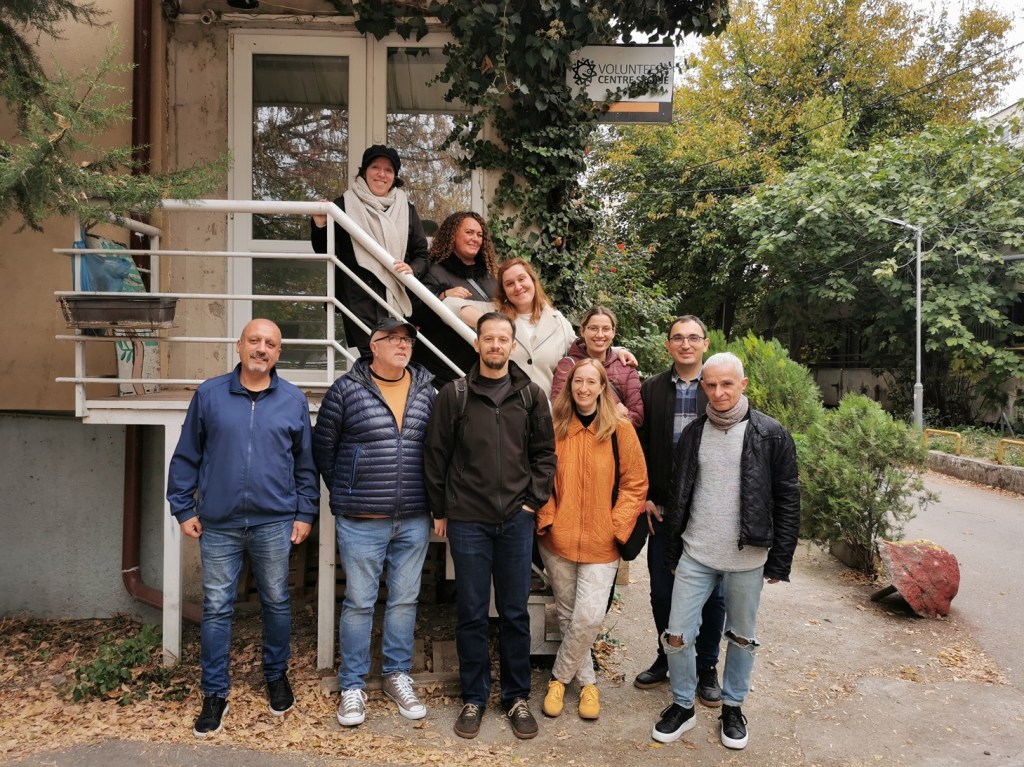
Volunteers Centre Skopje hosted the first mobility of this very project, kick-off and study visit, that took place in Skopje from 26.10 to 1.11.2026. And we are inspired to continue.
During the Public Parliament and the kick-off and study visit overall, involving different generations happened both in practice and theory. Besides collecting enormous material for the intergenerational guide and the future youth exchange that we are preparing, we also have seen it happen physically. It was in the dialogue, when young and “young with experience” faced each other and talked. It was the moment when the older lady wanted to learn how to play games on mobile. It was the spontaneous game of hopscotch that we had on the street after the Public Parliament where the youngest participant was 15 and the oldest 58.
Empathy. Understanding. Communication. Respect. Patience.
Those are the key words we have taken from the Public Parliament. We can build on that. It was merely a good start, but not only for the project that we will develop in the next few months. It was the beginning of the dialogue between generations.
I learned a new word during that week. Ageism. Have you heard that one before? I didn’t. I’ve heard about the discrimination based on gender, race or religion. But there is a word to describe discrimination based on age, that affects young just as much as elderly. It is ageism. And just because it is less known than the word racism, doesn’t mean that there is less ageism than racism in the world.
And if you ask me, dialogue between generations seems like a good start of combating ageism. What we sometimes lack is understanding of the other side. We don’t understand younger people. We don’t understand older people.
“My favorite age is now,” said Kirsten Dunst when asked about aging. Yes, beloved Mary Jane of Peter Parker from Spiderman 2002-2007.
Any age can be your favorite. Any age is good. Good to play mobile games, to do crosswords and to crochet. Like suggest those boardgames that sometimes have “Age: 5 to 100+” written on it. And all there is offered by the world we can do together. Intergenerational experience.
Ewelina Chańska
With warm regards to our “Très Share Generation” project partners: Centre Social des 4 Quartiers from France and Asociación Filia from Spain. With you, “the age is just a number” takes on a new meaning.


Leave a Reply