
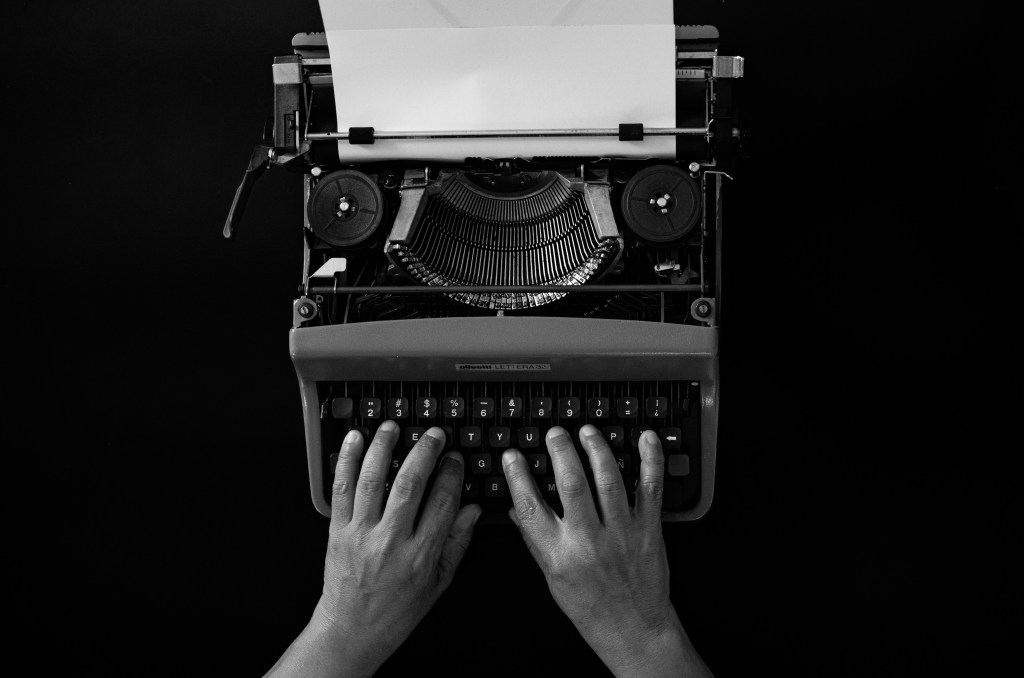
She says. “But when somebody asks me what I do? Where do you work? I think, oh man.” Because the answer is not that simple.
Everybody likes to watch movies or theaterplays but who are the people that start it all and lay the base of the play months before the curtain falls for the first time?
Those are the playwrights, and one of them is Eva Kamchevska, hating to stand in front of a camera or speak in front of a lot of people, she flourishes behind the scenes.
Growing up surrounded by American movies and TV shows it seems like working in the film industry has always been her destiny.
Born in Skopje, she went straight from high school to the Faculty of Dramatic Arts in Skopje. After finishing her master’s in script writing, she worked for some time for TV channels before receiving a scholarship to study in Canada for a year. When she returned, she joined the production for one of the few children’s shows made in Macedonia.
Freelancing, though creatively fulfilling, proved unstable, eventually leading her back to a more stable job at a TV channel.
“I think that I’m juggling and managing it well,” Eva explains. “To have that day job and some salary, which is always on time”. Unlike freelancing, her job now provides safety.
In a country where making a living solely from writing scripts is difficult, she has made a pragmatic compromise.
For Eva, the challenge is not just personal but a reflection of a broader reality where you need to navigate through an industry that often rewards conformity over authenticity.
Theater and film have the unique ability to make people think and feel. They act as a mirror of society, reflecting cultural values and struggles while fostering empathy and critical thinking. Art, being a form of expression and protest in itself, makes it fundamental for society.
Yet artists are increasingly undervalued, often expected to work for free, something Eva can tell from firsthand experience.
“In my country, people think: Oh, it’s art. Why should we pay for art? Like, oh my God, when you go to buy bread, do you say, ‘I’m hungry, I’m not paying for it’’? she says.
While the audience wants to enjoy movies and plays, the artists behind them struggle to get paid fairly, forcing many to choose between stability and creativity. Leading art to slowly vanish.
“We went from a horse to a donkey,” Eva remarks about the decline of the industry.
Still, giving up on writing is no option for her. She continues to work on her scripts in the evenings, keeping her always busy and her passion alive. Her goal is to write stories in which the viewer can recognize themselves.
“I’m trained to work for film and TV. That’s my profession. That’s my vocation,” Eva says emphatically. Her struggle is not just about opportunities but about being understood on her own terms. “You have to know how to play the game,” she says. “I’m really not into that kind of stuff and that gets me to where I am. So that’s also an issue.”
Wanting to build a career beyond her home’s borders has presented yet another set of obstacles. “When you come from such a small country, they see you as an outsider,” she explains. “They have their own vision of what they want to see from a country like Macedonia.”
Expecting her to write about war, even though she never experienced one.
“If I were affected by the war, I would write that kind of stuff if I feel like it,” but she never was.
Her refusal to play into those narratives and adapt to those expectations is a conscious choice. “I’m refusing to play the game. For me, then, the art doesn’t really make sense.”|
So she sticks to absurd scripts and that with success.
A script disliked in Macedonia got her an award in Germany, showing that cultural backgrounds can influence our taste in movies and art as well.
The popular idea that if you “find your passion, you’ll never have to work a day in your life” seems almost cynical in this context. For many artists, that quote feels increasingly detached from reality and more like a romanticization of their struggle. Passion in Eva’s case, does not replace work – it adds on.
Her path reflects the quiet reality shared by many artists: even though passion might not pay the bills, without it art wouldn’t exist at all.
Nelli Winzer


Leave a Reply