
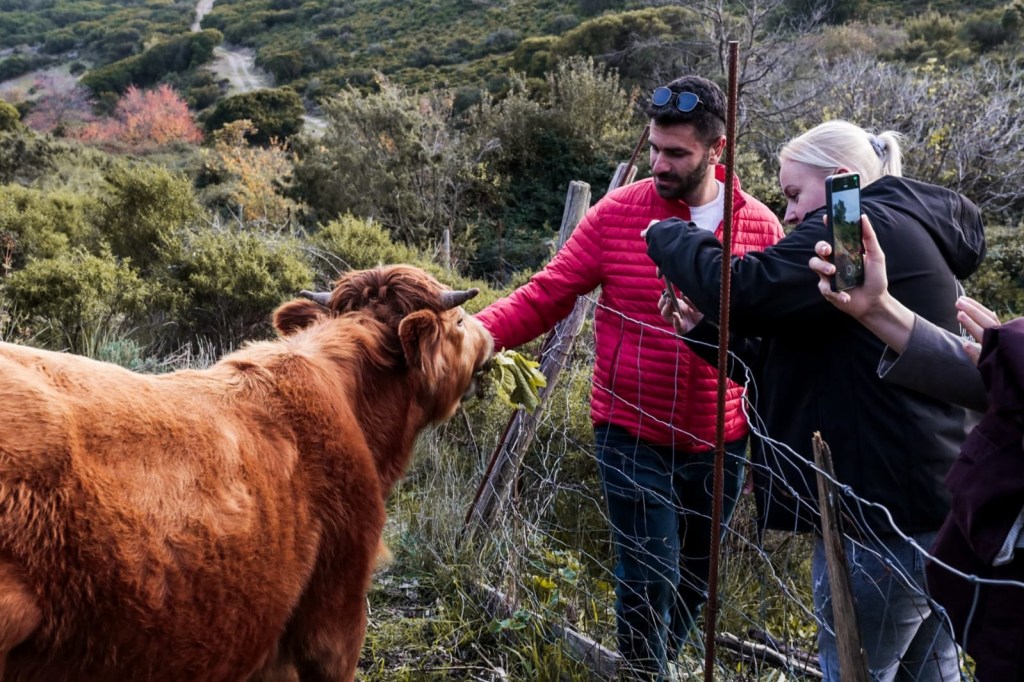
“Brick!”, calls Anastasija and we are all waiting in anticipation looking up the grassy hill. A blink of an eye later, the caramel-brown, quite small and happy bull is running downhill to meet us at the fence, his tail wagging. “He wants the treat first”, says Anastasija, while Riccardo gives him a juicy green branch to eat. Then Brick is receiving affection from us.
Brick has been in the sanctuary since he was a baby and this summer he will turn 2 years old. He is quite an adult but he is smaller than bulls his age, as he stopped drinking milk at an early stage.
“His mother refused to feed him, and his previous owners were unable to care for him. He was also too young to be sent to the slaughterhouse, so they reached out to us, and we took him in.”
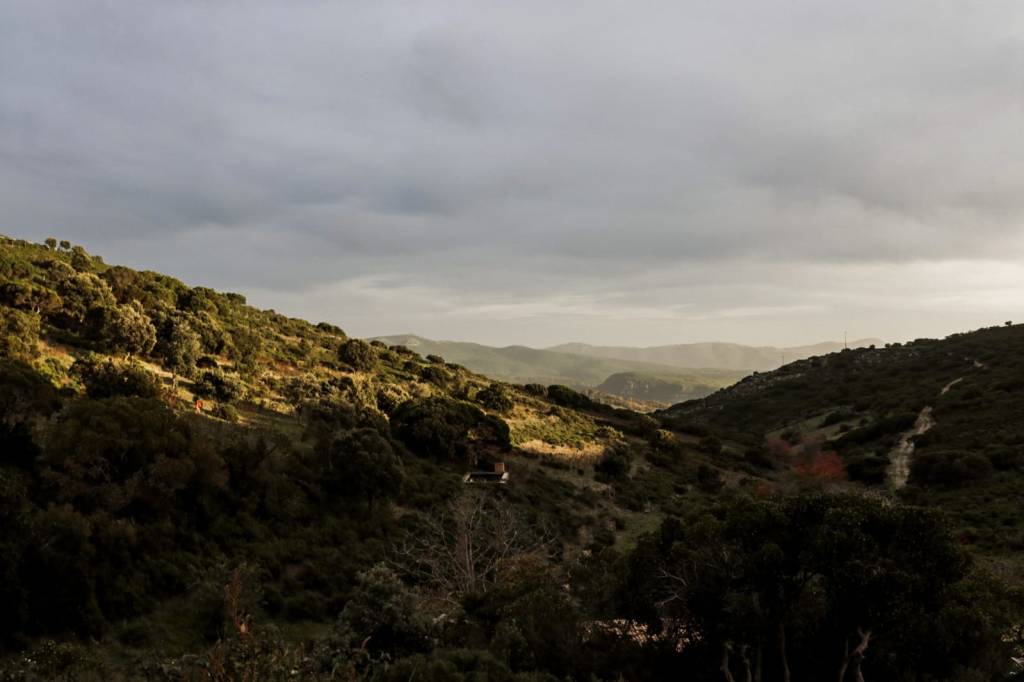
Brick is one of many animals taken in and cared for by Anastasija and Riccardo, two young people who in spring 2024 founded Arrexini Asula, a youth and animal sanctuary, located uphill Seulo, in Sardinia. Arrexini Asula, translated from Sardinian to English Blue Roots, refers to its home, which is one of the five blue zones in the world (blue zone is a place where the people live extraordinarily long). This youth-led organisation supports marginalised and neurodivergent young people through non-formal nature education while running an ethical, nature-friendly animal sanctuary. “Our vision is to create an eco-conscious, creative and inclusive reality where nearly everyone can find a natural outlet to support themselves and the environment.”
Anastasija comes from Latvia where she has done youth work with a focus on marginalised youth, youth with disabilities, neurodivergency and those under social services care. “Since I was a child I have loved animals (yes, I’m vegan) and have always been very curious about nature”, Anastasija says. She calls herself “structured creative” and this mix of work she finds at the moment the most fulfilling, a perfect balance between youth work and project management.
Riccardo has deep roots in Seulo. He is a youth worker, project manager and community organiser. Riccardo says that his experience in youth work started with serving as a student representative and organisational manager for the Union of Students in Cagliari, where he coordinated youth-led initiatives. This eventually brought him to the civil service in TDM 2000. He then gained international experiences in ESC volunteering, mobilities and project management. “Currently, my hyperfocus is on permaculture – I enjoy learning and experimenting as much as I can and sharing my knowledge with others”, he adds.
And you might have asked how one Latvian and one Sardinian happened to found a youth and animal sanctuary in a rural place on an island? They met at an Erasmus+ training course in Malta in 2022, keeping in touch since then, visiting each other and brainstorming. They both shared love for animals and nature. It was a moment when Riccardo, passionate about Seulo, saw it as a location to create something new in a youth work sector and Anastasija needed something new as well in her youth work and project management life. One serious talk in an Indian restaurant later they decided to do something together. And those who visited them in their blue-rooted paradise can certainly say that all the heart and passion they put in the (also bureaucratic) fight was worth it. Now as a still quite a young organisation, they keep expanding their range of activities.
“Besides the sanctuary, we coordinate a range of local initiatives and implement several EU-funded projects. We maintain a permaculture garden and do permaculture workshops. We are actively developing initiatives for neurodivergent youth. For example, we are currently managing a youth mobility project with Latvia called “Talking Roots,” which involves young people with neurodivergence from both Sardinia and Latvia. We also run a “free shop” – Trashop, which currently operates as a Saturday free market. As part of this initiative, we organise upcycling workshops for both the local community and visitors.”
They are involved in solidarity projects, as well as small-scale partnerships, while brainstorming and working on new ideas. “At the moment, we are particularly interested in exploring nature expeditions and permaculture as themes for our future projects. Soon we will also start to offer and lead nature therapy sessions”, they say.
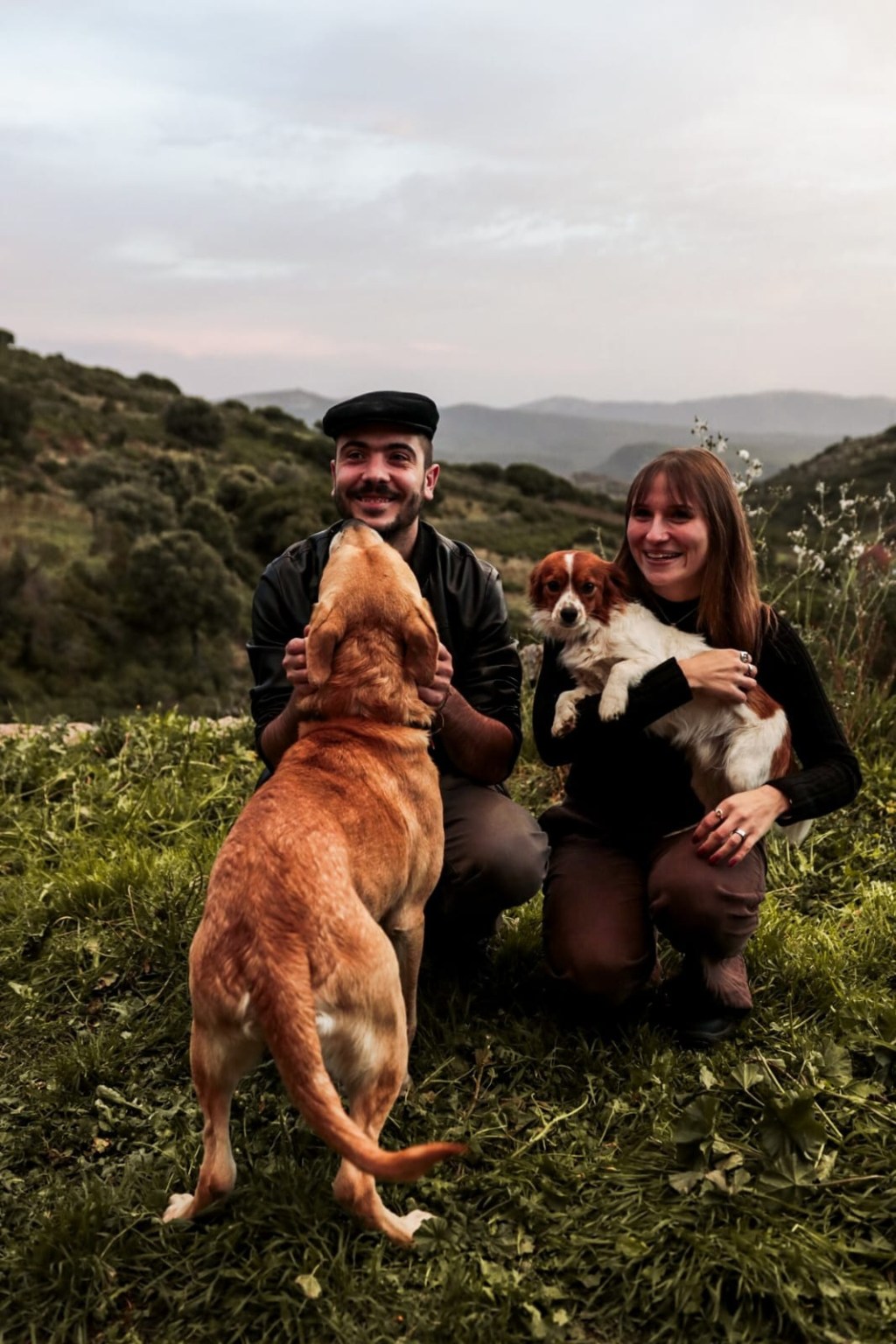
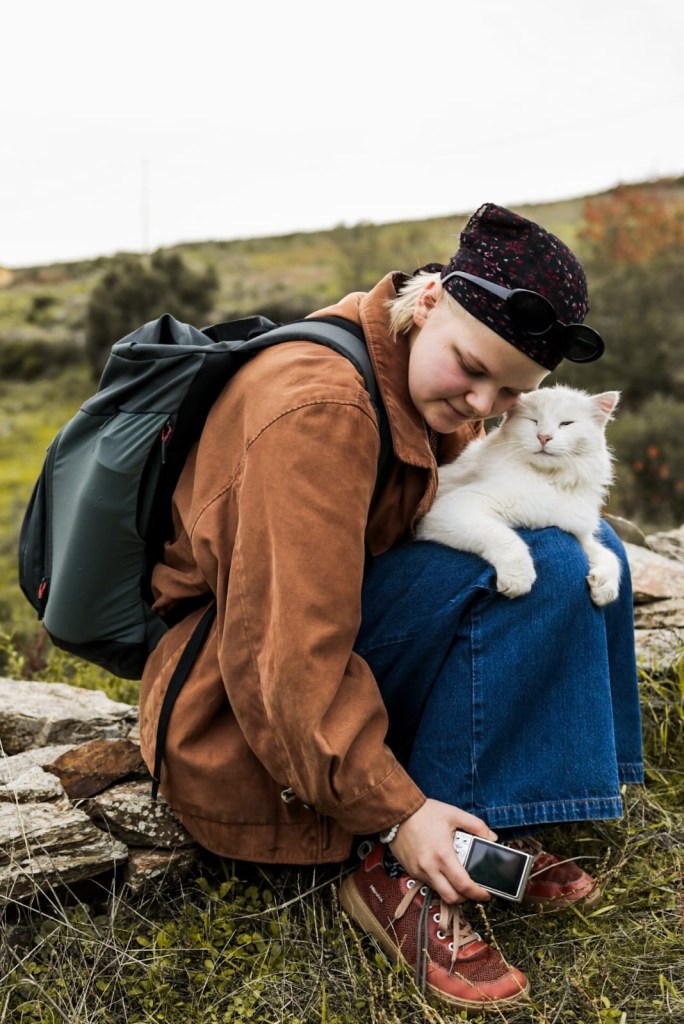
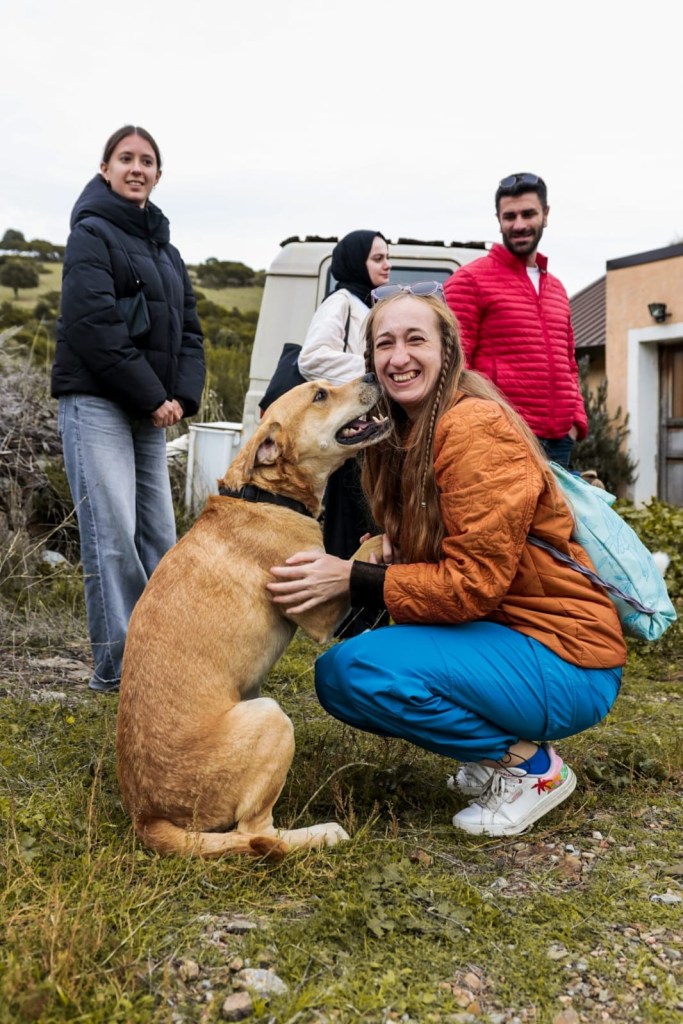
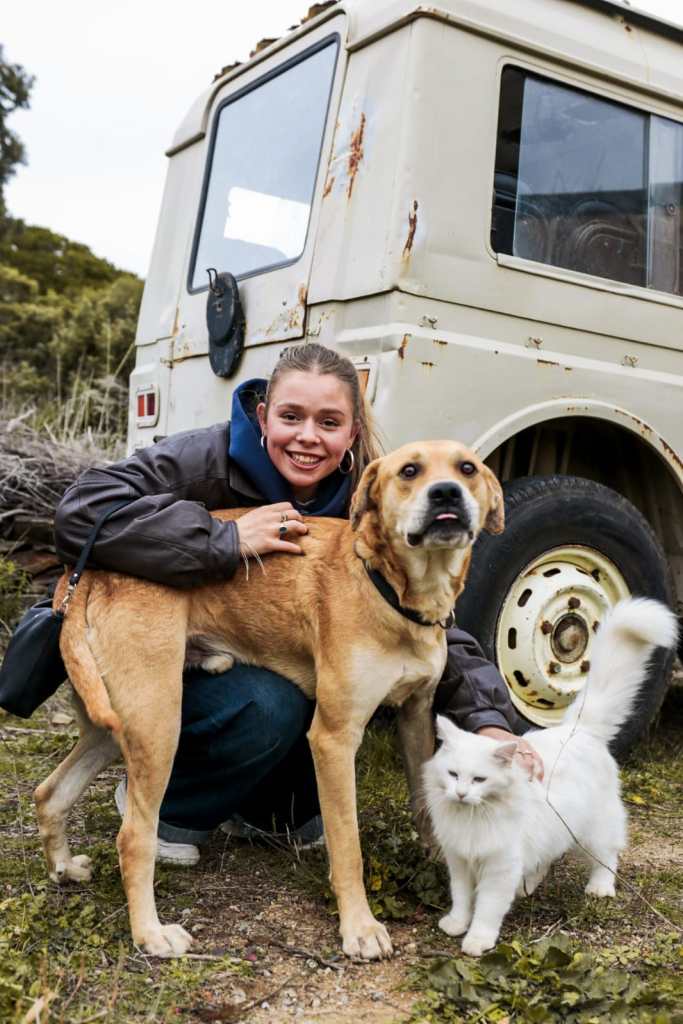
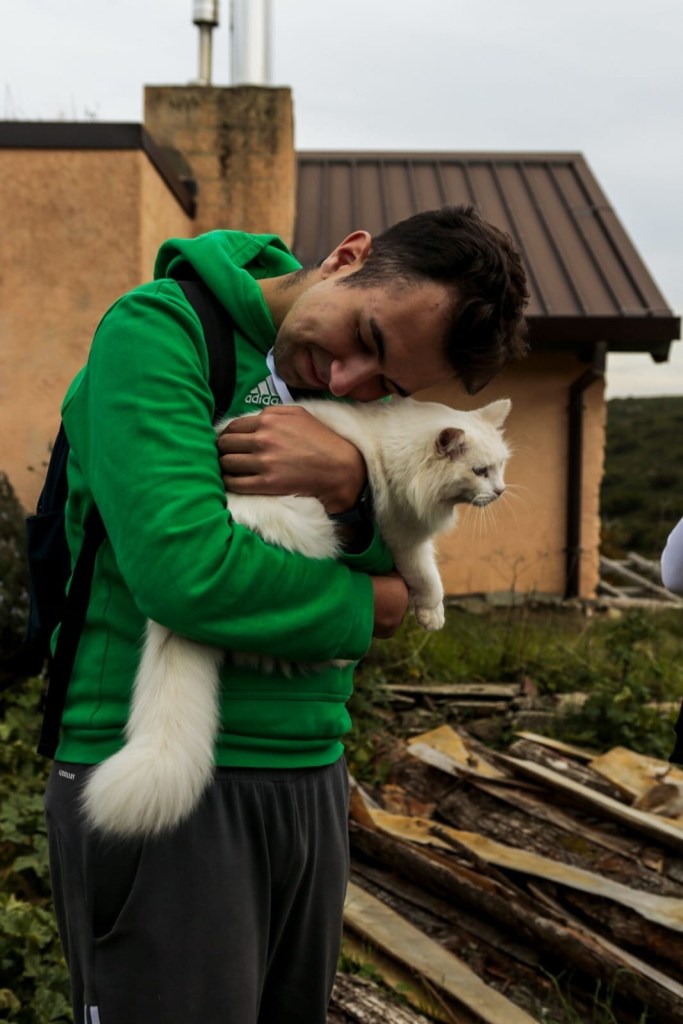
We are walking in the garden, Anastasija and Riccardo giving us a tour, telling stories about animals and explaining the gardening process. Dogs are roaming free around us, definitely happy to have even more hands to pet them, cats multiplying in our eyes, appearing here and there from the bushes. The sanctuary is a home for five dogs: Russell, Nala, Gilda, Pulce and Bambi; six cats: Fagiolino, Carciofa, Dalia, Iris, Saddy, Matilda; two sheep, and of course, you know the bull Brick already. At the moment of our visit, there was also Peppo the pig, a good friend of Brick.
“Peppo and the sheep arrived from a woman who was no longer able to care for them, and as a result they had experienced some neglect. When Peppo first came to us, he was severely overweight and could only walk a few steps before becoming exhausted. After a few months, however, he regained his strength, colour and became much more active, eventually returning to a healthy and energetic state for his age.”
We met Peppo running toward us, and just as Brick, expecting to get cuddles (and a treat). Healthy. Happy. Sadly, he died recently, and we believe that he lived his happiest life in sanctuary.
“The last year has actually been exceptionally difficult with the animals. We have gone through some bad accidents and circumstances in which we have lost quite a few of our animal friends – our pigs Iggy and Peppo died, we have also lost sheep”, shared Anastasija and Riccardo.
Each animal has its story. And each was offered a second chance in sanctuary.
“Every animal in our sanctuary has been rescued in one way or another. Russell, Nala, and Gilda come from a dog shelter, while Pulce was taken in from a shepherd who disposed of puppies in what could be described as an “old-school” way. Carciofa, Fagiolino, Dalia, Saddy, and Iris are kids of a cat we rescued, and Matilda came from an owner who had not been taking proper care of her.”
They love it there, they love Anastasija and Riccardo, although some of them are still untrustful towards visitors. “We are in constant collaboration with a vet and local animal keepers (who have kept animals for decades) to make sure our animal friends are happy and healthy. As the animals we take in are rescued, they often come with certain health conditions or behaviours which need specific care, for example Russell has leishmania, Nala and Matilda are very socially anxious, the sheep don’t have any natural instincts, Bambi is aggressive, Fagiolino has a severe sensitivity to the sun.”
Working with animals is rewarding as they return the love and care back, they are also heroes in all the small animal stories that happen in Arrexini Asula on a daily basis. Anastasija and Riccardo, laughing, shared some of them with us. There is a story of Russell, a dog that very anxiously attached to his new care-givers, managed to learn how to open the window, just to follow them. Also, Brick learned how to jump fences, only to come and hang out in front of the door to his owners’ house.
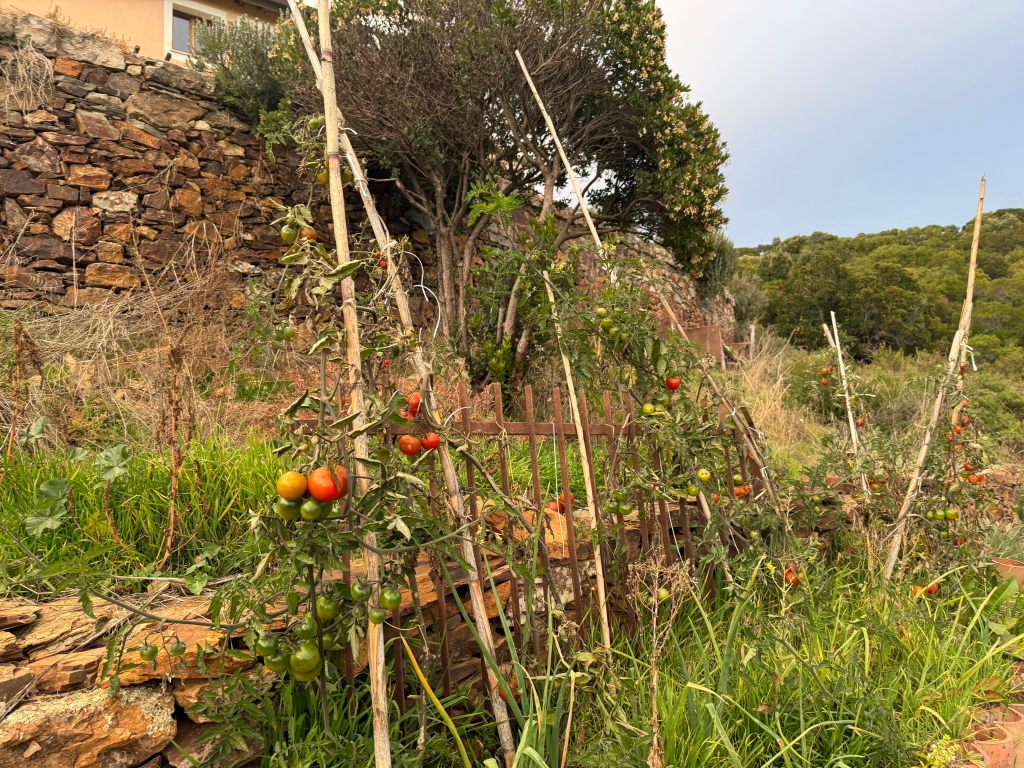
We are passing through the garden. Seeing all the greenery dotted here and there with red spots of ripe tomatoes. Riccardo takes one from the branch, giving it to me to try. I will eat it an hour later, when the scents of the place I visited will still be fresh in my mind. “Be careful, don’t step on rukola”, says Riccardo laughing. Rukola. Rocket. Arugula. A treasure that not everyone of us can grow in their gardens, especially we, who live in the cities.
The daytime in Arrexini Asula is seeping and is very full. It is fulfilling too. “We wake up early to prepare food for the dogs and then go and work together with our “garden cat” Iris in our permaculture garden – to water, plant, clean up, harvest. After that our animal morning routine starts – feeding the dogs, cats and doing daily visual and health checkups.” There is time for “computer work”, rest, having visitors, and also having volunteers come by to help.
“At lunchtime we take a short rest, during which we often do a “dog zoomie session”. Quite frequently during the week we just go outside and jump around with the dogs for a little bit, as it brings joy for both – the dogs and us.”
I imagine that–a “dog zoomie session”–standing there in this green green land with blue roots, surrounded by dogs running around.
We now enter the house, located in the heart of the sanctuary. Cosy space opens up in front of us, the cats and dogs follow, settling in on the sofas. “Give yourself time” is written on the wall of the living room. And indeed the sanctuary is the place where you can give yourself time. A place where you want to stay at least for a while and come back to visit when you feel like you are losing your roots. And our roots, as humans, are certainly deep in nature.
Ewelina Chańska
Pictures: Hubert Marynowicz
Arrexini Asula: on Instagram | on Facebook


Leave a Reply