
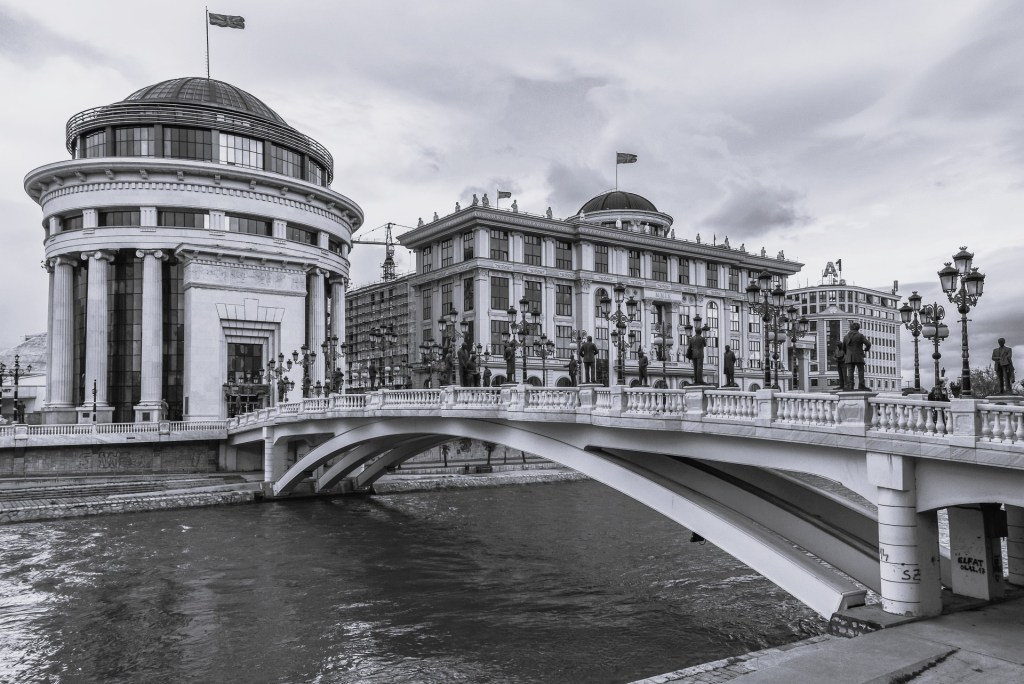
As an interior architecture student, I experience new cities through observation, noticing how people use spaces, how atmospheres form, and how everyday life shapes design.
In Skopje, one of the first things that stood out was the café and bar culture. It reminded me of Türkiye’s meyhane tradition, places not just for eating and drinking, but for slowing down and connecting. The atmosphere through lighting, layout, and openness becomes part of how people unwind and spend time together.
As I moved beyond the center, the city unfolded in layers. Streets shaped by different communities each carried their own rhythm. Materials, colors, and spatial transitions kept shifting, turning every walk into a new composition. It made me realize how identity lives in space, not as a fixed style but as something constantly evolving.
Skopje’s character is also shaped by its history of reconstruction after the 1963 earthquake. The presence of modernist and brutalist architecture gives the city a raw yet expressive quality, feeling both unfinished and intentional at the same time.
This becomes clearer through its key buildings. The Museum of Contemporary Art reflects openness and collective rebuilding, while the former railway station, now the Museum of the City of Skopje, holds memory in a physical way with its clock frozen at 5:17. Alongside the fortress and the monumental structures by the river, these layers show how the city moves between past and present.
Then there are quieter moments within the city itself. Places like Matka canyon or Mount Vodno shift the pace, offering a sense of calm and a different spatial scale overlooking Skopje. From above, the city reads as a composition of layers, where natural and built environments exist in constant dialogue.
Skopje, to me, feels like a balance of contrasts, raw yet calm, layered yet fluid, a city you don’t just see but slowly experience.
Berna Demirci


Leave a Reply