
As an architect interested in cultural heritage and urban identity, the way I try to understand a city often follows certain steps. While volunteering in Skopje, I used the same approach to get to know the city. The first step is to experience the city on foot: observing how streets connect, where public spaces are concentrated, and where people gather. The second step is to follow the historical layers of the city: understanding how architectural traces from different periods exist side by side and relate to each other. The final step is to observe how people interact with spaces in their daily lives, because the true meaning of a building or public area often appears in how people use it.
During my observations following these steps, I noticed that some spaces act as strong thresholds, connecting different layers of the city. These thresholds can be a square, a street, or a point that links two different urban areas.
The clearest impression I gained from my walks in the city is that Skopje is more than just its buildings. It is a layered city where different periods, cultures, and architectural styles coexist. These layers appear in a square, a narrow street, or even on a bridge.
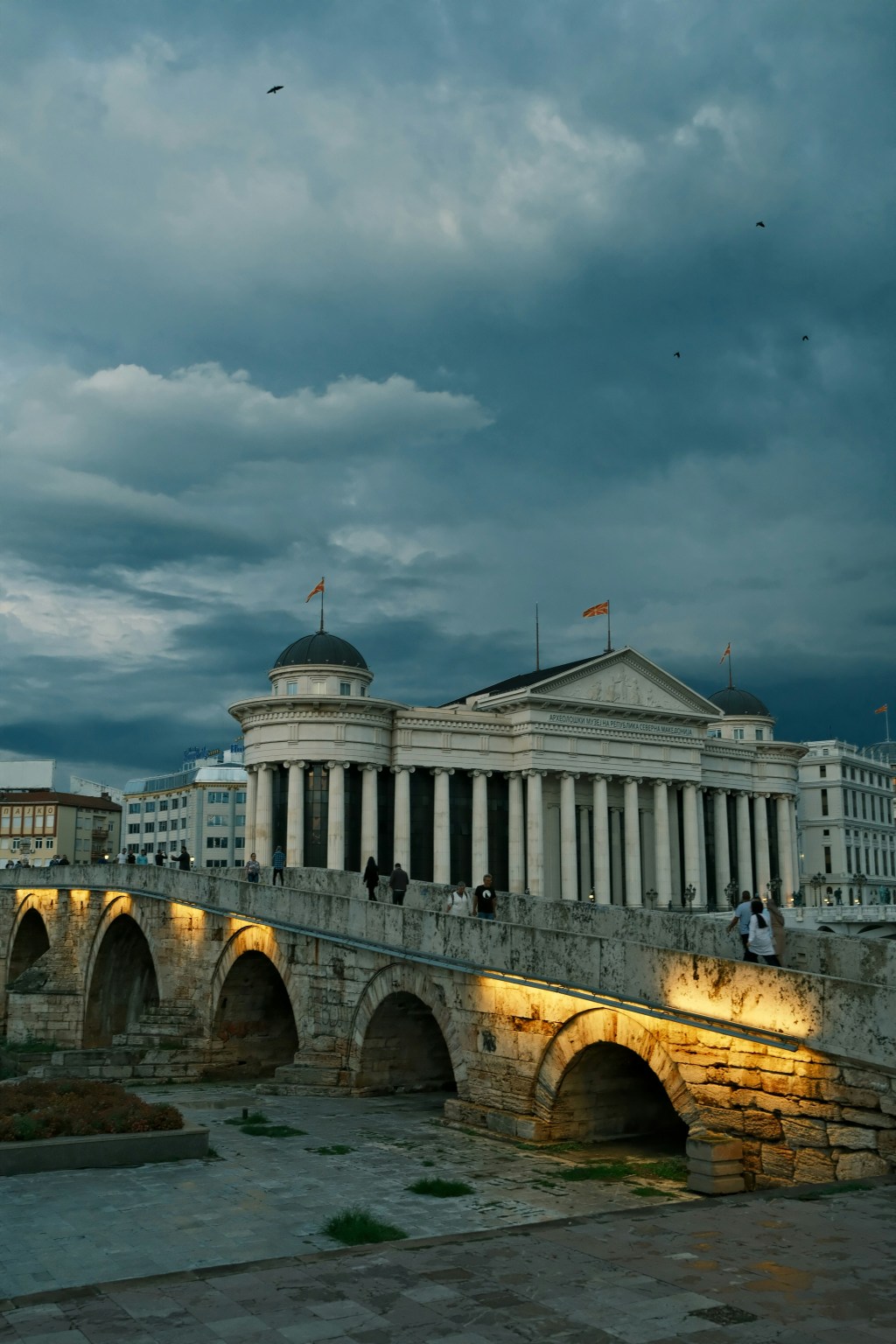
At this point, the Stone Bridge over the Vardar River stands out as one of the spaces that best shows the city’s layered structure. With a history of around six centuries, this bridge is not just a means of connecting two banks; it also forms an important spatial axis that makes Skopje’s historical development readable. On one side are the narrow streets and traditional buildings of the historic bazaar, while on the other side are modern squares and new urban layouts. The bridge provides a physical transition between these two urban characters, while also symbolically connecting the past with the present.
Even a short time spent on the bridge shows that it is more than just an architectural structure. At different times of the day, different activities can be observed: tourists taking photos, people pausing for a short conversation, or moments of quiet reflection by the river. People use the bridge not only as a passage but also as a temporary public stop. This transforms the bridge’s role in the city from a simple infrastructure element into a social meeting and encounter space.
The architectural simplicity of the Stone Bridge supports this strong urban role. Its stone arches and rhythmic openings create a balanced design that harmonizes with both the river view and the surrounding urban fabric. Therefore, the bridge is not only a historical structure but also an important architectural reference for understanding Skopje’s urban identity.
Understanding a city often requires observing not only its buildings but also how these buildings fit into people’s lives and public life. My walks and observations in Skopje showed that the city’s identity is shaped not only by its architectural forms but also by the social meanings of its spaces. The Stone Bridge is one of the strongest examples of this relationship, serving as a threshold that brings together the past and present, different urban layers, and people. In this way, the bridge continues to exist not only as a historic structure but also as a living public space that carries Skopje’s collective memory and urban identity.
Nazar Erginyavuz


Leave a Reply