And for decades, women have been told not to speak too loudly.
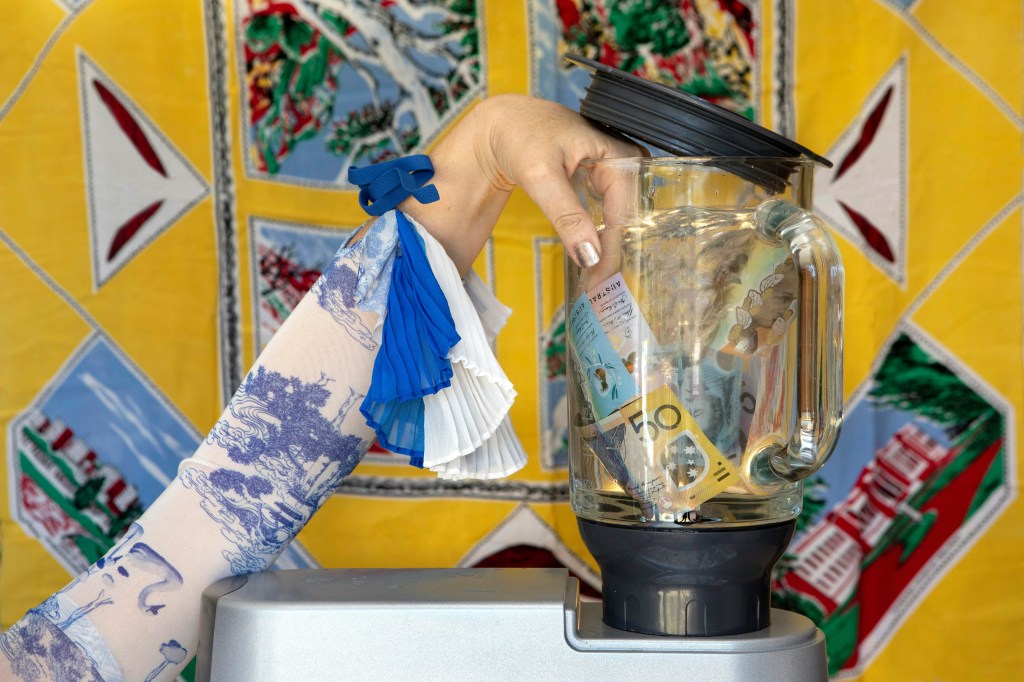
According to a 2023 report from Harvard Business Review, women are still less likely than men to negotiate salaries, funding, or investment opportunities, not because they lack confidence or competence, but because they are more frequently penalized socially when they do. At the same time, data from McKinsey & Company and LeanIn.Org shows that women-led businesses continue to receive dramatically less funding worldwide despite performing just as well, if not better, over time.
The contradiction is almost ironic: women are expected to lead, create, nurture, organise, innovate, but still hesitate to ask for more in return. The contradiction feels almost absurd. Women are expected to lead, create, organise, nurture, innovate but asking for more in return still comes with consequences.
I’ve been self-employed for more than two years now. I started working for myself at 25, not because I romanticised freelancing, but because in the reality of the design industry, it felt like the closest thing to both survival and freedom. I was always the youngest person in the room, always moving before permission arrived, from institutions, clients, or peers (typical annoying Gen Z behaviour, maybe, but also a necessity).
Arriving in Macedonia made me question the place women occupy in entrepreneurship here. In France, and across much of Western Europe, conversations around women in business, economic independence, and representation have become impossible to avoid. Yet even there, genuinely visible female success stories remain rare. Rarer still are stories of working-class women, racialised women, queer women, lesbians, the ones who rarely make the front page.
What struck me most in Macedonia wasn’t only the ambition of the women I met, but the way they imagined success collectively rather than individually.
A lot of my male friends run businesses too. Whenever I talk to them about community-based or charitable projects, the reaction is almost always immediate: “You’re not seriously going to do that for free?”
Maybe that says everything.
Because women entrepreneurs often understand something capitalism still struggles to quantify: community is infrastructure too. Care is labour too. Creating spaces where people can meet, learn, exchange knowledge, and support one another isn’t secondary to business, it’s part of building sustainable futures.
It feels increasingly urgent for women to build networks, business clubs, and communities of their own. Not in the exhausted language of performative “girlboss” culture or corporate networking circles, but as spaces for political education, financial literacy, mentorship, and collective growth. Spaces where women share resources instead of competing for the single seat historically left available to them.
Every woman I interviewed spoke, in one way or another, about transmission. The desire not only to grow, but to bring others along with them. They spoke about exhaustion, doubt, visibility, ambition but also excitement. Hope, even. A belief that collaboration, solidarity, and persistence can still reshape the future.
And maybe that’s the most radical thing of all: women imagining futures large enough for other people to exist inside them too.
Throughout my conversations, one idea kept resurfacing: these women refuse to exist in only one dimension.
Women like Dina move between worlds without apology. She works in tech while DJing at night, navigating corporate structures, nightlife, strategy, creativity, and culture all at once. She refuses the idea that a person, especially a woman, should fit neatly into a single category.
And maybe that’s exactly where a new form of female entrepreneurship is emerging.
For a long time, society expected people, especially women, to wear only one hat. To be legible. Easy to define. Easy to market. You were either serious or creative. Ambitious or caring. Artistic or strategic. Women who moved between different worlds were often perceived as unfocused, inconsistent, and difficult to categorise.
But contemporary work no longer fits inside those rigid binaries.
In a world shaped by economic instability, digital acceleration, and constant reinvention, being multi-potential is no longer a weakness; it’s survival. The ability to adapt, shift industries, learn new skills, and connect different disciplines has become a form of intelligence in itself.
That’s what fascinated me most about the women I met in Macedonia: their comfort with complexity. They are designers organising cultural events, developers involved in activism, founders who are also artists, mothers, researchers, DJs, and community organisers. They don’t separate creativity from professionalism; they use one to strengthen the other.
There’s something deeply political about allowing yourself to exist fully. To refuse reduction. To stop performing a single acceptable version of womanhood.
For many women, embracing multiple identities becomes a way of recognising the full extent of their abilities. Once you stop limiting yourself to one role, you realise your skills are transferable, creativity becomes leadership, empathy becomes management, artistic sensitivity becomes strategy.
None of the women I interviewed was trying to become a perfect symbol of success. They were building lives flexible enough to contain every version of themselves. And maybe that’s what entrepreneurship looks like now: less like a linear career path, more like an ecosystem of skills, passions, contradictions, and survival strategies evolving alongside the world itself.
Thank you so much to Jovana Kocevska and Dina Damjanovikj.
Aurélie Elisa Morra


Leave a Reply