
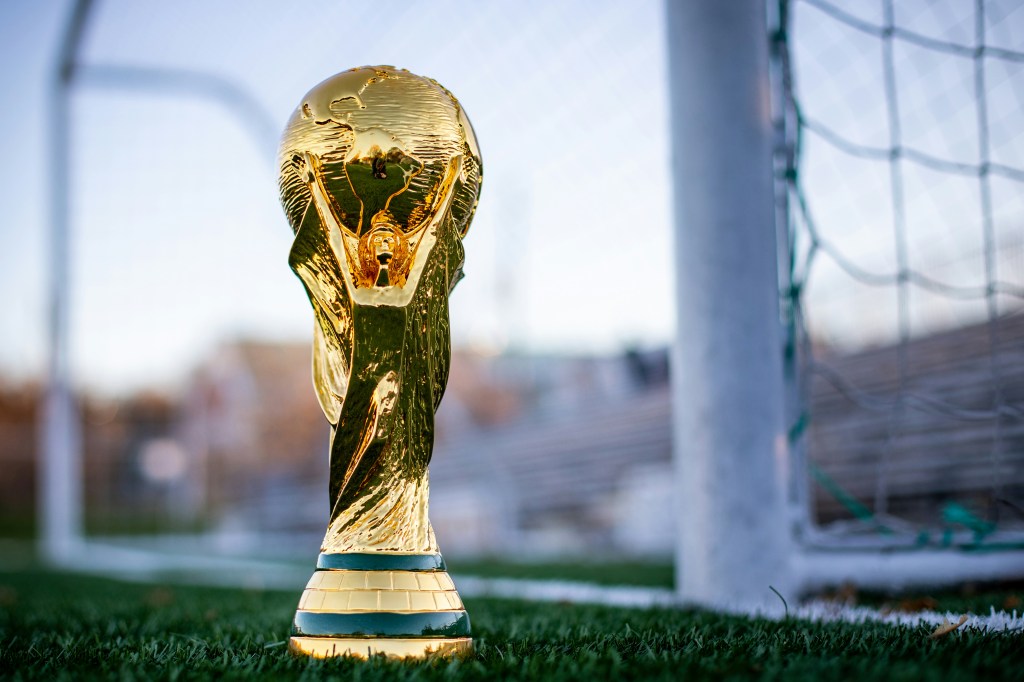
The world is counting the last days before the start of the football World Cup on 11-th June. For the first time, there will be 3 host countries: Mexico, the United States and Canada.
The World Cup takes place every 4 years, starting from 1930, and since then it has been held every four years, except during the war, when it was not held.
This year’s edition features 48 teams for the first time, meaning we’ll have more matches compared to last year’s edition, which had 32 teams. This new system was introduced to give teams that have never participated in the World Cup a chance. It also includes three host countries, meaning more matches for them.
The 2026 FIFA World Cup will not only be the biggest sporting event of the decade. With 48 teams, 104 matches and three host countries, this edition represents a profound transformation of the global sports, marketing, tourism and media industries. More teams, more games, more money. According to FIFA, the global economic impact of the tournament could reach nearly $80 billion, making this competition the most profitable football event in history.
The 2026 World Cup marks football’s entry into the realm of a “global mega-industry.” The increase in the number of teams and matches allows FIFA to multiply: TV broadcasting revenue, sponsorship contracts, ticket sales, merchandise, technology, and partnerships.
FIFA’s expected revenue could exceed $11 billion, compared to approximately $7.5 billion during the 2022 World Cup in Qatar.
The tournament’s expansion is also strategic: more participating nations mean more television markets, more local sponsors, and a wider global audience. The tournament thus becomes an arena for economic competition between sports brands, digital platforms, broadcasters, and investing states.
The 2026 World Cup will likely be the most-streamed sporting event in history. The audiovisual industry is evolving rapidly: OTT platforms, mobile streaming, TikTok content,
AI for live statistics, augmented reality, and immersive fan experiences.
Television rights remain FIFA’s primary source of revenue. The expanded format of 104 matches automatically increases the volume of content that can be sold to broadcasters and digital platforms. Broadcasters are now looking to transform each match into an interactive experience: integrated sports betting, personalized advertising, real-time analytics via artificial intelligence, and exclusive content for premium subscribers.
Host cities are investing heavily in: transportation, stadiums, hotels, digital networks, security.
However, this industrial approach also raises criticisms: an explosion of public costs, rising ticket prices, risk of “empty stadiums”, profits concentrated in the hands of large companies.
Many economists point out that the economic impact of mega-events is often overestimated. Some discussions on Reddit highlight the fact that the profits benefit FIFA and large corporations more than local populations.
The 2026 World Cup confirms a strong trend: modern football now functions as a global entertainment industry. As the first man of FIFA, Gianni Infantino stated, “the tournament will be the greatest show on Earth.”
Adrien Graveraux
Sources:
Coupe du monde de football 2026 — Wikipédia
Coupe du Monde de la FIFA 2026™
2026 World Cup: FIFA revenue projections and global economic impact | beIN SPORTS


Leave a Reply