An Interview with Francesco Muri, artistically known as VISCER
Body Painter · Photographer · Artist
“I want to create something that makes people feel before they understand.”
Art is more than something we see — it is something we experience. In this interview, Francesco Muri opens up about his journey as a body painter, photographer, and artist, sharing his sources of inspiration, creative process, and the emotions behind his work.
Who or what is your muse?
My muse is the human body, but not the body as something beautiful or perfect. I am interested in what is underneath it: instinct, vulnerability, desire, wounds, sexuality, identity. People are my greatest inspiration. Sometimes a specific person. Sometimes simply the relationship that is created between two human beings. I see the body as a sort of language. Something that can speak even when we don’t.
What or who brought you into this specific art performance?
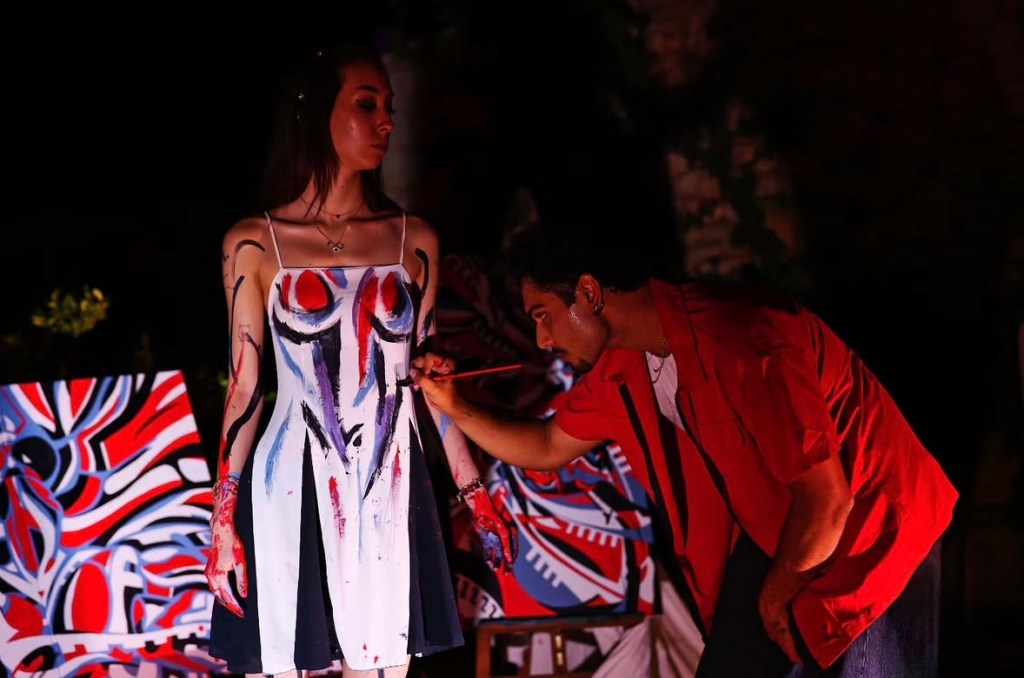
I think it came from a need to stop separating the different parts of my artistic identity. I have always moved between photography, painting, design, and visual experimentation. Performance allowed me to put everything together and make the body itself become the canvas. VISCER was born from this necessity: to stop only representing the body and start using it as a medium.
Can you describe your unique style?
I would describe it as ritualistic, visceral, and corporeal. I am interested in the contrast between the beautiful and the disturbing, the sacred and the sexual, attraction and repulsion. My visual language often revolves around the body, fragmented identities, flesh, blood, bones, darkness, and strong contrasts. VISCER is not really about making something “dark” just for aesthetic reasons. Darkness is a way of looking inward.
Is it usually a woman’s body that you paint? If yes, why do you think it is the way it is?
The female body often appears in my work, but it is not because I see it simply as an object of beauty. I am interested in the female body because it has historically been one of the most represented, controlled, desired, and mythologized bodies in art. When I paint on it, I want to transform that relationship. The body becomes the artwork, but also the surface on which another identity is created. It can become monstrous, sacred, erotic, alien, fragile, or powerful. For me, the important thing is not whether the body is male or female. It is what happens when the body stops being just a body and becomes a language.
What is one thing you could not survive in your job?
I wouldn’t be able to create if I felt constrained by rules, expectations, or established patterns. I need to feel free to experiment. I couldn’t survive doing the same thing just because it works. I need to question myself, destroy what I have created, and build something different again. For me, art has to remain dangerous somehow. If I already know exactly what the result will be, I lose interest.
Does your own country have a big influence on your art?
Absolutely. I am Italian, from Southern Italy, and I think that environment inevitably lives inside my work. There is something extremely physical about the South: the light, the heat, the stone, the religious imagery, blood, rituals, bodies, death, sexuality. Even the architecture feels corporeal to me. I don’t necessarily want to make “Italian art”, but Italy is part of the vocabulary I use without even realizing it.
What moment made you feel like you had truly become an artist?
I don’t think there was one specific moment. It happened when I stopped asking myself whether what I was creating was “good enough to be art.” I started understanding that being an artist isn’t about having permission to call yourself one. It’s about realizing that creating is something you cannot really stop doing. At some point, I understood that my work wasn’t simply a hobby or an aesthetic interest anymore. It had become a way of understanding myself. That was probably the moment VISCER started becoming real.
How much time does one project take for you?
It depends completely on the project. A photograph can take hours or even minutes to create, but the idea behind it might have been developing inside me for months. A body-painting performance can take several hours of preparation, sometimes days of conceptual work, research, sketches, materials and rehearsals. So I don’t really measure my projects only in hours. The physical execution might take one day. The idea can take months or years to arrive.
Do you have some powerful or memorable memories while doing your job?
The most powerful moments are usually the ones I didn’t plan. There are moments during a performance when you suddenly stop thinking about the technique, the camera, the people watching, or whether the work is going well. You simply enter a kind of connection with the person in front of you. I remember moments where it felt almost like two bodies were creating something together rather than one person creating something on another. Those moments are probably the closest thing I have experienced to a ritual.
Do you have a goal you want to achieve?
I don’t have one final destination. I want VISCER to become a language that exists beyond me, something recognizable even without my name attached to it. I want to create exhibitions, performances, and collaborations where photography, painting, fashion, music, and the human body stop being separate disciplines. Ultimately, I want to create something that makes people feel before they understand.
Laura Lőwingerová


Leave a Reply