
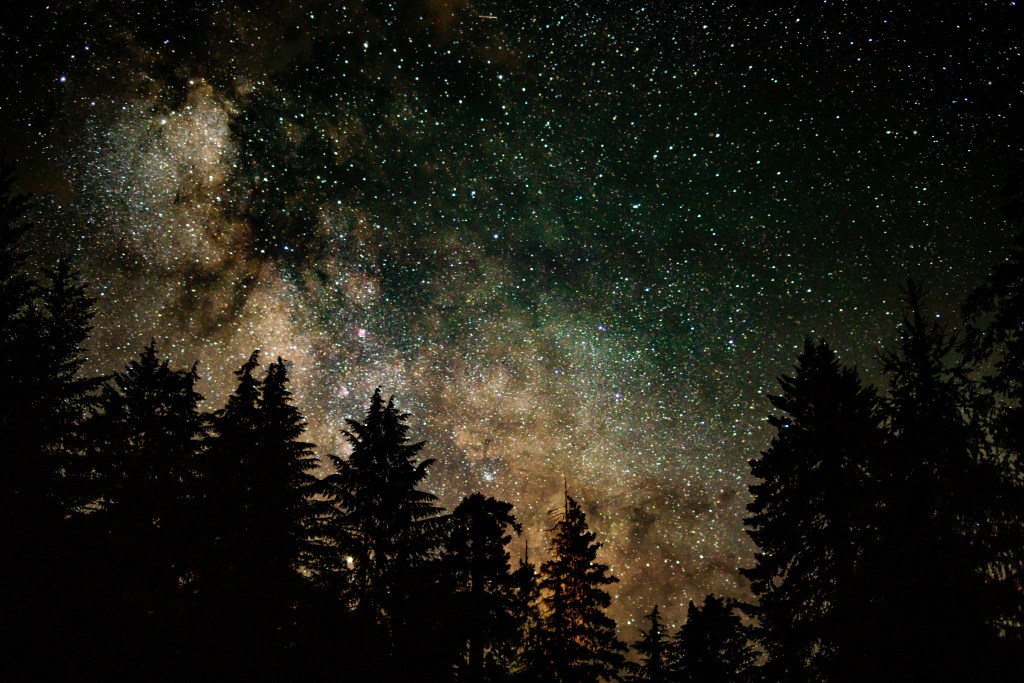
Since the beginning, humanity has searched to understand what it sees above itself. Before telescopes, before maps, even before words, there was simply the emptiness of the sky. The stars, tiny yet infinite, seemed to form a sort of language. The first humans wanted to decipher it: they connected the points, told stories, invented figures. That is how the constellations were born. Some myths suspended in the darkness of the night, some fragments of human memory into eternity.
But the sky has never been a permanent image. Each civilization has drawn its own borders, its own stories. The Greeks drew heroes and monsters, the Chinese, dragons and palaces; the Arabs–people, spiritual symbols and instruments of navigation. The sky was a way to express our beliefs. Yet, over the centuries, certain constellations have disappeared. Erased, renamed, forgotten as if the sky had undergone a form of censorship.
During the 17th and 18th centuries, European astronomers invented new constellations to fill empty spaces. Those creations had strange names: Pneumatic Machine, The Fox chasing the Goose, the Cat, the Unicorn… they reflected the obsessions of their time: science, mechanics, curiosity of the natural world. The sky was just becoming a museum of human spirit. In 1922, the International Astronomical Union fixed an official list of 88 constellations. The sky became more universal but at the same time less dreamlike.
Even the constellations that we know today have been remodeled. Argo Navis, the immense ship of the Argonauts, has been divided into three parts: the Carina, the Puppis and the Vela. This division, motivated by the need for precision, fragmented a millennial myth. What was once a single heroic boat became three technical parts, easier to put on a map but deprive of its poetic unity. This gesture reveals something deeper: our need to impose order to chaos, to make infinity measurable even if that means losing a bit of wonder.
The forgotten constellations remind us that the sky is a work of art. It changes with us. It transforms according to our dreams, our fears, our discoveries. When machines fascinated the Age of Enlightenment, it appeared in the sky. When myths ruled, gods and monsters could be seen. When the navigation dominated, constellations became tools to guide sailors. The sky is a mirror of humanity: it reflects our progress, our beliefs, our desires.
But there is a certain melancholy in these disappearances. The Cat doesn’t run in the sky; the Fox no longer carries his Goose; the Pneumatic Machine has gone silent. These figures exist only in the margins of old atlases, in forgotten libraries, in the notes of astronomers from the past. Their erasure is not merely a science matter; it’s a loss of poetry.
Yet, the sky is still speaking to us. Every night, it tells us a different story. Stars as we see them nowadays are the same as the ancients were looking at; we simply name them differently. We changed, and the sky followed us. It is no longer only about tracing figures, but about feeling their absence. Understanding that behind every forgotten star lies a human thought, a dream, an attempt to give meaning to infinity.
Today, some artists and poets are searching to reinvent this lost cartography. They imagine modern constellations: broken hearts, human silhouettes, hope or revolt symbols. The sky becomes an open canvas, a space where everyone can inscribe their own myth. In a world saturated by artificial lights, where the stars are disappearing slowly from our cities, this gesture becomes a form of resistance: give back its voice to the sky, its memory, its part of mystery.
The mapping of forgotten stars is a metaphor for our time. It reminds us that knowledge alone cannot fill the void. We must also preserve beauty, curiosity, and wonder. Each vanished constellation is a ghost of human imagination, a relic of our need to tell stories. Looking at the sky is contemplating the history of our desire to understand but also to create.
And perhaps, when we lift our eyes to the sky, we should think about those erased constellations. They are not dead; they are sleeping, somewhere, in the memory of the cosmos. They are whispering to us that the sky is not only a light map, but also a memory map.
Paul Goumault


Leave a Reply