
It is October. War continues in Ukraine. The Israeli-Palestinian conflict fills our screens with images that are difficult to look at and even harder to forget. In France, Italy, Serbia, and Albania, protests bring citizens, including young people, into the streets, demanding answers and calling for change. Across different countries and for different reasons, one thing becomes clear: young people are not only watching the world unfold. They are part of it, questioning and trying to shape what comes next.
But what about the past? If young people care about what is happening now, do they also care about what happened before they were born?
Not just the dates in history books, the names of battles or the borders drawn on maps. But the unresolved questions, inherited memories and divisions that previous generations have left behind. Can we understand the world we live in today without understanding the conflicts that helped shape it?
Across the Western Balkans, the conflicts of the 1990s are part of the recent past. For some young people, they live on through family memories, shaping how their families talk about their neighbours and which stories are told at the dinner table. For others, they are fragments encountered at history lessons at school. In a region where borders, identities and memories often overlap, the past can be both deeply personal and fiercely political. And the same questions are being asked around the world. Who gets to tell the story of a conflict? Whose suffering is recognised? Which memories become part of a country’s official history, and which are left at the margins?
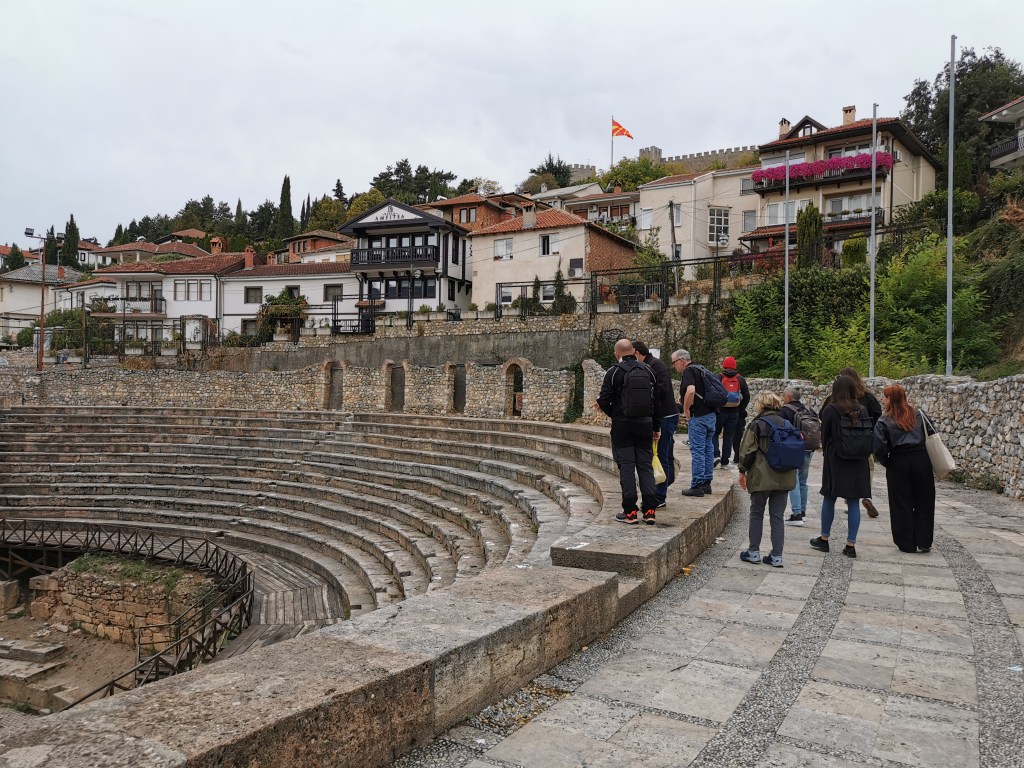
In October 2026, youth workers and representatives of institutes and youth centers from Macedonia, Germany and Ukraine met in Skopje for the Peer Training Course “The European Youth Goals and the ‘Missing Peace’, organised within the Erasmus+ small-scale partnership “The Future of Europe’s Past”. Through non-formal learning, discussions, presentations and visits to places of remembrance, partners explored how young people can engage with Europe’s difficult past, learned how to work with remembrance and peace, and exchanged experiences on youth work from their own organisations and centers.
But what does peace really mean? Is it simply the moment when the fighting stops and an agreement is reached? These are important steps, but what happens afterwards? What about the trust that has been broken, the communities that remain divided, and the memories that continue to shape how people see one another?
This is where ‘The Missing Peace’ comes in. It invites us to look beyond the formal end of conflict and ask what people need to live together with dignity. Trust, belonging, justice, inclusion, dialogue and the willingness to confront uncomfortable truths may be less visible than borders or political agreements, but they are no less important in building lasting peace.
These questions are also finding their way into discussions about the future of EU youth policy. At the EU Youth Conference in Dublin in September 2026, youth delegates finalised a revised set of 12 European Youth Goals, including a dedicated goal on Peace and Security. The revised goals reflect young people’s priorities and will contribute to discussions on the EU Youth Strategy beyond 2027. This focus on peace and security also resonates with the United Nations Youth, Peace and Security agenda, which calls for young people to play a meaningful role in preventing conflict and building peace.
The idea is important for one simple reason: young people should not be seen only as those who will inherit the consequences of today’s conflicts. They should also have a say in how those conflicts are understood and how communities recover, but also how to build a more peaceful future.
Youth work can create a space where young people learn to listen without immediately preparing a counterargument, explore different perspectives without turning every discussion into a competition, and recognise that understanding someone’s experience does not necessarily mean agreeing with their conclusions. It can also help young people understand that inclusion does not mean giving every claim equal validity. A youth-friendly culture of remembrance must be open to different experiences while remaining attentive to evidence, human rights and the dignity of those affected by violence.
Perhaps the missing piece is not only a lesson we have yet to learn about history. Perhaps it is the space we create for young people to question it, understand one another and imagine a future that does not have to repeat it.
We cannot rewrite the past. We cannot promise that every conflict will end in reconciliation. And we should never confuse remembering with repairing everything that has been broken.
But we can decide what we do with the knowledge we inherit.
Jolanta Ciopcińska
Project partners: Memos (Germany), LRE Poland (Poland), Stadt Nürnberg Jugendamt (Germany), and Volunteers Centre Skopje (Macedonia)


Leave a Reply